

There’s something wonderfully satisfying about cooking a dish that makes the whole kitchen smell incredible. If you’ve ever craved a restaurant-style dinner but wanted to enjoy it in your own cozy kitchen, Duck à l’Orange is the kind of recipe worth trying. The crisp skin, tender meat, and bright orange sauce feel special without requiring fancy restaurant equipment.
And don’t let the French name intimidate you. With a little patience and a few simple techniques, you can make this classic at home. The key is giving the duck enough time to render its fat and letting the orange sauce balance sweet, tangy, and savory flavors. It may look impressive on the table, but the process is much more approachable than you might expect.
Prep & Cook Time
| Time | Details |
|---|---|
| Prep Time | 25 minutes |
| Cook Time | 1 hour 45 minutes |
| Resting Time | 15 minutes |
| Total Time | About 2 hours 25 minutes |
| Servings | 4 |
Difficulty: Moderate
Best for: Sunday dinner, date night, holidays, dinner parties, or a special family meal
What Equipment Do You Need?
You don’t need a professional kitchen to make Duck à l’Orange. A few reliable tools are enough:
- Large roasting pan or Dutch oven
- Wire rack that fits inside the roasting pan
- Sharp chef’s knife
- Small paring knife or zester
- Large saucepan
- Fine-mesh strainer
- Wooden spoon
- Instant-read meat thermometer
- Cutting board
- Small bowl
- Tongs
- Basting brush or spoon
Chef tip: An instant-read thermometer is one of the most useful tools here. Duck can look beautifully browned on the outside while the meat still needs more cooking.
Ingredients
For the Duck
- 1 whole duck, about 5 to 6 pounds, fully thawed
- 2 teaspoons kosher salt
- 1 teaspoon freshly ground black pepper
- 2 oranges, quartered
- 4 garlic cloves, lightly crushed
- 4 fresh thyme sprigs
- 2 fresh rosemary sprigs
- 1 small onion, quartered
For the Orange Sauce
- 1 cup fresh orange juice, from about 3 to 4 oranges
- 1 tablespoon finely grated orange zest
- 1 cup chicken or duck stock
- 1/3 cup granulated sugar
- 1/4 cup red wine vinegar
- 1/4 cup dry white wine
- 2 tablespoons Grand Marnier or Cointreau, optional
- 1 tablespoon unsalted butter
- 1 tablespoon cornstarch
- 2 tablespoons cold water
- 1/4 teaspoon kosher salt, or to taste
- 1/4 teaspoon freshly ground black pepper
Optional Garnish
- Thin orange slices
- Fresh thyme
- A little finely grated orange zest
Important: If using Grand Marnier or Cointreau, the alcohol will be reduced during cooking, but you can leave it out for a family-friendly version.
Why Each Ingredient Matters
Duck
Duck has naturally rich meat and a generous layer of fat beneath the skin. Slow roasting allows that fat to render while the skin becomes deeply golden and crisp.
Oranges
Orange brings the signature fresh, slightly sweet citrus flavor. Both the juice and zest are useful, but they do different jobs. The juice provides acidity and sweetness, while the zest adds concentrated aromatic oils.
Sugar
Sugar helps create the sweet side of the classic orange sauce and contributes to its glossy finish.
Red Wine Vinegar
This is the ingredient that keeps the sauce from becoming overly sweet. Its acidity cuts through the richness of the duck and makes each bite taste brighter.
Stock
Duck or chicken stock gives the sauce savory depth. It also helps turn the orange mixture into a proper dinner sauce rather than simply tasting like sweet orange juice.
White Wine
A splash of dry white wine adds acidity and complexity. You don’t need an expensive bottle; something crisp and dry works well.
Grand Marnier or Cointreau
These orange liqueurs intensify the citrus aroma and give the sauce a more classic French-style character. They are completely optional.
Butter
A small amount of butter whisked in at the end makes the sauce smooth, shiny, and silky.
Cornstarch
Cornstarch gives the sauce a little body without requiring a long reduction. Always mix it with cold water first to prevent lumps.
Garlic, Thyme, Rosemary & Onion
These aromatics gently flavor the duck from the inside as it roasts. They provide savory balance without overpowering the orange.
Step-by-Step Instructions
Step 1: Prepare the Duck
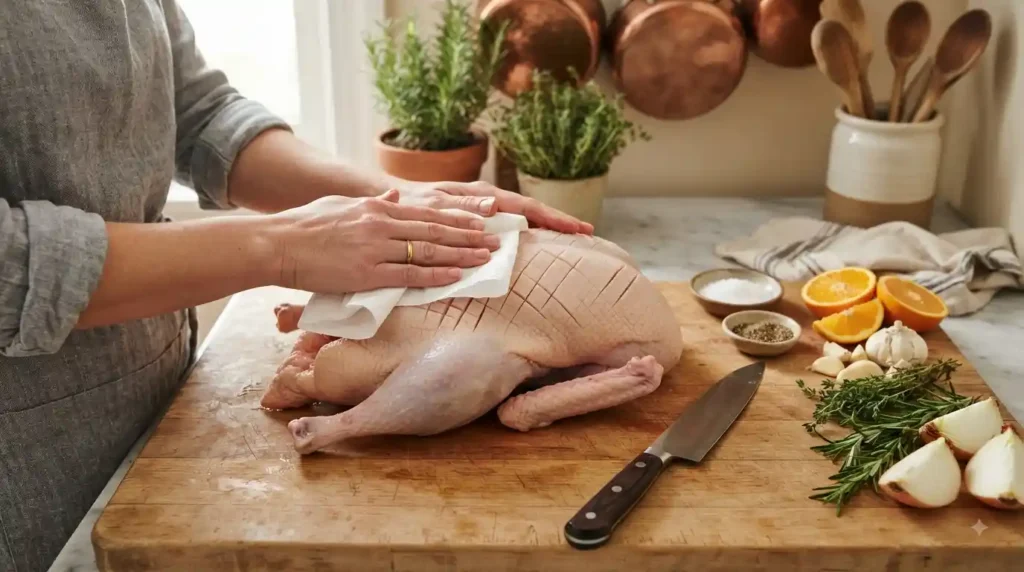
Remove the duck from the refrigerator about 30 minutes before cooking. Take out any giblets from the cavity and pat the duck very dry with paper towels.
Using a sharp knife, gently score the skin in a shallow crosshatch pattern, especially over the breast and thicker areas of fat.
Do not cut deeply into the meat. You only want to pierce the skin and fat.
Season the entire duck inside and out with 2 teaspoons kosher salt and 1 teaspoon black pepper.
Place the orange quarters, garlic, thyme, rosemary, and onion inside the cavity.
Let the seasoned duck sit while the oven heats.
Step 2: Start Roasting and Render the Fat
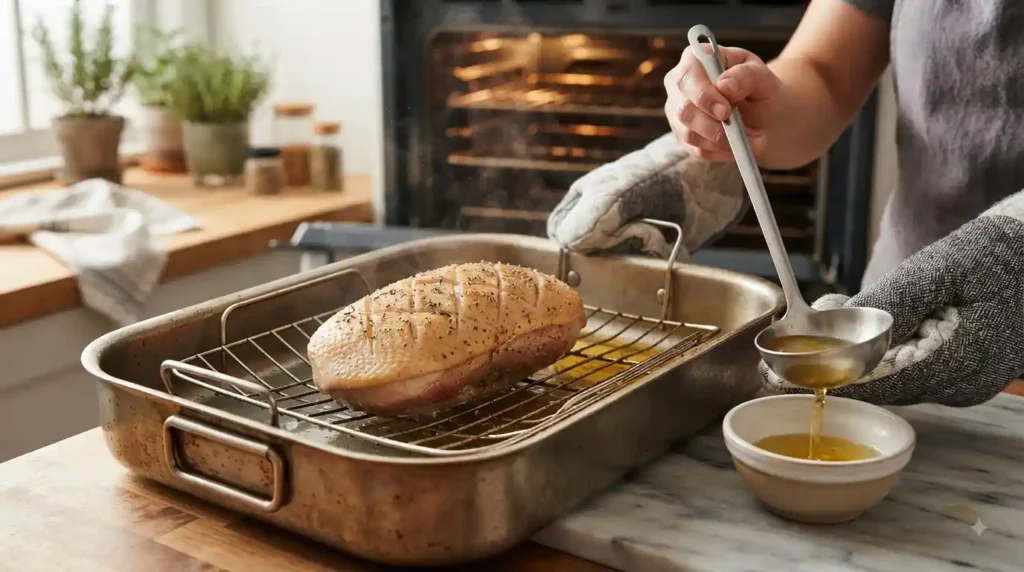
Preheat the oven to 425°F (220°C).
Place the duck breast-side up on a rack inside a roasting pan. Pour a small amount of water into the bottom of the pan, making sure it does not touch the duck.
Roast at 425°F for 20 minutes.
Carefully remove the roasting pan and drain off excess rendered fat if there is a large amount. Save the duck fat for roasting potatoes or vegetables later—it is far too good to waste.
Reduce the oven temperature to 350°F (175°C).
Continue roasting for about 75–90 minutes, depending on the size of the duck.
Every 30 minutes or so, carefully remove excess fat from the pan. Avoid repeatedly opening the oven because it lowers the temperature.
Step 3: Check the Duck and Let It Rest
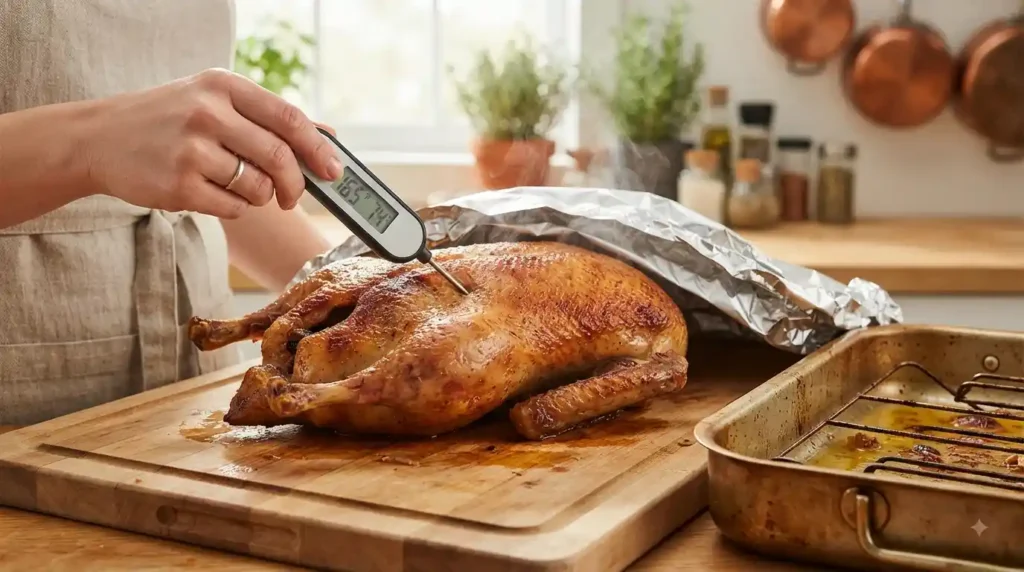
Start checking the internal temperature during the final 15–20 minutes of roasting.
Insert an instant-read thermometer into the thickest part of the thigh without touching the bone. The duck should reach a safe internal temperature according to current food-safety guidance, and the juices should run clear when properly cooked.
If the skin is not crisp enough, increase the oven temperature to 425°F (220°C) for the final 5–10 minutes, watching closely so it doesn’t burn.
Transfer the duck to a cutting board and loosely tent it with foil.
Let it rest for 15 minutes before carving.
Don’t skip the resting period. It gives the juices time to settle and makes carving much less messy.
Step 4: Make the Orange Base
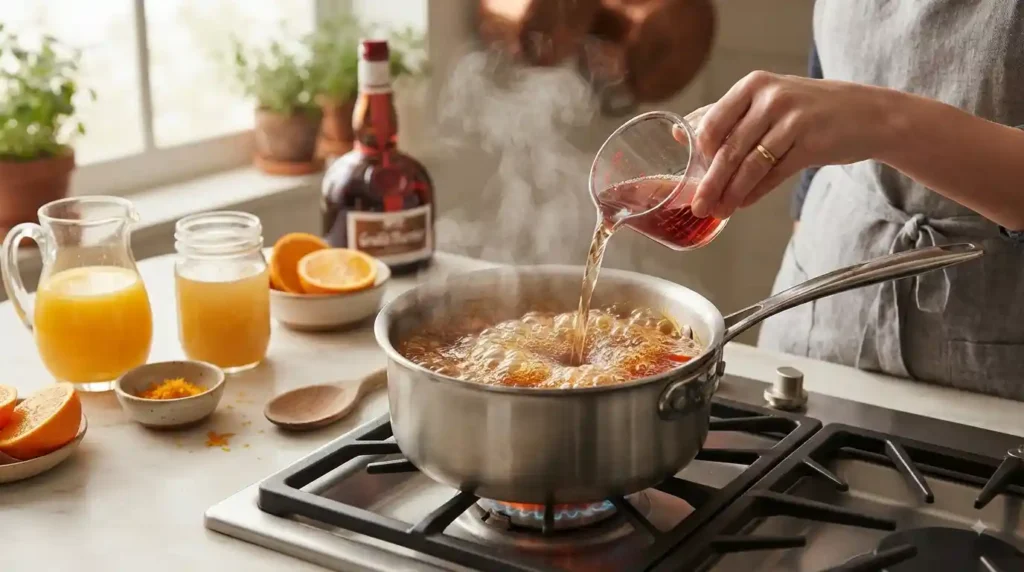
While the duck rests, prepare the sauce.
Place the sugar in a medium saucepan over medium heat. Let it melt until it becomes a deep amber caramel.
Carefully add the red wine vinegar and white wine.
Stand back slightly when adding the liquid. The caramel will bubble aggressively, and hot sugar can cause serious burns.
Stir until the caramel loosens.
Add the orange juice, orange zest, and stock. Bring the mixture to a gentle simmer.
If using Grand Marnier or Cointreau, add it now.
Simmer for 10–15 minutes, stirring occasionally, until the sauce has reduced slightly and smells intensely citrusy.
Step 5: Finish and Thicken the Sauce
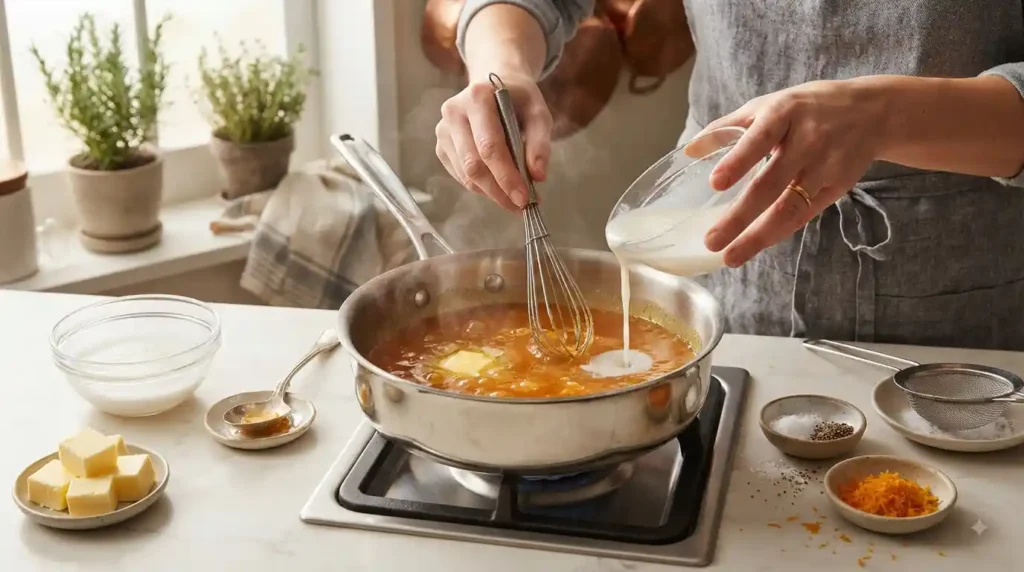
Mix 1 tablespoon cornstarch with 2 tablespoons cold water in a small bowl until completely smooth.
Slowly whisk the slurry into the simmering orange sauce.
Cook for 1–2 minutes, stirring constantly, until the sauce lightly coats the back of a spoon.
Turn off the heat.
Whisk in 1 tablespoon butter, then season with salt and black pepper.
Strain the sauce through a fine-mesh strainer if you want an especially smooth restaurant-style finish.
Taste before serving.
If it seems too sweet, add a tiny splash of vinegar. If it tastes too sharp, add a little more orange juice or a small amount of sugar.
Step 6: Carve and Serve
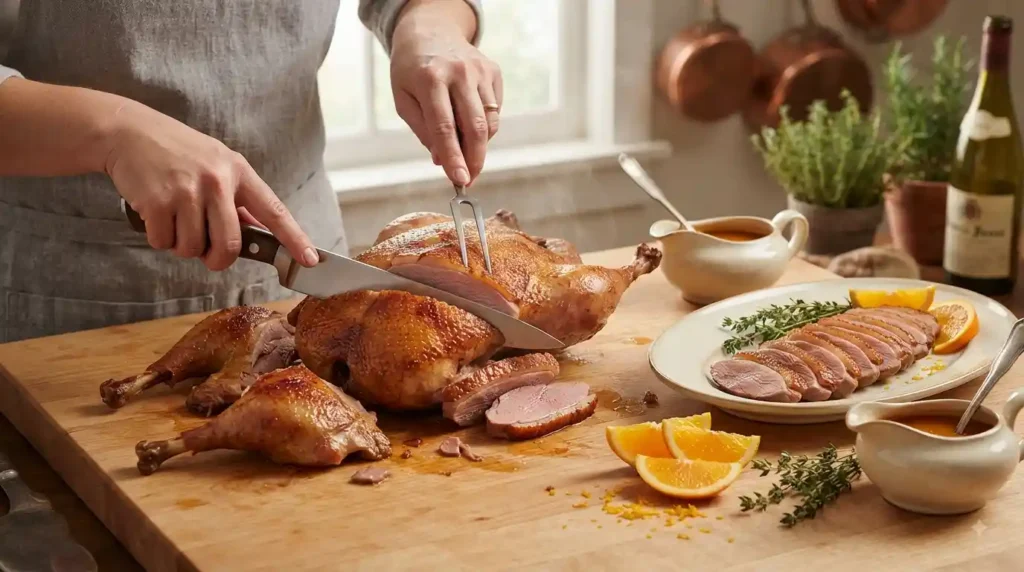
Remove the aromatics from the duck cavity.
Using a sharp knife, separate the legs and thighs first. Then slice the breast meat against the grain into thick, even pieces.
Arrange the duck on a warm serving platter.
Spoon a little orange sauce over the meat and serve the remaining sauce alongside.
Finish with thin orange slices, fresh thyme, or a little orange zest.
For the crispiest skin, don’t drown the duck in sauce. Keep most of the sauce underneath or alongside the meat so the beautifully roasted skin stays crisp.
Health Benefits
Duck à l’Orange is an indulgent dish, but it also provides several useful nutrients.
- Duck provides protein, which supports muscle maintenance and helps keep meals satisfying.
- Orange juice and zest provide vitamin C and plant compounds called flavonoids.
- Orange zest contains aromatic citrus oils, adding flavor without needing large amounts.
- Duck contains iron and zinc, minerals involved in normal energy metabolism and immune function.
- Fresh herbs contribute antioxidants while adding flavor without significant calories.
- Much of the duck’s rendered fat can be removed during roasting, allowing you to control how rich the final dish is.
Because duck is naturally rich, pair it with lighter sides such as roasted vegetables, green beans, a crisp salad, or steamed broccoli.
Nutrition Information (Per Serving)
Approximate values will vary depending on the size of the duck, how much fat is rendered, and how much sauce is served.
| Nutrient | Approximate Amount |
|---|---|
| Calories | 720 kcal |
| Protein | 43 g |
| Fat | 48 g |
| Carbohydrates | 25 g |
| Sugar | 18 g |
| Fiber | 1 g |
| Sodium | 850 mg |
Note: These figures are estimates for informational purposes and can change significantly based on portion size and ingredient brands.
Pro Tips & Variations
1. Dry the Duck Really Well
Moisture is the enemy of crispy skin. Pat the duck thoroughly dry before seasoning.
2. Score the Skin, Not the Meat
Make shallow cuts through the skin and fat. Cutting into the meat can allow valuable juices to escape.
3. Save the Duck Fat
Strain the rendered fat into a heat-safe container and refrigerate it. It is excellent for crispy roasted potatoes, carrots, or other vegetables.
4. Don’t Make the Sauce Too Sweet
The duck is already rich, so the sauce needs acidity. The red wine vinegar is not there to make the sauce taste sour—it keeps the sweetness balanced.
5. Use Fresh Oranges
Fresh orange juice gives the sauce a cleaner, brighter flavor than bottled juice. If possible, zest the oranges before squeezing them.
6. Make It Alcohol-Free
Simply leave out the Grand Marnier and white wine. Replace the wine with a little extra stock and a small splash of additional orange juice.
7. Want a Stronger Citrus Flavor?
Add a little extra finely grated orange zest near the end of cooking. Avoid adding lots of white pith because it can taste bitter.
8. Don’t Skip the Thermometer
Roasting times can vary depending on the duck’s size and your oven. Temperature is a much better guide than the clock alone.
Easy Serving Ideas
Duck à l’Orange pairs beautifully with:
- Creamy mashed potatoes
- Crispy roasted potatoes
- Green beans almondine
- Roasted carrots
- Brussels sprouts
- Simple arugula salad
- Buttered rice
- Crusty French bread
How Much Does It Cost to Make?
Prices vary considerably by location and whether you buy fresh or frozen duck. This is a reasonable U.S. grocery-store estimate for four servings.
| Ingredient | Estimated Cost |
|---|---|
| 5–6 lb whole duck | $25–$32 |
| Oranges | $4–$5 |
| Fresh herbs | $2–$3 |
| Onion & garlic | $1–$2 |
| Stock | $2 |
| White wine | $2 |
| Sugar & vinegar | $1 |
| Butter & cornstarch | $1 |
| Grand Marnier/Cointreau | $1–$3 per recipe portion |
| Estimated Total | $39–$51 |
| Approx. Cost Per Serving | $9.75–$12.75 |
Budget tip: Skip the orange liqueur and use homemade or leftover chicken stock. You can still make a beautifully balanced sauce without those extras.
Frequently Asked Questions
What is Duck à l’Orange made of?
Duck à l’Orange combines roasted duck with a sweet-tart orange sauce. The sauce typically includes fresh orange juice and zest, sugar, vinegar, stock, and sometimes white wine or orange liqueur.
Can I make Duck à l’Orange ahead of time?
Yes. You can roast the duck several hours ahead and prepare the sauce separately. Refrigerate both promptly after cooking. Before serving, gently reheat the sauce and warm the duck in the oven until heated through. For the best skin, avoid covering the duck tightly while reheating.
Why is my duck skin not crispy?
The most common causes are excess surface moisture, insufficient fat rendering, or overcrowding. Pat the duck very dry, score the skin carefully, roast it on a rack, and drain excess fat during cooking.
Can I make Duck à l’Orange without alcohol?
Absolutely. Leave out the Grand Marnier and white wine. Use additional stock and orange juice instead. The finished sauce will still have plenty of citrus flavor and a lovely sweet-tart balance.
Final Thoughts
Duck à l’Orange may have a fancy French reputation, but you don’t need to be a trained chef to make it at home. Give the duck time to render, keep the orange sauce balanced rather than overly sweet, and let the meat rest before carving.
Most importantly, don’t worry if your first attempt isn’t perfectly restaurant-looking. A little uneven carving or an extra splash of sauce is part of cooking at home. What matters is that golden, crisp duck meets that bright orange sauce on the plate—and suddenly an ordinary dinner feels like a special occasion.