

There’s something special about bringing a platter of hot, buttery crab legs to the table. Whether it’s a relaxed weekend dinner or a seafood night that feels a little celebratory, those sweet, juicy bites make the extra napkins worthwhile. The good news is that restaurant-style crab legs are surprisingly easy to make at home.
The real trick is keeping that delicate crab meat plump instead of watery. Since most store-bought crab legs are already cooked, they need gentle reheating rather than aggressive boiling. Steaming keeps them above the water, warms them evenly, and protects their naturally sweet flavor. Add lemon and warm garlic butter, and dinner suddenly feels much fancier than the effort involved.
Prep & Cook Time
| Details | Time / Amount |
|---|---|
| Prep Time | 5 minutes |
| Cook Time | 6–8 minutes |
| Total Time | 11–13 minutes |
| Servings | 4 |
Chef’s note: These times are designed for thawed, pre-cooked crab legs. Frozen legs will need a few extra minutes to heat through.
What Equipment Do You Need?
You don’t need specialty seafood equipment to make excellent steamed crab legs. A few basic kitchen tools will do the job:
- Large stockpot or deep saucepan with lid
- Steamer basket or metal steaming insert
- Kitchen tongs
- Small saucepan or microwave-safe bowl for the butter
- Sharp kitchen shears
- Seafood crackers, optional
- Small serving bowls for garlic butter
- Large serving platter
- Instant-read thermometer, optional but helpful
Make sure your steamer basket sits above the water rather than inside it. That small detail is the key to preventing soggy, waterlogged crab meat.
Ingredients
For 4 servings, you’ll need:
- 2 pounds (900 g) pre-cooked king crab or snow crab legs, thawed
- 1½ cups water
- 1 lemon, divided
- ½ cup (113 g) unsalted butter
- 2 garlic cloves, finely minced
- 1 tablespoon fresh parsley, finely chopped
- ¼ teaspoon freshly ground black pepper
- ⅛ teaspoon sea salt, optional
- ½ teaspoon Old Bay seasoning, optional
- Extra lemon wedges, for serving
Crab is naturally salty, especially when commercially cooked and frozen, so taste before adding extra salt.
Why Each Ingredient Matters
Understanding what each ingredient does makes it much easier to adjust the recipe without accidentally overpowering the crab.
| Ingredient | Why It Matters |
|---|---|
| Crab legs | Naturally sweet and rich in protein. Pre-cooked legs only need gentle reheating. |
| Water | Creates steam without soaking the crab meat. |
| Lemon | Its acidity brightens the natural sweetness and richness of the seafood. |
| Unsalted butter | Adds richness while allowing you to control the overall salt level. |
| Garlic | Gives the dipping butter savory depth without hiding the crab flavor. |
| Parsley | Adds freshness and a light herbal finish. |
| Black pepper | Provides mild warmth and balances the buttery sauce. |
| Old Bay | Optional, but adds classic seafood-seasoning notes. |
The biggest culinary advantage here comes from the cooking method rather than extra seasoning. Crab meat is delicate and already flavorful, so restraint usually produces a better result.
Step-by-Step Instructions
Step 1: Thaw and Prepare the Crab Legs
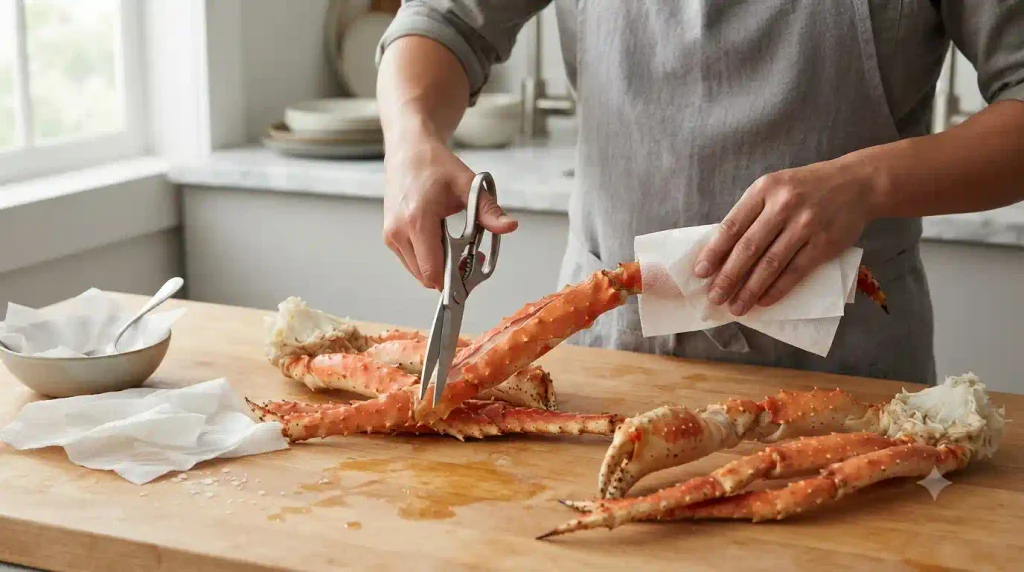
If your crab legs are frozen, thaw them overnight in the refrigerator. For a faster method, place the sealed crab legs under cold running water until thawed.
Avoid leaving seafood at room temperature for extended periods.
Once thawed, pat the shells dry with paper towels. If the clusters are too large for your pot, carefully separate them at the joints.
You can also use kitchen shears to make a shallow slit along the shell of thicker legs. This isn’t essential, but it makes the crab much easier to eat once it reaches the table.
Step 2: Prepare the Steaming Pot
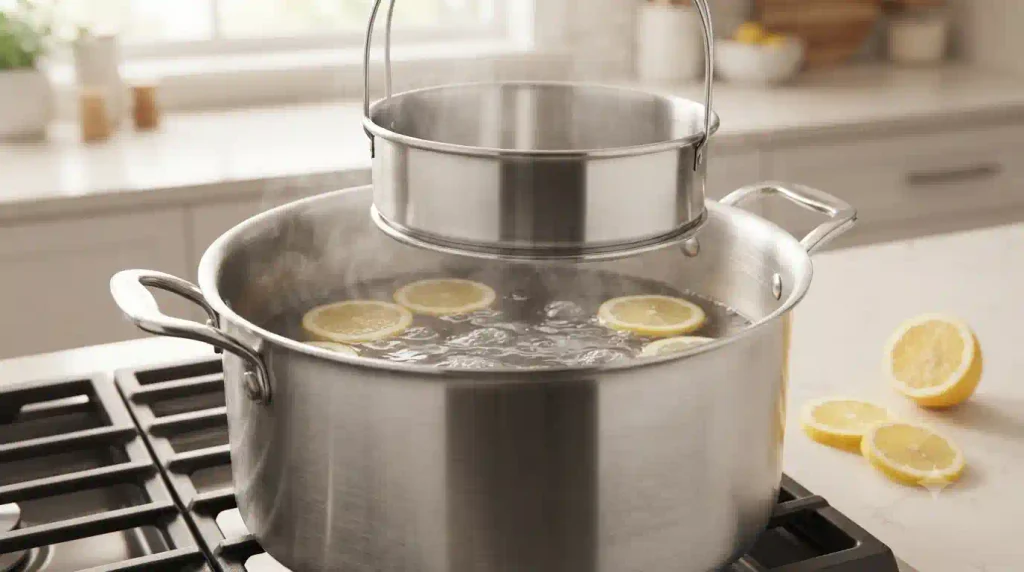
Pour 1½ cups water into a large stockpot.
Cut half of the lemon into slices and add them to the water. The lemon will lightly perfume the steam without soaking the crab in lemon juice.
Place your steamer basket inside the pot.
Check the water level carefully. The water should sit below the steamer basket. If the crab legs are resting directly in simmering water, they are effectively being boiled rather than steamed.
Bring the water to a strong simmer over medium-high heat.
Step 3: Arrange and Steam the Crab Legs
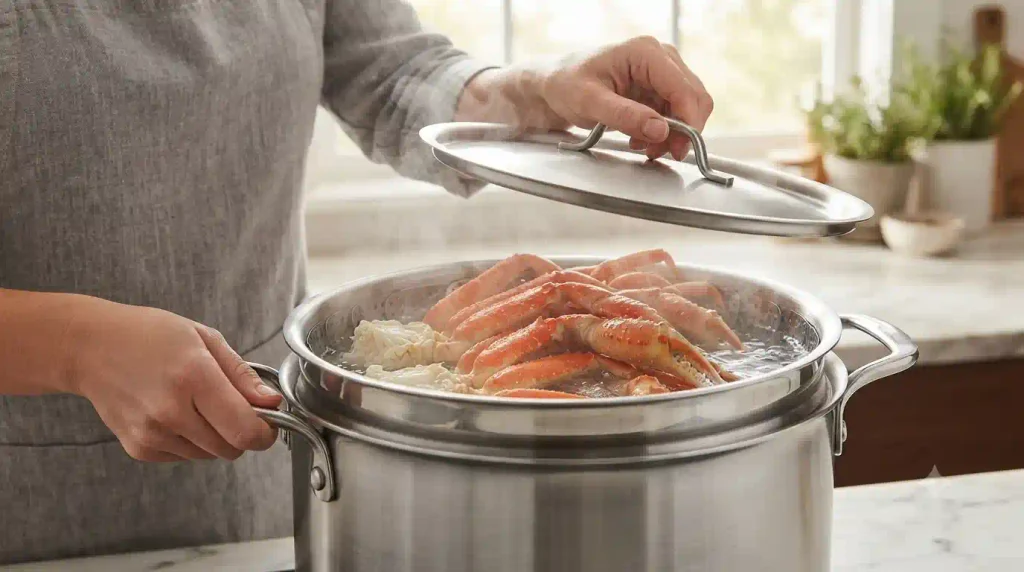
Once you see steady steam, carefully arrange the thawed crab legs inside the steamer basket.
Don’t cram them tightly together. A little space allows steam to circulate around the shells.
Cover immediately with a tight-fitting lid.
Steam thawed, pre-cooked crab legs for approximately 6–8 minutes, depending on their thickness.
Try not to repeatedly lift the lid. Every peek releases steam and lowers the temperature inside the pot.
The crab is ready when the shells are hot and the meat is heated through.
Because commercially sold crab legs are generally already cooked, you’re reheating rather than cooking them from raw. Overheating can make the meat dry, rubbery, or stringy.
Step 4: Make the Garlic Butter

While the crab steams, melt ½ cup unsalted butter in a small saucepan over low heat.
Add:
- 2 minced garlic cloves
- ¼ teaspoon black pepper
- ⅛ teaspoon sea salt, if needed
- ½ teaspoon Old Bay, if using
Cook gently for about 1 minute.
Don’t let the garlic brown. Burnt garlic quickly becomes bitter and can overpower delicate crab meat.
Remove the pan from the heat and stir in 1 tablespoon chopped parsley and a squeeze of fresh lemon juice.
Taste before adding more salt.
Step 5: Drain Without Soaking
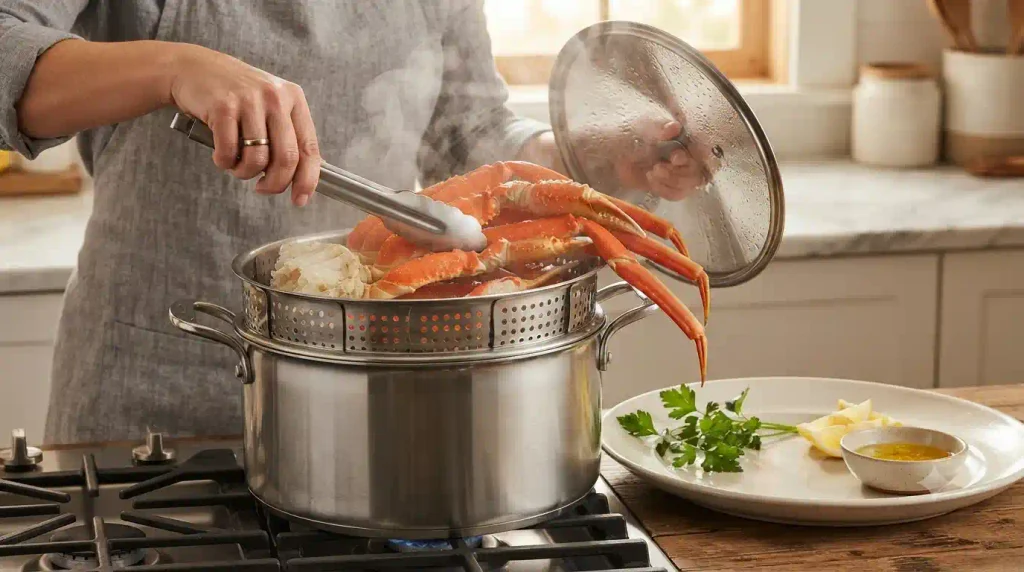
Use kitchen tongs to carefully transfer the hot crab legs from the steamer basket to a serving platter.
Be careful when removing the lid. Steam can cause serious burns, so lift the lid away from your face and hands.
Let the crab rest for about 1 minute.
If you notice a little condensation trapped around the shells, that’s completely normal. Just don’t leave the cooked crab sitting in the steaming water.
This is where steaming beats boiling: the meat stays moist from its natural juices without absorbing unnecessary cooking water.
Step 6: Crack, Dip, and Serve
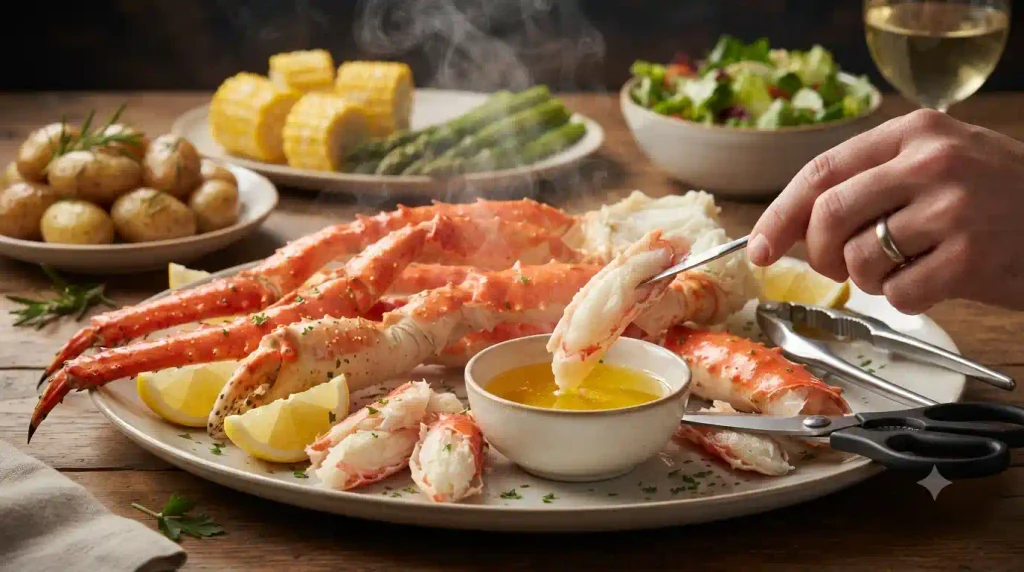
Serve the crab legs immediately while they’re piping hot.
Squeeze fresh lemon over the top and sprinkle with a little additional parsley if you like.
Use seafood crackers or kitchen shears to open the shells, then pull out the meat gently.
Serve with the warm garlic butter and extra lemon wedges on the side.
For a full seafood dinner, pair the crab with roasted potatoes, corn on the cob, steamed vegetables, rice, coleslaw, or a crisp green salad.
And keep plenty of napkins nearby. Crab night is rarely a tidy dinner, and that’s part of the fun.
Health Benefits
Crab isn’t just delicious—it can also provide several useful nutrients.
High-quality protein: Crab provides complete protein containing essential amino acids. Protein helps support muscle maintenance and normal tissue repair.
Relatively low in carbohydrates: Plain crab meat naturally contains very little carbohydrate, making it easy to pair with vegetables or other sides according to your dietary preferences.
Vitamin B12: Crab can be a valuable source of vitamin B12, which plays an important role in normal red blood cell formation and nervous system function.
Minerals: Crab provides nutrients such as selenium, zinc, phosphorus, and copper in varying amounts.
Omega-3 fats: Crab also supplies some omega-3 fatty acids, although amounts vary by species.
Keep in mind that crab can contain a significant amount of sodium, particularly commercially cooked products. Using unsalted butter and limiting extra salt helps keep the meal more balanced.
Crab is also a shellfish allergen and should not be served to anyone with a known shellfish allergy.
Nutrition Information (Per Serving)
Approximate values are based on four servings and include a portion of the garlic butter.
| Nutrient | Approximate Amount |
|---|---|
| Calories | 330 kcal |
| Protein | 28 g |
| Fat | 23 g |
| Carbohydrates | 2 g |
Nutrition note: These figures are estimates. Exact nutrition varies according to the crab species, serving size, brand, sodium content, and how much garlic butter is actually consumed.
If you want a lighter serving, use less dipping butter and increase the lemon juice, herbs, and vegetables served alongside the crab.
Pro Tips & Variations
1. Thaw before steaming when possible.
Thawed crab legs heat more evenly and give you better control over texture. Frozen crab can still be steamed, but it requires additional cooking time.
2. Never submerge the crab.
Keep the steaming water below the basket. This is the most important trick for preventing waterlogged meat.
3. Don’t overcook pre-cooked crab.
Once the meat is thoroughly heated, take it off the heat. Extra cooking doesn’t make crab more tender—it can do the opposite.
4. Use unsalted butter.
Crab legs can already be fairly salty. Unsalted butter gives you much better control.
5. Add seasoning to the butter instead of covering the crab.
This keeps the natural sweetness of the meat front and centre while allowing everyone to control how strongly seasoned each bite tastes.
6. Try herb butter.
Add chopped chives, dill, or parsley to melted butter for a fresher flavor.
7. Make spicy garlic butter.
Add a small pinch of cayenne or crushed red pepper flakes.
8. Try lemon-pepper butter.
Increase the black pepper and add finely grated lemon zest for a bright, punchy dipping sauce.
9. Skip the butter for a lighter option.
Serve the steamed crab with lemon wedges, fresh herbs, and a small amount of olive oil instead.
10. Don’t throw away good leftover crab meat.
Remove leftover meat from the shell and refrigerate promptly in a covered container. Use it in crab cakes, seafood pasta, omelets, salads, or sandwiches.
How Much Does It Cost to Make?
Crab prices vary significantly depending on species, season, location, and whether you’re buying king crab or snow crab.
Here is a rough U.S. grocery-store estimate:
| Ingredient | Estimated Cost |
|---|---|
| 2 lb crab legs | $25–$50 |
| Butter | $1.50–$2.50 |
| Lemon | $0.75–$1.25 |
| Garlic | $0.25–$0.50 |
| Parsley | $0.50–$1.00 |
| Seasonings | $0.25–$0.50 |
| Estimated Total | $28–$56 |
| Approx. Cost Per Serving | $7–$14 |
King crab will usually push the total toward the higher end, while sales on snow crab can make this dinner considerably more affordable.
For a budget-friendly seafood night, serve smaller portions of crab alongside inexpensive sides such as roasted potatoes, corn, rice, bread, or seasonal vegetables.
Frequently Asked Questions
Is it better to boil or steam crab legs?
Both methods work, but steaming is especially useful when you want to avoid waterlogged crab meat. The crab stays above the cooking water and is heated by steam instead of being submerged.
It also reduces the chance of washing away some of the crab’s delicate flavor.
How long should you steam crab legs?
For thawed, pre-cooked crab legs, about 6–8 minutes is usually enough.
Very thick king crab legs may need slightly longer. Frozen crab legs require additional time because the centre must heat through.
Remember that most frozen crab legs sold at supermarkets have already been cooked, so your goal is simply to reheat them thoroughly without drying out the meat.
How do you keep steamed crab legs from getting soggy?
Keep the crab completely above the water line.
Use enough water to generate plenty of steam, but not so much that bubbling water reaches the steamer basket.
Once the crab is heated, remove it promptly instead of leaving it inside the covered pot. Those two habits make a noticeable difference in texture.
Can I steam crab legs directly from frozen?
Yes, you can steam frozen pre-cooked crab legs, but thawing them first generally gives more even results.
If cooking from frozen, allow extra steaming time and check that the thickest sections are heated through before serving.
For food safety, thaw frozen seafood in the refrigerator or under cold running water rather than leaving it on the kitchen counter.
Final Thoughts
Great crab legs don’t need complicated techniques or a long ingredient list. The secret is simply treating delicate seafood gently.
Keep the crab above the water, steam only until heated through, and serve it immediately with warm garlic butter and plenty of fresh lemon. You’ll get juicy, sweet crab meat without the soggy texture that can come from boiling.
Once you’ve tried this method, it makes an impressive seafood dinner surprisingly manageable—even in a busy home kitchen with butter on the counter, shells piling up on the plates, and everyone reaching for one more crab leg.