

There’s something wonderfully comforting about cooking eggs in a quiet, messy home kitchen. If you love a breakfast that feels a little more special without requiring complicated ingredients, duck eggs are worth trying. Their larger yolks and naturally rich texture turn a simple pan of scrambled eggs into something deeply creamy and satisfying.
Duck eggs can look intimidating if you have never cooked them before, but they’re surprisingly easy to handle. They cook much like chicken eggs, with a few small differences that make a big impact. Keep the heat gentle, stir patiently, and you’ll have soft, luxurious eggs that are perfect with toast, roasted tomatoes, avocado, or a simple weekend breakfast spread.
Prep & Cook Time
| Details | Time |
|---|---|
| Prep Time | 5 minutes |
| Cook Time | 7 minutes |
| Total Time | 12 minutes |
| Servings | 2 |
| Recipe Type | Breakfast |
| Cuisine | American / British |
| Cooking Method | Stovetop |
What Equipment Do You Need?
You only need a few basic kitchen tools:
- Medium mixing bowl
- Whisk or fork
- Nonstick skillet or frying pan
- Rubber or silicone spatula
- Measuring spoons
- Small plate or serving dish
A nonstick skillet is especially helpful because duck eggs are rich and can become difficult to remove if they stick to the pan.
Ingredients
- 4 duck eggs
- 1 tablespoon unsalted butter
- 1 tablespoon heavy cream or double cream
- ¼ teaspoon fine sea salt
- ⅛ teaspoon freshly ground black pepper
- 1 tablespoon finely chopped fresh chives
- 1 teaspoon grated Parmesan cheese, optional
- 1 teaspoon water, optional
Simple Ingredient Table
| Ingredient | Amount | Purpose |
|---|---|---|
| Duck eggs | 4 | Rich, creamy base |
| Unsalted butter | 1 tbsp | Adds richness and prevents sticking |
| Heavy cream | 1 tbsp | Creates a softer, silkier texture |
| Sea salt | ¼ tsp | Enhances the egg flavor |
| Black pepper | ⅛ tsp | Adds gentle warmth |
| Fresh chives | 1 tbsp | Fresh, oniony finish |
| Parmesan | 1 tsp | Optional savory depth |
| Water | 1 tsp | Optional, helps create lighter curds |
Why Each Ingredient Matters
Duck eggs: Duck eggs have larger yolks and a higher proportion of yolk compared with many chicken eggs. That gives the finished scramble a noticeably rich, almost custardy texture.
Butter: Butter adds flavor while creating a smooth cooking surface. Unsalted butter also lets you control the final salt level more easily.
Heavy cream: A small amount of cream adds extra richness and helps keep the curds soft. You don’t need much.
Salt: Salt brings out the natural savory flavor of the eggs. Add it before cooking so it seasons the mixture evenly.
Black pepper: Freshly ground pepper gives the eggs a little bite without overpowering their rich flavor.
Chives: Chives cut through the richness with a fresh, lightly oniony flavor. They also make the finished eggs look beautiful.
Parmesan: This is optional, but a little Parmesan adds umami and makes the scramble taste even more savory.
Step-by-Step Instructions
Step 1: Crack and Whisk the Duck Eggs
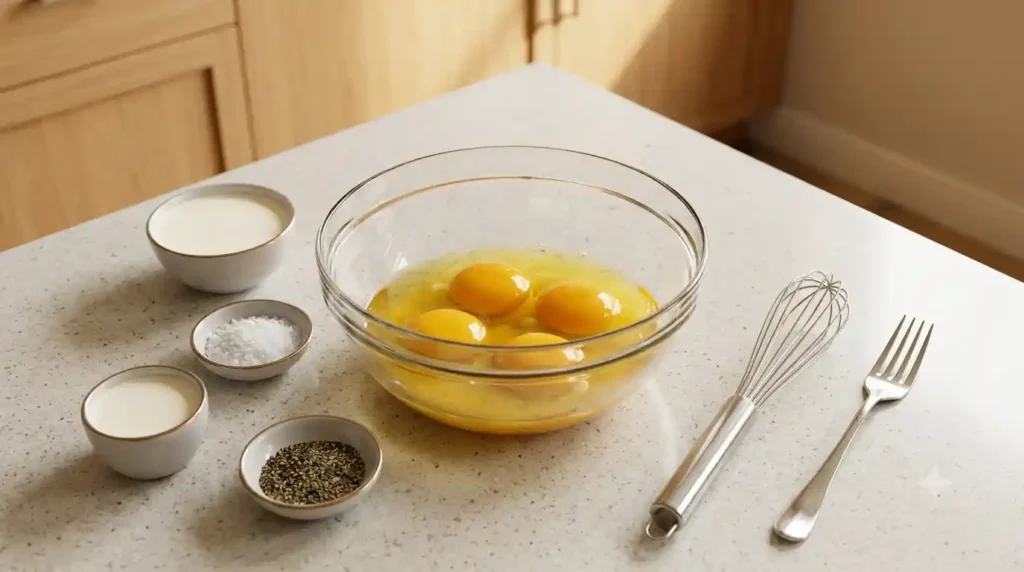
Crack the 4 duck eggs into a medium bowl. Add the heavy cream, sea salt, and black pepper.
Whisk gently for about 20–30 seconds, just until the yolks and whites are fully combined.
Don’t whip the eggs aggressively. You want a smooth mixture rather than lots of large air bubbles.
Kitchen tip: Duck egg shells can be thicker than chicken egg shells, so crack them firmly but carefully against a flat surface. If you get a shell fragment in the bowl, remove it with a larger piece of shell rather than chasing it around with your fingers.
Step 2: Warm the Pan Slowly
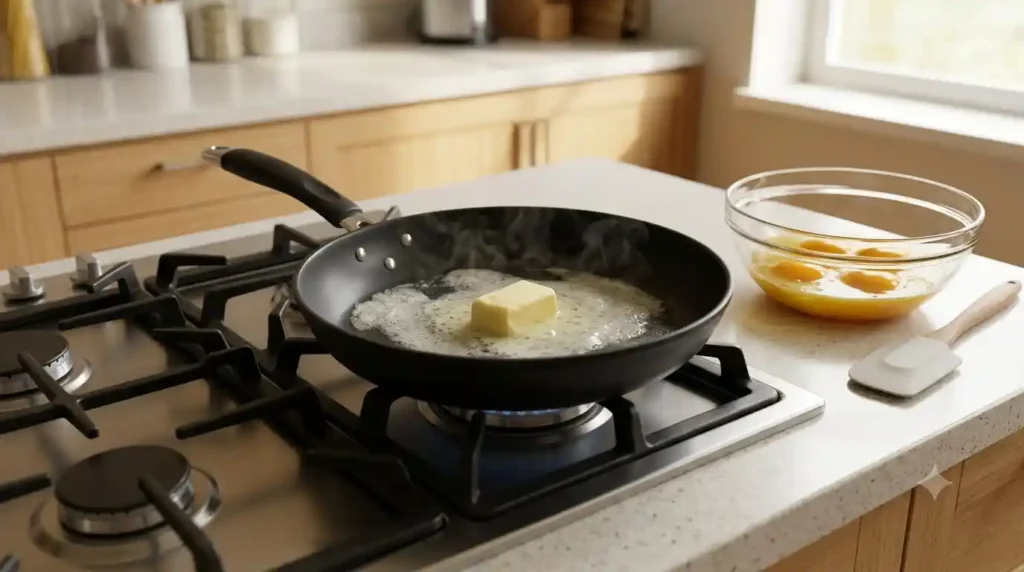
Place a nonstick skillet over low to medium-low heat.
Add the 1 tablespoon of butter and let it melt gently. The butter should become foamy but should not turn brown or smoke.
This is one of the most important parts of the recipe. Duck eggs are rich and can become rubbery if cooked too aggressively.
Step 3: Add the Egg Mixture
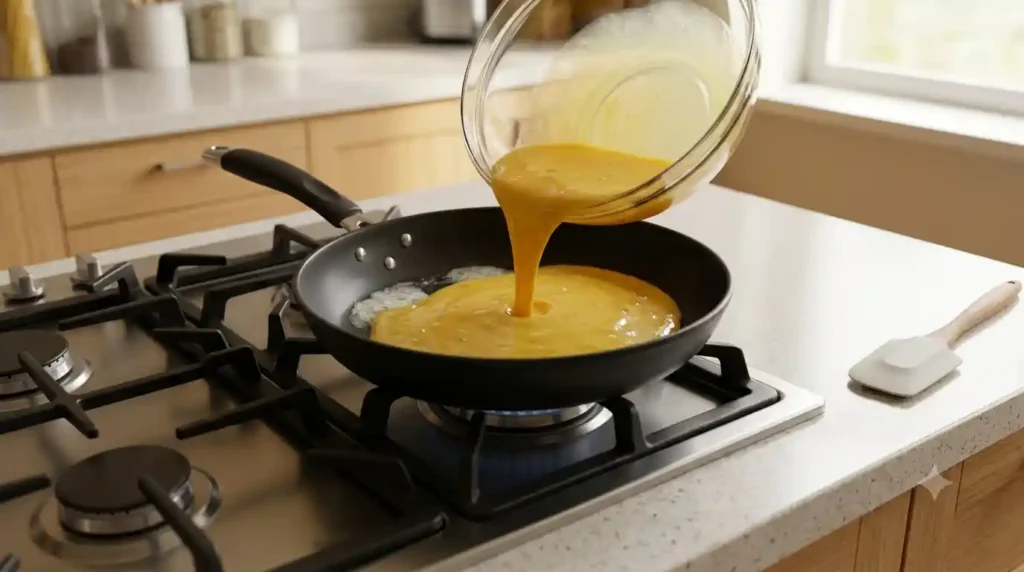
Pour the whisked duck eggs into the skillet.
Let them sit undisturbed for about 10 seconds, then use a silicone spatula to gently move the eggs from the edges toward the center.
Continue making slow, sweeping movements rather than constantly stirring.
Step 4: Build Soft, Creamy Curds
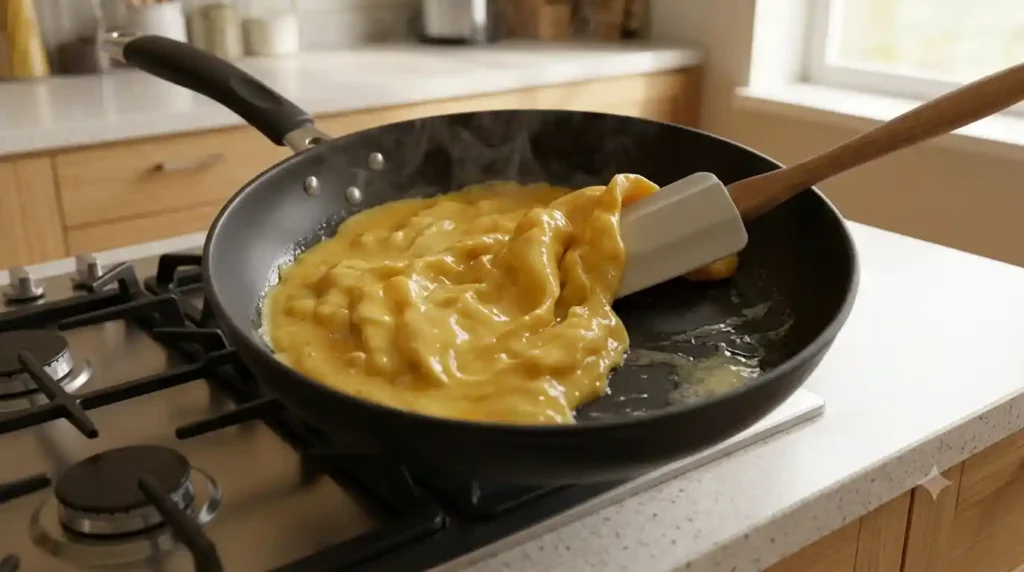
Keep the heat low and gently fold the eggs every few seconds.
Cook for approximately 3–5 minutes, depending on your pan and desired texture.
Remove the skillet from the heat when the eggs are mostly set but still slightly glossy. They’ll continue cooking from residual heat.
If the eggs look a little wetter than you expect, don’t panic. Taking them off the heat early is better than waiting until they look completely dry.
Step 5: Finish With Cheese and Chives
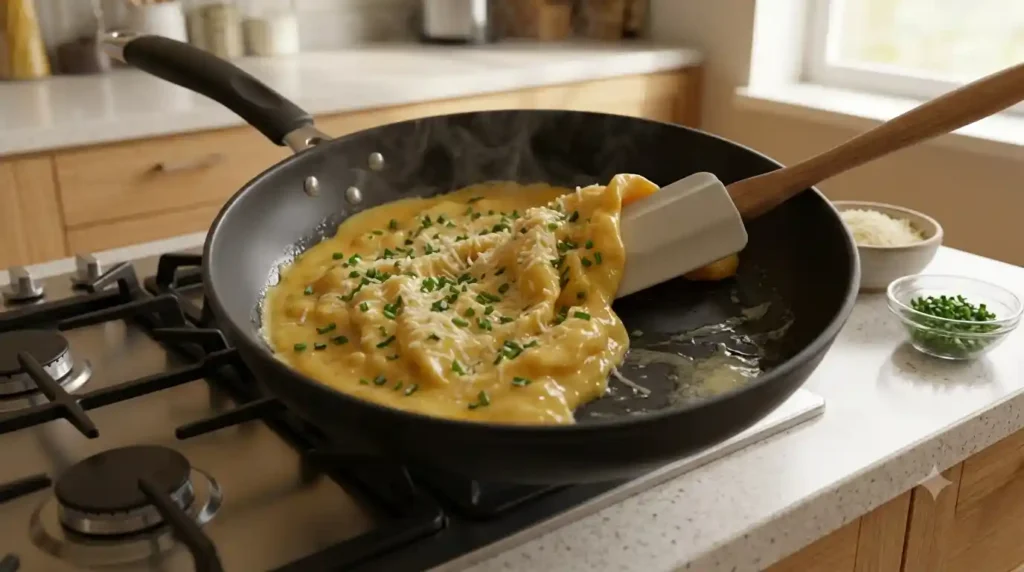
If using Parmesan, sprinkle the 1 teaspoon grated Parmesan over the eggs while they’re still warm.
Fold gently once or twice, then add the fresh chopped chives.
Taste and adjust the seasoning if needed.
Food safety note: Cook eggs until the whites and yolks are set to your preferred safe level, particularly when serving young children, older adults, pregnant people, or anyone with a weakened immune system. Avoid consuming raw or undercooked egg mixtures.
Step 6: Serve Immediately

Transfer the creamy duck eggs to warm plates immediately.
Serve with:
- Buttered sourdough or whole-grain toast
- Roasted tomatoes
- Sautéed mushrooms
- Avocado
- Fresh herbs
- Crispy potatoes
- A light green salad
For the best texture, eat the eggs right away. Scrambled eggs become firmer as they sit.
Health Benefits
Duck eggs are nutrient-dense and can be a satisfying part of a balanced breakfast.
Protein
Duck eggs provide a good amount of high-quality protein, which helps support muscle maintenance and keeps you feeling satisfied after breakfast.
Vitamin B12
Eggs are a useful source of vitamin B12, a nutrient involved in normal red blood cell formation and nervous system function.
Selenium
Duck eggs provide selenium, an essential mineral that supports normal thyroid function and antioxidant defenses.
Choline
Eggs are particularly notable for their choline content. Choline plays an important role in normal cell function and brain health.
Healthy fats
The yolk contains fats that contribute to the eggs’ rich flavor and satisfying texture. Because duck eggs are naturally rich, a modest serving can feel quite indulgent.
Keep in mind: Duck eggs are also relatively high in cholesterol and calories compared with some other egg options. Individual nutritional needs vary, so enjoy them as part of an overall balanced diet.
Nutrition Information (Per Serving)
Approximate nutrition for half of the recipe, including butter, cream, Parmesan, and chives:
| Nutrient | Per Serving |
|---|---|
| Calories | 335 kcal |
| Protein | 17 g |
| Fat | 28 g |
| Carbohydrates | 2 g |
| Fiber | 0 g |
| Sugar | 1 g |
| Sodium | 480 mg |
Nutrition values are estimates and can vary depending on egg size, brands, and exact ingredients used.
Pro Tips & Variations
For the creamiest duck eggs
Keep the heat low. High heat is the quickest way to turn beautifully rich eggs into dry, firm curds.
Don’t overcook them
Take the eggs off the heat when they’re still slightly glossy. The residual heat in the pan will finish the cooking.
Skip the cream if needed
You can make this recipe without heavy cream. Simply use the eggs, butter, salt, and pepper. The duck yolks provide plenty of richness on their own.
Try crème fraîche
For an extra luxurious version, replace the heavy cream with 1 tablespoon crème fraîche. Stir it in toward the end of cooking.
Add vegetables
Sauté chopped mushrooms, spinach, asparagus, or tomatoes separately and fold them into the finished eggs.
Make it cheesy
Cheddar, Gruyère, Parmesan, or goat cheese can all work well. Add cheese toward the end so it melts without making the eggs heavy.
Add smoked salmon
For a weekend brunch, serve the eggs with smoked salmon, fresh dill, and toasted sourdough.
Don’t overcrowd the pan
If you’re doubling the recipe, use a larger skillet. Crowding the pan can make the eggs release moisture and cook unevenly.
How Much Does It Cost to Make?
Prices vary by location, but here’s a reasonable estimate for a two-serving batch in the USA:
| Ingredient | Estimated Cost |
|---|---|
| 4 duck eggs | $3.50–$5.00 |
| Butter | $0.25 |
| Heavy cream | $0.20 |
| Chives | $0.30 |
| Parmesan | $0.20 |
| Salt & pepper | $0.10 |
| Estimated Total | $4.55–$6.05 |
| Approx. Cost Per Serving | $2.28–$3.03 |
Duck eggs are usually more expensive than standard chicken eggs, but you don’t need many to make a satisfying meal. If you already have butter, seasonings, and herbs at home, the actual out-of-pocket cost can be lower.
Frequently Asked Questions
Are duck eggs better than chicken eggs?
Duck eggs aren’t necessarily “better,” but they are richer and more yolk-heavy, which gives recipes a creamier texture. They’re especially enjoyable in scrambled eggs, baking, custards, and sauces.
Do duck eggs taste different from chicken eggs?
Yes, slightly. Duck eggs tend to have a richer, deeper yolk flavor and a more substantial texture. Once cooked with butter and gentle heat, they make an especially creamy scramble.
How long should duck eggs be cooked?
For creamy scrambled duck eggs, expect roughly 3–5 minutes over low to medium-low heat after adding them to the pan. Cooking time depends on your skillet, heat level, and preferred texture.
Can I use duck eggs in place of chicken eggs?
In many recipes, yes. Duck eggs can usually replace chicken eggs, but because they are larger and richer, you may need to adjust quantities slightly when baking or following recipes where egg size affects the structure.
Final Thoughts
If you’ve never cooked duck eggs before, this is a great place to start. The recipe is simple, but the result feels special: rich yolks, soft creamy curds, buttery flavor, and a fresh finish from chives.
The biggest secret is patience. Keep the heat gentle, don’t rush the curds, and take the pan off the stove while the eggs still look slightly glossy. Serve them with warm toast and your favorite breakfast sides, and you may find yourself reaching for duck eggs the next time you’re craving something extra comforting.