

There’s something deeply satisfying about cooking a batch of pork ribs when you’re craving proper comfort food. The smell of garlic and spices hitting the kitchen, the sound of ribs sizzling in hot oil, and that first crispy bite make the little bit of extra effort completely worth it. Deep frying is especially good when you want ribs with serious crunch rather than a sticky, saucy finish.
The trick is getting that crisp exterior without leaving the meat chewy inside. This recipe uses a flavorful marinade, a light starch coating, and controlled frying temperature to produce ribs that are golden and crunchy outside while staying juicy and tender inside. It’s straightforward enough for a weekend home cook but delivers restaurant-style results.
Deep Fried Pork Ribs Recipe for Tender, Crispy Results
These deep fried pork ribs combine a savory garlic-soy marinade with a thin, crisp coating. Cutting the ribs into individual pieces helps them cook evenly, while cornstarch creates a delicate crust without turning the ribs heavy or doughy.
Prep & Cook Time
| Detail | Time / Amount |
|---|---|
| Prep Time | 15 minutes |
| Marinating Time | 45 minutes |
| Cook Time | 20–25 minutes |
| Total Time | About 1 hour 25 minutes |
| Servings | 4 |
Note: Cooking time can vary depending on the thickness and meatiness of your ribs.
What Equipment Do You Need?
You don’t need restaurant equipment to make crispy pork ribs at home. A few basic kitchen tools will do the job:
- Large mixing bowl
- Sharp knife
- Cutting board
- Measuring spoons and cups
- Heavy-bottomed Dutch oven or deep saucepan
- Kitchen tongs or a spider strainer
- Instant-read meat thermometer
- Wire cooling rack
- Rimmed baking sheet
- Paper towels
Safety tip: A deep, heavy pot is much safer than a shallow frying pan. Never fill the pot more than halfway with oil because hot oil can bubble aggressively when the ribs are added.
Ingredients
For the Pork Ribs
- 2 lb (900 g) pork spare ribs, cut into individual rib pieces
- 2 tablespoons soy sauce
- 1 tablespoon rice vinegar
- 1 tablespoon brown sugar
- 1 tablespoon grated fresh ginger
- 4 garlic cloves, finely minced
- 1 teaspoon toasted sesame oil
- 1 teaspoon kosher salt
- ½ teaspoon freshly ground black pepper
- ½ teaspoon smoked paprika
- ¼ teaspoon cayenne pepper, optional
For the Crispy Coating
- ¾ cup cornstarch
- ¼ cup all-purpose flour
- ½ teaspoon baking powder
- ½ teaspoon garlic powder
For Frying
- 4–6 cups neutral frying oil, such as canola, vegetable, or peanut oil
Optional Garnish
- 2 green onions, thinly sliced
- Sesame seeds
- Fresh cilantro
- Chili flakes
- Lemon or lime wedges
Why Each Ingredient Matters
Great fried ribs aren’t simply about throwing seasoned pork into hot oil. Each ingredient has a job.
| Ingredient | Why It Matters |
|---|---|
| Pork spare ribs | Rich in fat and connective tissue, giving the ribs deep pork flavor and juiciness. |
| Soy sauce | Provides salt, savory umami flavor, and better browning. |
| Rice vinegar | Adds acidity that balances the richness of the pork. |
| Brown sugar | Adds subtle sweetness and encourages caramelization. |
| Garlic | Gives the ribs a bold, savory aroma. |
| Fresh ginger | Adds warmth and freshness that cuts through the richness. |
| Sesame oil | Adds a nutty, toasted background flavor. |
| Cornstarch | Creates the light, brittle crunch that makes these ribs special. |
| Flour | Gives the coating enough structure to cling to the meat. |
| Baking powder | Helps create a lighter, slightly blistered exterior. |
| Neutral oil | Allows you to fry at high temperatures without overpowering the pork. |
Cornstarch is particularly important. Using mostly cornstarch rather than flour gives you a thinner, crisper shell instead of a thick fried-chicken-style coating.
Step-by-Step Instructions
Step 1: Cut and Prepare the Ribs
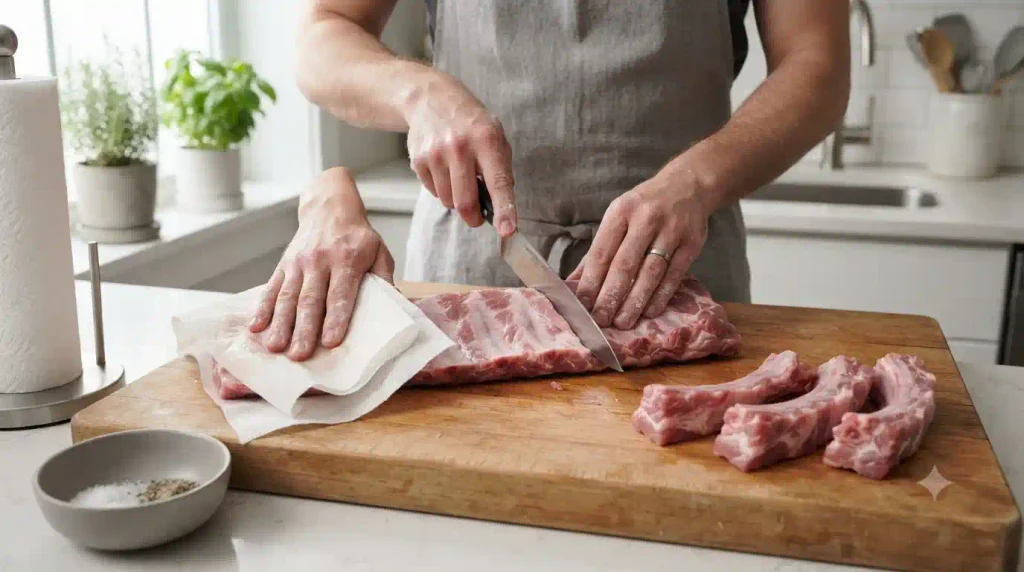
If your butcher hasn’t already separated the ribs, place the rack meat-side down on a sturdy cutting board.
Using a sharp knife, carefully cut between each bone to create individual ribs. If the ribs are unusually large, ask your butcher to cut the rack crosswise into smaller sections before you bring it home.
Pat the ribs thoroughly dry with paper towels.
Removing excess surface moisture helps the marinade cling to the pork and reduces unnecessary splattering later.
Step 2: Marinate the Pork
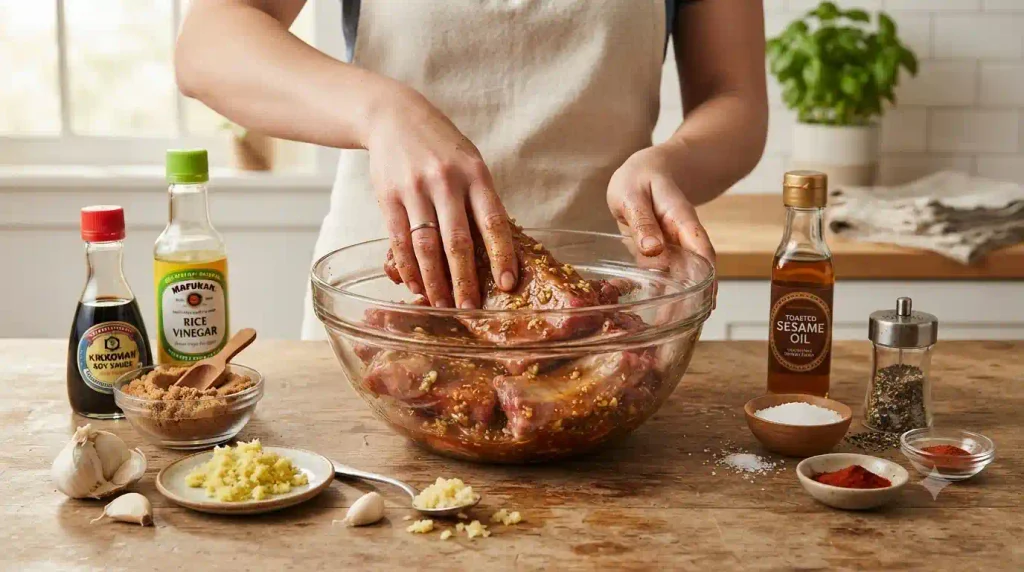
Place the ribs in a large mixing bowl.
Add:
- Soy sauce
- Rice vinegar
- Brown sugar
- Ginger
- Garlic
- Sesame oil
- Salt
- Black pepper
- Smoked paprika
- Cayenne, if using
Massage everything into the ribs until every piece is coated.
Cover and refrigerate for at least 45 minutes. For deeper flavor, you can marinate them for up to 4 hours.
Don’t leave the ribs sitting on the counter while they marinate. Raw pork should remain refrigerated.
Step 3: Coat the Ribs
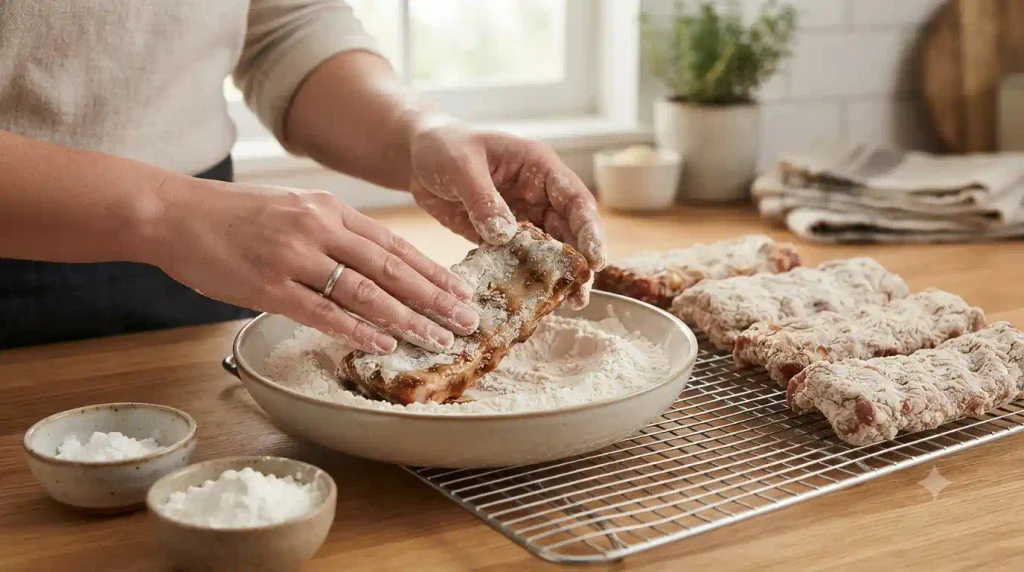
In a separate shallow bowl, combine:
- Cornstarch
- All-purpose flour
- Baking powder
- Garlic powder
Remove the ribs from the marinade one at a time and allow excess liquid to drip back into the bowl.
Roll each rib thoroughly through the starch mixture.
Press the coating gently against the meat with your fingers.
You want a thin, slightly uneven coating. Don’t worry if it looks a little patchy—that texture actually creates extra crispy edges once it hits the oil.
Place the coated ribs on a wire rack for about 5–10 minutes while you heat the oil.
Step 4: Heat the Frying Oil
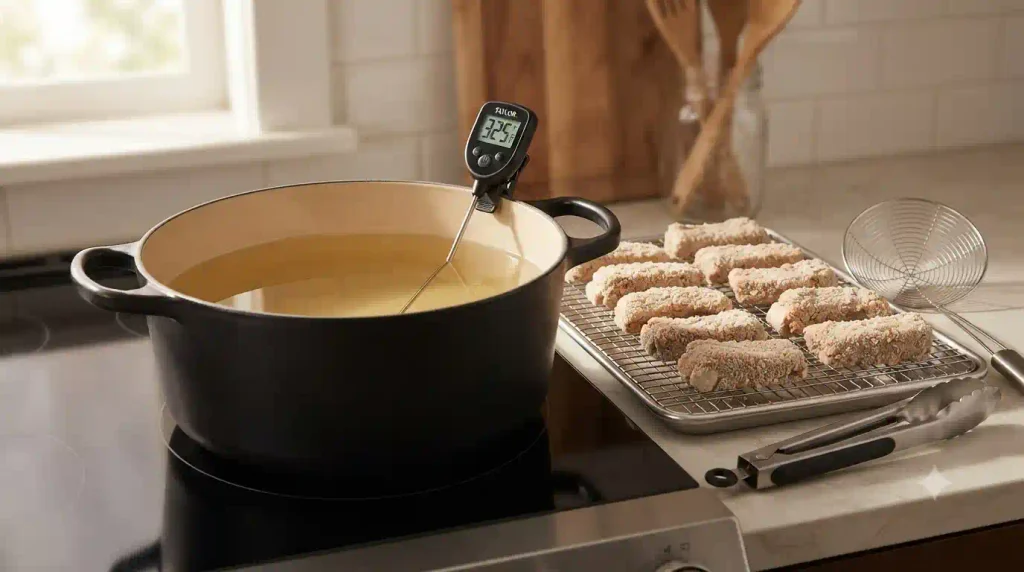
Pour enough oil into a heavy-bottomed pot to provide roughly 2–3 inches of frying depth.
Heat the oil to 325°F (163°C).
A thermometer makes a big difference here. If the oil is too cool, the coating absorbs excessive oil. If it’s too hot, the exterior can brown before the meat cooks properly.
Never leave heating oil unattended.
Keep the pot handle turned inward and make sure children and pets stay away from the stove while you’re frying.
Step 5: Fry Until Tender and Golden
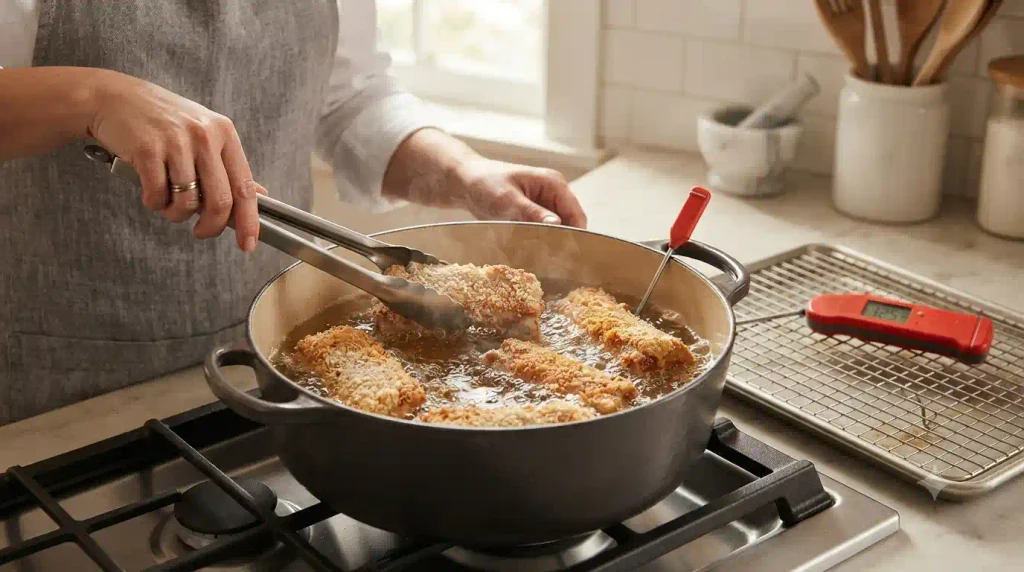
Carefully lower several ribs into the hot oil using tongs.
Do not overcrowd the pot.
Fry in small batches so the oil temperature doesn’t suddenly collapse.
Cook for approximately 7–10 minutes, depending on the size and thickness of the ribs, turning occasionally for even browning.
Because rib thickness varies considerably, don’t judge doneness by color alone.
Check the thickest meaty section with an instant-read thermometer, keeping the probe away from the bone. Pork must reach at least 145°F (63°C) with appropriate resting, though ribs generally benefit from cooking beyond the minimum safe temperature because their connective tissue needs more cooking to become tender.
Transfer the cooked ribs to a wire rack.
Step 6: Crisp, Rest, and Serve
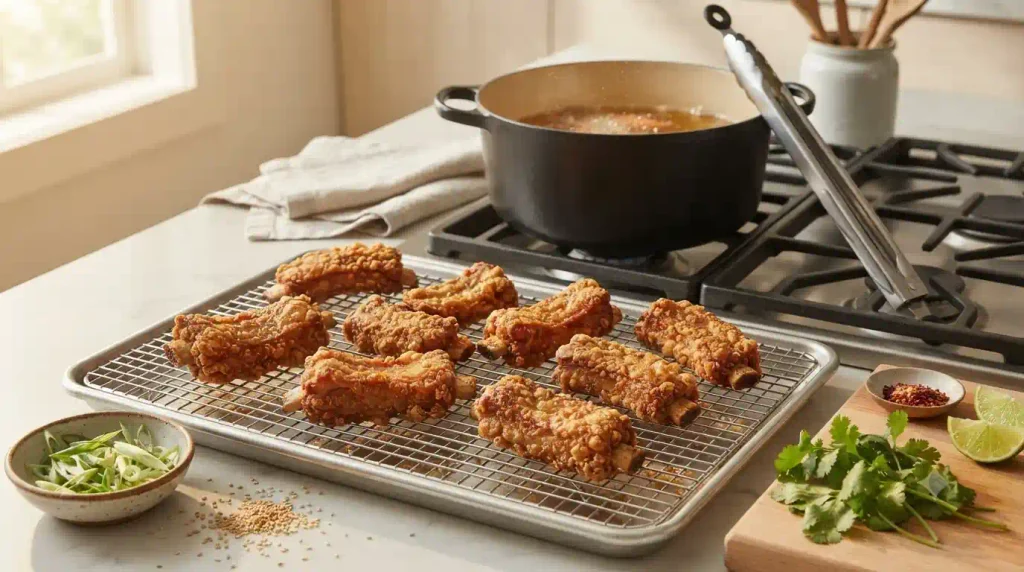
For an especially crisp restaurant-style finish, increase the oil temperature to approximately 375°F (190°C).
Return the cooked ribs to the oil in small batches for another 1–2 minutes, until deeply golden and crisp.
Transfer them immediately to the wire rack.
Avoid piling freshly fried ribs onto each other or sealing them in a bowl. Trapped steam quickly softens that beautiful crust.
Let them rest for several minutes before serving.
Finish with green onions, sesame seeds, cilantro, chili flakes, or a squeeze of fresh lime.
Serve while hot and crispy.
Health Benefits
Deep fried pork ribs are definitely an indulgent meal rather than everyday health food, but they still provide several valuable nutrients.
High-quality protein: Pork provides complete protein containing all essential amino acids. Protein supports muscle maintenance, recovery, and normal body function.
B vitamins: Pork is naturally rich in several B vitamins, particularly thiamine (vitamin B1), which plays an important role in energy metabolism.
Iron and zinc: Pork provides minerals including iron and zinc. Zinc contributes to normal immune function, while iron plays a role in transporting oxygen through the body.
Garlic and ginger: These aromatic ingredients contribute flavor without requiring heavy sauces and also contain naturally occurring plant compounds.
That said, deep frying substantially increases the calorie and fat content of the finished dish. Enjoy these ribs as an occasional comfort-food meal and pair them with vegetables, slaw, cucumber salad, or another fresh side for a more balanced plate.
Nutrition Information (Per Serving)
Estimated values for 1 of 4 servings:
| Nutrient | Approximate Amount |
|---|---|
| Calories | 620 kcal |
| Protein | 33 g |
| Fat | 45 g |
| Carbohydrates | 21 g |
Nutrition note: These figures are estimates. The actual nutritional content can vary significantly based on the amount of meat on the ribs, coating retained, oil absorbed, ingredients used, and serving size.
Pro Tips & Variations
Keep Your Oil Temperature Steady
This is probably the biggest difference between crisp ribs and greasy ribs.
When cold pork enters the pot, the oil temperature drops naturally. Frying too many ribs simultaneously makes that drop much worse.
Cook in batches and give the oil time to return to temperature between them.
Use a Wire Rack Instead of Paper Towels
Paper towels absorb surface oil, but the underside of hot fried food can also steam against them.
A wire rack allows air to circulate around the ribs, helping the coating stay crisp.
Place a baking sheet underneath the rack to catch drips and save yourself some cleanup.
Try the Double-Fry Technique
The first fry cooks the meat and sets the coating.
The quick second fry at a higher temperature removes additional surface moisture and gives the ribs an extra-crunchy finish.
It’s a small restaurant trick that works beautifully at home.
Make Them Spicier
Add ½–1 teaspoon cayenne pepper to the coating or toss the finished ribs with:
- Chili flakes
- Sliced fresh chilies
- Chili crisp
- Hot sauce
Make Salt-and-Pepper Pork Ribs
Skip the sweet finishing sauces.
After frying, toss the ribs lightly with sautéed garlic, green onions, fresh chilies, cracked black pepper, and a small pinch of salt.
Add a Sweet and Spicy Glaze
Combine a little honey with chili sauce and brush it lightly over the finished ribs.
Don’t drown them in sauce. Too much moisture will soften the coating you worked so hard to crisp.
No Rice Vinegar?
Use apple cider vinegar or fresh lime juice instead.
The flavor will change slightly, but both provide the acidity needed to balance fatty pork.
Don’t Reuse Burnt Oil
Small pieces of coating may fall from the ribs and collect at the bottom of the pot. If those crumbs begin burning, they’ll give later batches a bitter taste.
Carefully skim loose crumbs between batches when necessary.
How Much Does It Cost to Make?
For a home cook in the United States, the approximate cost might look like this:
| Ingredient | Estimated Cost Used |
|---|---|
| 2 lb pork spare ribs | $7.00–$10.00 |
| Soy sauce & sesame oil | $0.75 |
| Garlic & ginger | $0.80 |
| Cornstarch & flour | $0.60 |
| Seasonings | $0.40 |
| Frying oil used/absorbed | $2.00–$3.00 |
| Optional garnish | $1.00 |
| Estimated Total | $12.55–$16.55 |
For four servings, that’s roughly $3.15–$4.15 per serving.
Prices naturally vary by location, store, rib cut, and brand. Buying larger racks when they’re on sale can bring the cost down considerably.
Frequently Asked Questions
How do you make deep fried pork ribs tender?
Tender ribs need more than an aggressively hot fryer. Keep the initial frying temperature around 325°F (163°C) so the exterior doesn’t brown too quickly.
The size of the ribs also matters. Extremely thick spare ribs can become dark outside before enough heat reaches the center. Smaller individual rib pieces are much easier to fry successfully.
For exceptionally thick or tough ribs, you can gently pre-cook them before coating and frying.
How long does it take to deep fry pork ribs?
Individual pork ribs generally take around 7–10 minutes during the initial fry in this recipe, followed by an optional 1–2 minute second fry for extra crispness.
However, cooking time should never be your only test.
Ribs vary enormously in thickness and meat content, so always verify doneness with an instant-read thermometer.
What temperature should I deep fry pork ribs?
Use approximately 325°F (163°C) for the first fry.
For extra crisp ribs, increase the oil to around 375°F (190°C) and fry the cooked ribs again for 1–2 minutes.
The two-temperature method gives you much better control over cooking and crisping.
How do you keep fried pork ribs crispy?
Place freshly fried ribs on a wire cooling rack rather than stacking them in a bowl.
Steam is the enemy of crispy fried food.
You should also avoid covering the ribs while they’re still hot. If you’re adding sauce, serve it alongside the ribs for dipping or add only a light coating immediately before serving.
Final Thoughts
Making deep fried pork ribs at home isn’t complicated, but temperature control makes all the difference. Give the ribs enough room in the pot, keep an eye on your thermometer, and don’t rush the batches.
That quick second fry is worth doing when you’re chasing a truly crunchy exterior. Add something fresh and acidic on the side, bring the ribs straight to the table, and don’t be surprised when the crispiest pieces disappear first.
Once you’ve mastered the basic technique, you can easily switch up the seasonings and turn the same method into spicy chili ribs, salt-and-pepper ribs, garlic ribs, or sticky sweet-and-spicy ribs.