

There’s something deeply satisfying about turning a simple pork chop into a dinner that feels restaurant-worthy. When the craving hits for something golden, crunchy, juicy, and comforting, pork schnitzel is hard to beat. That first crackle through the breadcrumb crust followed by tender pork is exactly why this dish disappears so quickly at my table.
This version takes classic schnitzel one step further with a glossy “liquid gold” pan sauce made from the flavorful bits left in the skillet. It’s buttery, lemony, savory, and bright enough to balance the crispy pork. Best of all, the whole meal uses everyday ingredients and comes together without complicated techniques.
Prep & Cook Time
| Details | Time / Amount |
|---|---|
| Prep Time | 20 minutes |
| Cook Time | 20 minutes |
| Total Time | 40 minutes |
| Servings | 4 |
What Equipment Do You Need?
You don’t need restaurant equipment to make great schnitzel. A few basic kitchen tools will do the job:
- Large heavy skillet – Cast iron or stainless steel works especially well.
- Meat mallet or rolling pin – For pounding the pork thin and even.
- Cutting board – Use a washable board when handling raw pork.
- Plastic wrap or parchment paper – Keeps the kitchen cleaner while pounding.
- 3 shallow bowls or plates – For flour, eggs, and breadcrumbs.
- Kitchen tongs – Makes flipping the schnitzel safer and easier.
- Whisk – For the egg mixture and pan sauce.
- Instant-read thermometer – Helpful for checking that the pork is safely cooked.
- Paper towels or wire rack – For resting the fried schnitzel.
Ingredients
For the Pork Schnitzel
- 4 boneless pork loin chops, about 5–6 oz (140–170 g) each
- 1/2 cup (65 g) all-purpose flour
- 1 teaspoon kosher salt, divided
- 1/2 teaspoon freshly ground black pepper
- 1/2 teaspoon garlic powder
- 2 large eggs
- 1 tablespoon milk or water
- 1 1/2 cups (90 g) panko breadcrumbs
- 1/2 teaspoon smoked or sweet paprika
- 1/3–1/2 cup neutral cooking oil, as needed for shallow frying
For the Liquid Gold Pan Sauce
- 2 tablespoons unsalted butter, divided
- 1 small shallot, finely minced
- 1 garlic clove, minced
- 3/4 cup (180 ml) low-sodium chicken stock
- 1 teaspoon Dijon mustard
- 1 tablespoon fresh lemon juice
- 1 teaspoon finely grated lemon zest
- 1 teaspoon honey, optional
- 1 tablespoon chopped fresh parsley
- Salt and black pepper, to taste
For Serving
- Fresh lemon wedges
- Extra chopped parsley, optional
Why Each Ingredient Matters
Pork loin chops: Lean pork becomes tender and cooks extremely quickly once pounded thin. Keeping the thickness even also prevents one end from drying out before the other is cooked.
Flour: This first coating absorbs surface moisture from the pork and gives the beaten egg something to grip.
Eggs: Eggs form the sticky middle layer that holds the breadcrumbs firmly against the pork.
Panko breadcrumbs: Panko has larger, airier flakes than many traditional fine breadcrumbs, creating an especially light and crunchy crust.
Neutral oil: A neutral, higher-heat cooking oil lets the pork fry until golden without overpowering the other flavors.
Butter: Butter gives the pan sauce richness and helps create that glossy, restaurant-style finish.
Chicken stock: Stock loosens the browned bits stuck to the skillet. Those little bits may look messy, but they contain concentrated roasted flavor.
Dijon mustard: Mustard adds acidity, gentle heat, and complexity without making the sauce taste strongly of mustard.
Lemon: Pork schnitzel is rich and fried, so fresh lemon provides the acidity needed to keep every bite lively rather than heavy.
Shallot and garlic: These aromatics build a savory base for the sauce.
Honey: A tiny amount rounds out the lemon and mustard. It’s optional, but useful if your lemon is particularly sharp.
Parsley: Fresh herbs add color and a clean finish that cuts through the richness.
Step-by-Step Instructions
Step 1: Pound and Season the Pork
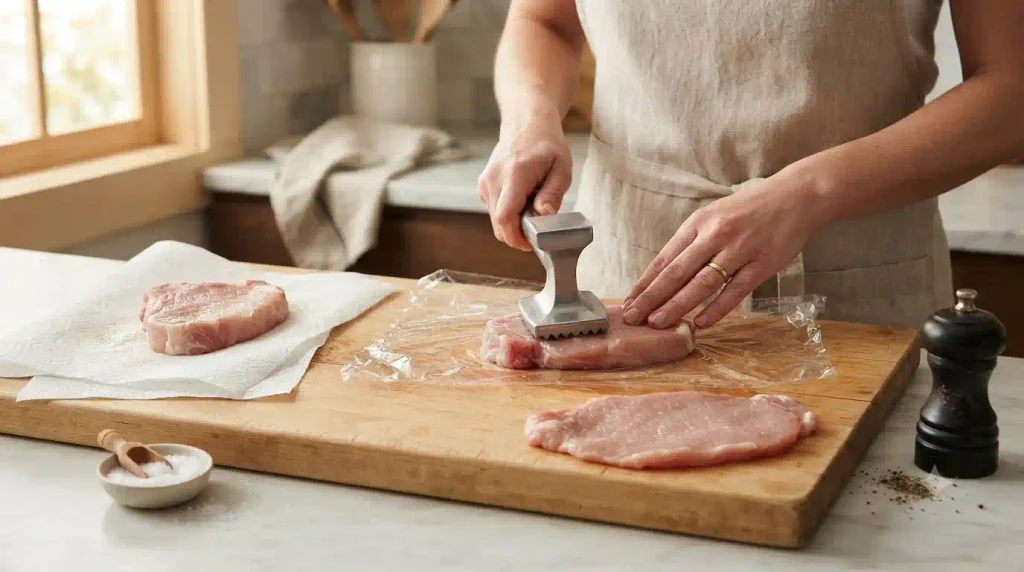
Place one pork chop between two pieces of plastic wrap or parchment paper.
Using the flat side of a meat mallet, gently pound the pork until it is approximately 1/4 inch (6 mm) thick. Work from the center toward the edges rather than hammering one spot repeatedly.
Repeat with the remaining chops.
Pat both sides dry with paper towels and season lightly with some of the salt and black pepper.
Chef tip: Even thickness matters more than making the pork paper-thin. Thick spots cook slowly while thin edges can become dry.
Wash your hands, utensils, and any surfaces that have contacted raw pork before touching cooked ingredients.
Step 2: Build the Breading Station
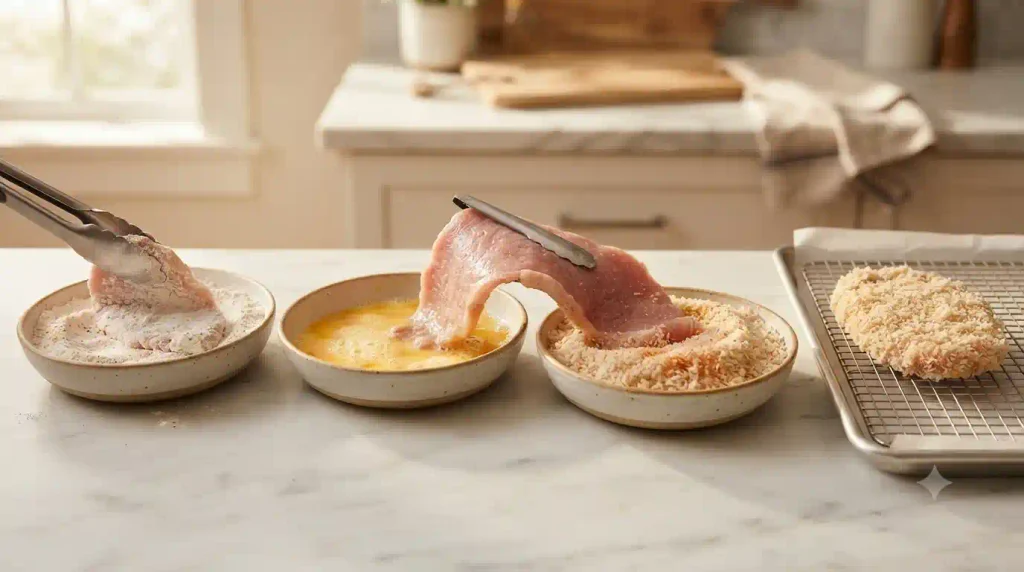
Arrange three shallow bowls in a row.
In the first bowl, combine:
- Flour
- Garlic powder
- Half the remaining salt
- Black pepper
In the second bowl, whisk:
- Eggs
- Milk or water
In the third bowl, combine:
- Panko breadcrumbs
- Paprika
- Remaining salt
Coat each pork cutlet lightly in flour and shake away the excess.
Dip it into the beaten egg, allowing extra egg to drip back into the bowl.
Finally, coat it thoroughly with the panko.
Press very gently. You want the breadcrumbs attached without crushing their airy texture.
Place the breaded cutlets on a clean plate.
Step 3: Fry Until Crispy and Golden
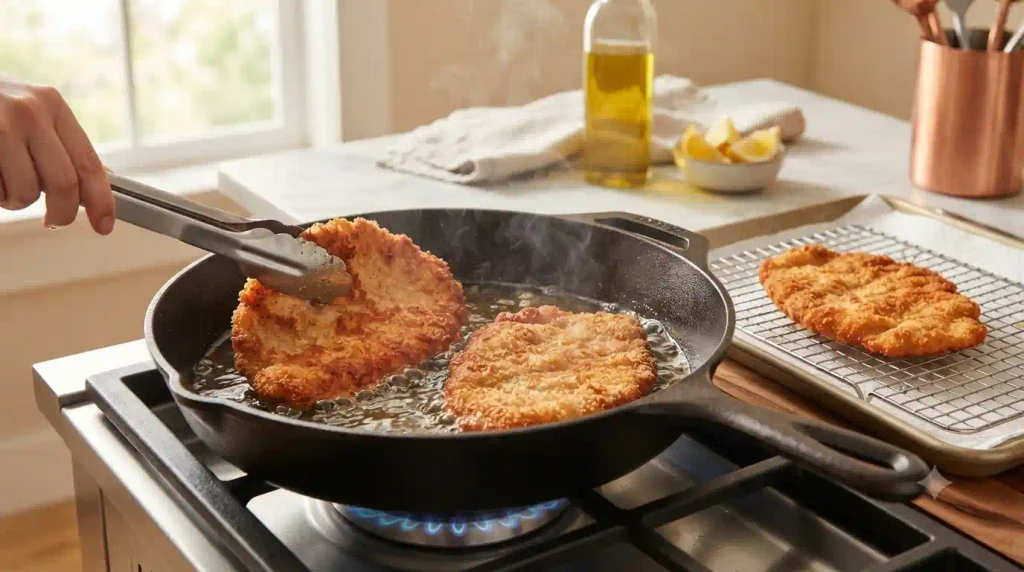
Pour enough oil into a large skillet to generously cover the bottom, roughly 1/4 inch deep.
Heat over medium-high heat.
Test the oil with a breadcrumb. It should immediately bubble and sizzle without burning.
Carefully add one or two cutlets depending on the size of your skillet. Do not crowd the pan.
Cook for roughly 2–3 minutes on the first side, until deeply golden.
Flip carefully and cook another 2–3 minutes, adjusting the heat if the breadcrumbs are browning too quickly.
For food safety, cook whole-muscle pork to 145°F (63°C) internally, followed by a short rest.
Transfer the schnitzel to a wire rack or paper towel-lined plate.
Repeat with the remaining pork, adding a little extra oil when necessary.
Step 4: Build the Liquid Gold Pan Sauce
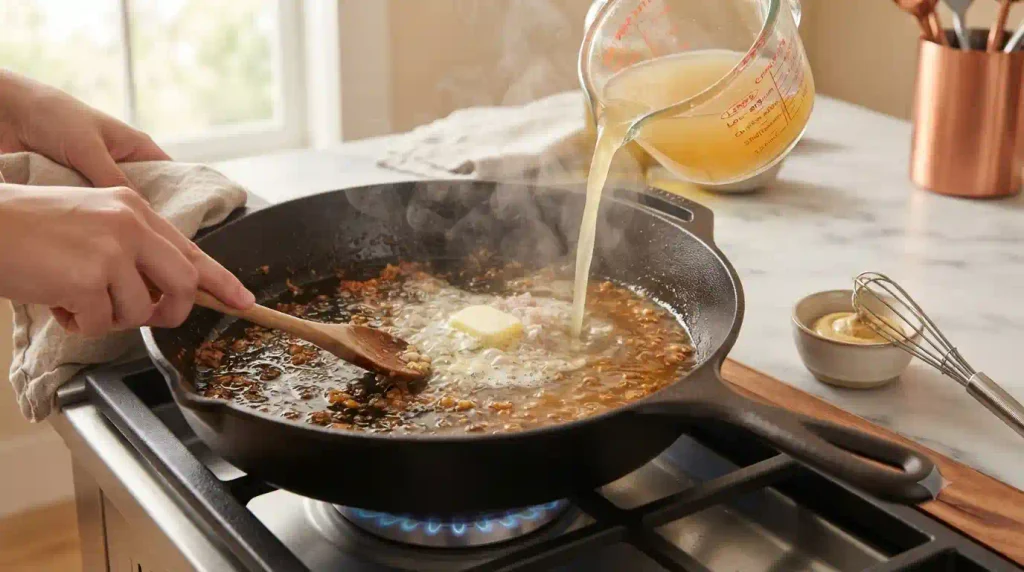
Carefully pour off most of the frying oil. Keep the flavorful browned bits in the skillet, but discard any obviously burned breadcrumb pieces.
Reduce the heat to medium.
Add 1 tablespoon butter and the minced shallot.
Cook for about 1–2 minutes, stirring until softened.
Add the garlic and cook for roughly 30 seconds. Garlic burns quickly, so keep it moving.
Pour in the chicken stock.
Use a wooden spoon to gently scrape the browned bits from the bottom of the skillet.
Whisk in the Dijon mustard.
Let the mixture simmer for approximately 3–5 minutes, until slightly reduced.
Step 5: Finish the Sauce
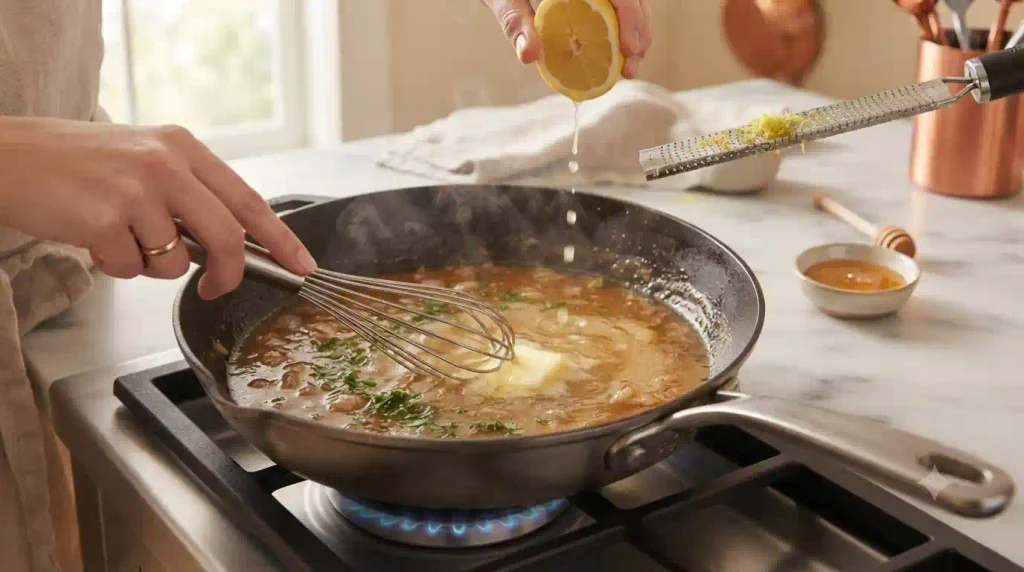
Lower the heat.
Stir in:
- Lemon juice
- Lemon zest
- Honey, if using
Remove the skillet from direct heat and whisk in the remaining 1 tablespoon cold butter.
This last piece of butter gives the sauce its silky texture and glossy “liquid gold” appearance.
Stir in the parsley.
Taste before adding additional salt. Stock and the seasoned pan drippings may already provide plenty.
The finished sauce should taste savory and buttery at first, followed by a clean lemony finish.
If it tastes too sharp, add a tiny touch more honey. If it tastes flat, another squeeze of lemon can wake it right up.
Step 6: Rest, Sauce and Serve
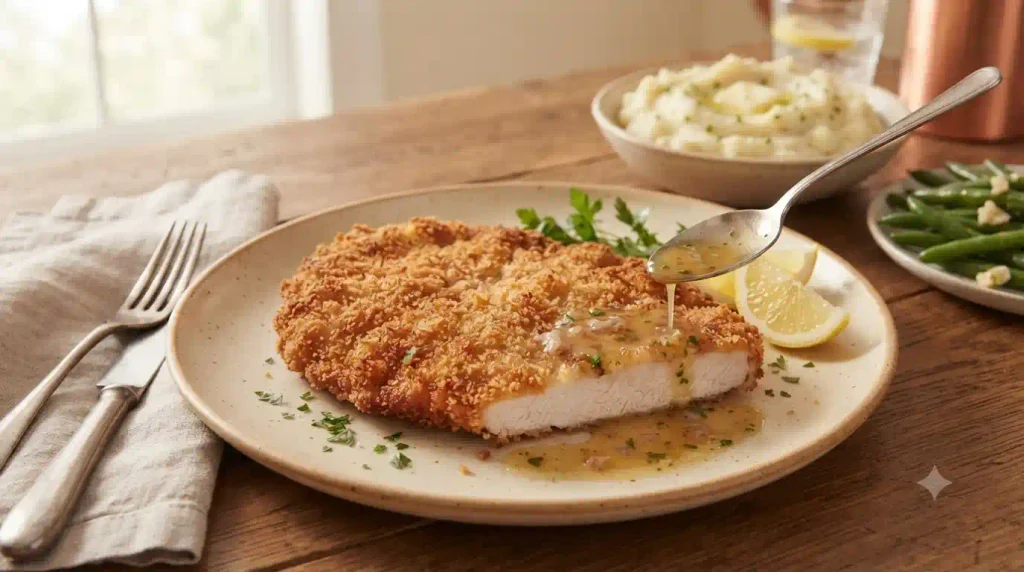
Let the pork schnitzel rest for 2–3 minutes.
Place each schnitzel on a warm plate.
Here’s an important trick: don’t completely drown that beautiful crust in sauce.
Spoon a little liquid gold sauce alongside the schnitzel or lightly over one section. This gives you both crisp and saucy bites.
Finish with chopped parsley and serve with fresh lemon wedges.
Mashed potatoes, roasted potatoes, buttered noodles, cucumber salad, green beans, or a crisp green salad all work beautifully alongside it.
Serve immediately while that breadcrumb crust is still wonderfully crunchy.
Health Benefits
Pork schnitzel is comfort food, but it can still provide valuable nutrients when enjoyed as part of a balanced meal.
High-quality protein: Pork provides complete protein containing the essential amino acids your body needs for muscle maintenance and tissue repair.
B vitamins: Pork is naturally rich in several B vitamins, particularly thiamine, which plays an important role in normal energy metabolism.
Iron and zinc: Pork contributes minerals including iron and zinc. Zinc supports normal immune function, while iron helps the body produce healthy red blood cells.
Portion flexibility: Because the pork is pounded thin, one modest chop becomes a surprisingly generous-looking serving.
Fresh aromatics: Garlic, parsley, shallot, and lemon provide flavor without requiring large quantities of sugar.
For a lighter plate, serve one schnitzel with a generous helping of vegetables or salad rather than fries.
You can also reduce the amount of oil absorbed by keeping your frying oil properly heated and allowing the cooked schnitzel to drain before serving.
Nutrition Information (Per Serving)
Approximate nutrition will vary depending on the size of the pork chops and how much frying oil and sauce are actually consumed.
| Nutrient | Approximate Amount |
|---|---|
| Calories | 560 kcal |
| Protein | 42 g |
| Fat | 30 g |
| Carbohydrates | 31 g |
These estimates are intended as a practical guide rather than medical dietary calculations.
Pro Tips & Variations
1. Pound the pork evenly
This is probably the biggest difference between average schnitzel and great schnitzel. Aim for about 1/4 inch thickness throughout.
2. Keep the breading light
A thick, compressed coating can become heavy. Shake off excess flour and don’t aggressively press the panko into the meat.
3. Watch your oil temperature
If the oil isn’t hot enough, the breading absorbs more fat and becomes greasy. If it’s excessively hot, the outside burns before the pork is properly cooked.
Aim for roughly 350°F (175°C) if you’re checking with a thermometer.
4. Cook in batches
Crowding lowers the oil temperature dramatically. Two perfectly crisp schnitzels are better than four soggy ones.
5. Keep finished schnitzel crisp
If you’re cooking several batches, place finished cutlets on a wire rack set over a baking sheet in a low 200°F (95°C) oven.
Don’t leave them there too long, though. Lean pork can eventually dry out.
6. Make it with regular breadcrumbs
No panko? Fine dry breadcrumbs work. The crust will simply be finer and slightly denser.
7. Try chicken
Thin chicken breast cutlets can replace the pork. Cooking time may vary, and poultry should reach 165°F (74°C) internally.
8. Make the sauce creamier
Add 2–3 tablespoons heavy cream after reducing the chicken stock. Simmer gently before finishing with butter.
9. Add capers
A tablespoon of drained capers gives the lemon-butter sauce a salty, briny edge.
10. Want extra lemon flavor?
Serve lemon wedges at the table instead of dramatically increasing the juice in the sauce. Too much juice can overpower the butter and stock.
How Much Does It Cost to Make?
Prices vary by store, season, and location, but this remains a fairly affordable restaurant-style dinner for four.
Estimated U.S. Grocery Cost
| Ingredient | Estimated Cost Used |
|---|---|
| Pork loin chops | $6.00–$8.00 |
| Flour + seasonings | $0.50 |
| Eggs | $0.75–$1.00 |
| Panko breadcrumbs | $1.00 |
| Cooking oil | $0.75–$1.00 |
| Butter | $0.50 |
| Chicken stock | $0.75 |
| Shallot + garlic | $0.75 |
| Lemon | $0.75 |
| Dijon mustard | $0.20 |
| Parsley | $0.75 |
| Estimated Total | $12.70–$15.70 |
That works out to roughly $3.20–$3.95 per serving, before side dishes.
In the UK, ingredient prices and package sizes differ, but pork loin is generally an accessible cut and the remaining ingredients are mostly inexpensive pantry staples.
Frequently Asked Questions
How do you keep pork schnitzel crispy?
Start with dry pork, shake away excess flour, use hot oil, and avoid overcrowding the skillet.
After frying, place schnitzel on a wire rack rather than stacking the pieces. Stacking traps steam, and steam is the enemy of crisp breading.
Also avoid pouring lots of sauce directly over the entire schnitzel. Serve most of it underneath or alongside the pork.
Why does the breading fall off my pork schnitzel?
Several things can cause this.
The pork may have been too wet before breading, too much flour may have remained on the surface, or the cutlet may have been moved excessively during frying.
Follow the simple sequence:
Dry pork → flour → egg → breadcrumbs → hot oil.
Once the schnitzel enters the skillet, give the crust time to set before flipping it.
Can I make pork schnitzel ahead of time?
You can bread the pork several hours ahead.
Arrange the breaded cutlets in a single layer, cover them, and refrigerate until you’re ready to cook.
For the best texture, however, fry schnitzel shortly before serving. Refrigerated cooked schnitzel loses some of its signature crunch.
What is the best oil for frying schnitzel?
Use a neutral cooking oil suitable for frying, such as canola, vegetable, sunflower, or avocado oil.
You don’t need to deep-fry the pork. A shallow layer of oil is enough because the cutlets are thin.
Avoid relying entirely on butter for frying. Butter’s milk solids can burn before you’ve finished cooking all the schnitzel. Save that buttery flavor for the pan sauce instead.
Final Thoughts
This Epic Pork Schnitzel Recipe With a Liquid Gold Pan Sauce proves you don’t need complicated ingredients to make an impressive dinner.
The magic comes from getting the basics right: pound the pork evenly, build a light breadcrumb coating, keep the frying oil hot, and turn those flavorful pan drippings into a buttery lemon sauce.
Don’t chase absolute perfection on your first batch. My first cutlet is occasionally a little lighter or darker than the others while I dial in the stove temperature—that’s normal home cooking.
Once you hear that crisp crust crack beneath your knife and taste it with the warm lemon-butter sauce, you’ll understand why this is the kind of dinner worth making again.