

Craving something crispy, creamy, sweet, and savory all at once? Crab rangoon is exactly the kind of snack that sends you into the kitchen “just to make a few,” only to discover the whole plate disappearing. The contrast between the shatteringly crisp wrapper and warm cream cheese filling makes these little parcels hard to resist.
The frustrating part is when they split open in the oil and the filling escapes. This version focuses on a thick, well-balanced filling, proper sealing, and controlled frying temperature. The result is golden crab rangoon with crisp edges, a creamy center, and a lightly sweet restaurant-style flavor—without turning your frying oil into a cream-cheese mess.
Prep & Cook Time
| Details | Time / Amount |
|---|---|
| Prep Time | 20 minutes |
| Cook Time | 12–15 minutes |
| Total Time | 35 minutes |
| Servings | 6 |
| Yield | About 24 crab rangoons |
What Equipment Do You Need?
You don’t need restaurant equipment to get properly crisp crab rangoon. A few basic kitchen tools will do the job:
- Medium mixing bowl
- Silicone spatula or sturdy spoon
- Measuring spoons and cups
- Baking sheet or large plate
- Small bowl of water
- Heavy-bottomed saucepan, Dutch oven, or deep skillet
- Kitchen thermometer
- Slotted spoon or spider strainer
- Wire cooling rack or paper towels
- Small cookie scoop or teaspoon
Chef’s tip: A thermometer is especially useful here. Oil that’s too cool creates greasy wrappers, while excessively hot oil can brown the outside before the filling is properly heated.
Ingredients
For the Crab Rangoon
- 8 oz (225 g) full-fat cream cheese, softened
- 6 oz (170 g) crab meat, well drained and finely chopped
- 2 green onions, finely sliced
- 1 1/2 tablespoons powdered sugar
- 1 teaspoon Worcestershire sauce
- 1 teaspoon soy sauce
- 1/2 teaspoon garlic powder
- 1/4 teaspoon onion powder
- 1/4 teaspoon fine salt, or to taste
- 24 square wonton wrappers
- 2–3 tablespoons water, for sealing
- 4–6 cups neutral frying oil, such as canola or vegetable oil
Optional Sweet Dipping Sauce
- 1/3 cup sweet chili sauce
- 1 tablespoon rice vinegar
- 1 teaspoon honey
Why Each Ingredient Matters
| Ingredient | Why It’s Important |
|---|---|
| Cream cheese | Creates the rich, smooth center and helps bind the filling. Full-fat cream cheese stays thicker than many reduced-fat versions. |
| Crab meat | Provides delicate seafood flavor and a little protein. Draining it thoroughly helps prevent watery filling. |
| Powdered sugar | Gives the filling that subtle sweetness associated with American Chinese restaurant-style crab rangoon while dissolving smoothly. |
| Green onions | Cut through the richness with fresh, mild onion flavor. |
| Worcestershire sauce | Adds savory depth and gentle tang. |
| Soy sauce | Provides salt and umami without needing lots of additional seasoning. |
| Garlic powder | Distributes evenly through the filling without introducing moisture from fresh garlic. |
| Onion powder | Adds another savory layer without changing the creamy texture. |
| Wonton wrappers | Fry into the thin, blistered, crunchy shell that makes crab rangoon so satisfying. |
| Water | Softens the wrapper edges so they can stick together securely. |
| Neutral oil | Allows the wrappers to fry crisp without introducing a strong competing flavor. |
The biggest enemy of crab rangoon is excess moisture. If your crab is wet or the filling is overloaded, steam builds inside the wrapper and increases the chance of splitting.
Step-by-Step Instructions
Step 1: Make the Creamy Crab Filling
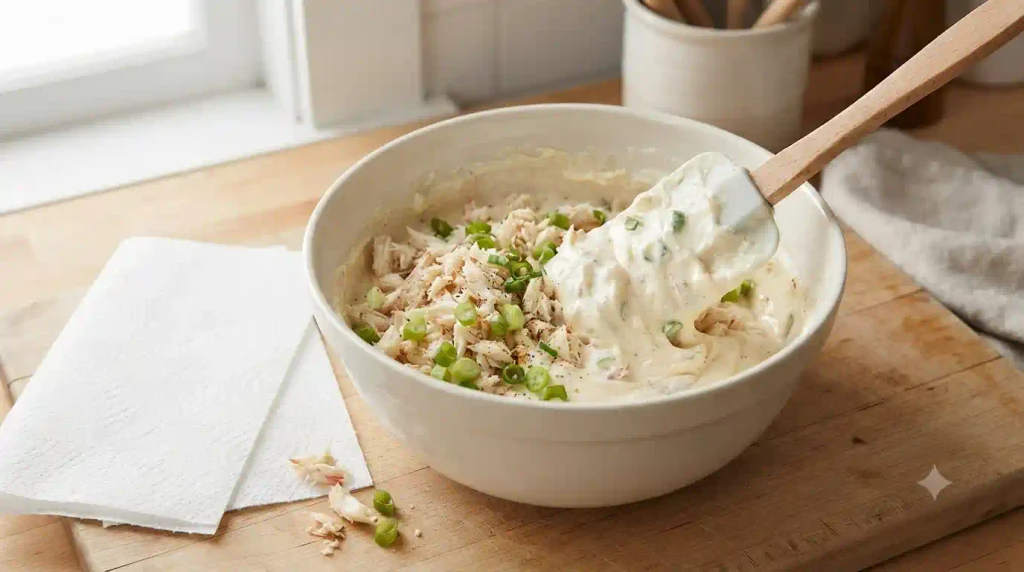
Place the softened cream cheese in a medium bowl. Stir it with a spatula until smooth and creamy.
Add the drained crab, green onions, powdered sugar, Worcestershire sauce, soy sauce, garlic powder, onion powder, and salt.
Fold everything together until evenly combined.
The filling should be thick enough to hold its shape on a spoon. If you can see liquid collecting at the bottom of the bowl, your crab probably wasn’t drained sufficiently.
For very moist crab meat, gently press it between clean paper towels before mixing.
Step 2: Fill the Wonton Wrappers
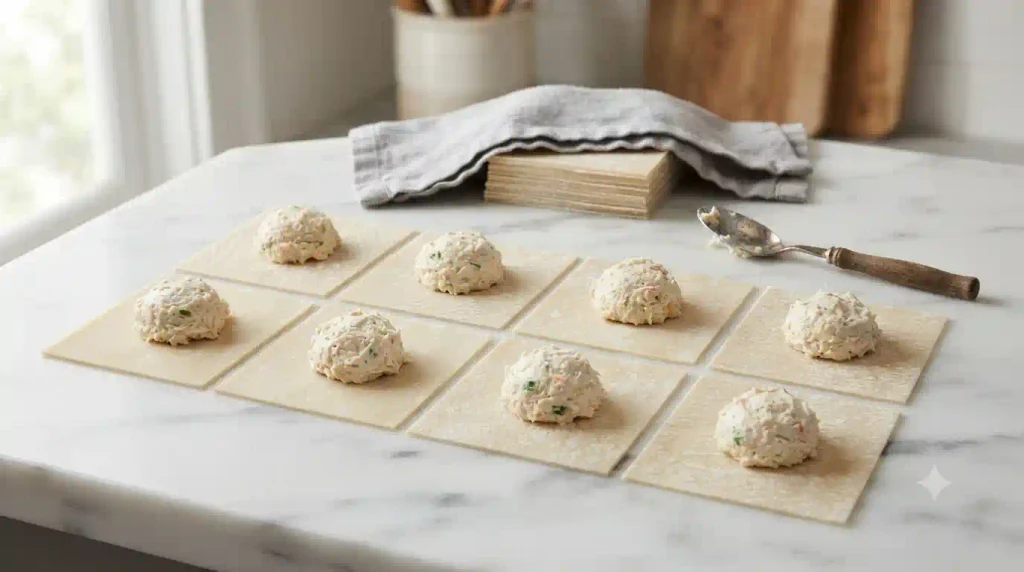
Arrange several wonton wrappers on a clean, dry work surface. Keep the unused wrappers covered with a slightly damp kitchen towel because they dry surprisingly quickly.
Place approximately 2 teaspoons of filling in the center of each wrapper.
Resist the temptation to add a giant scoop. Overfilling is one of the most common reasons homemade crab rangoon bursts.
Leave plenty of clean wrapper around the filling so you can create a secure seal.
Step 3: Fold and Seal Them Tightly
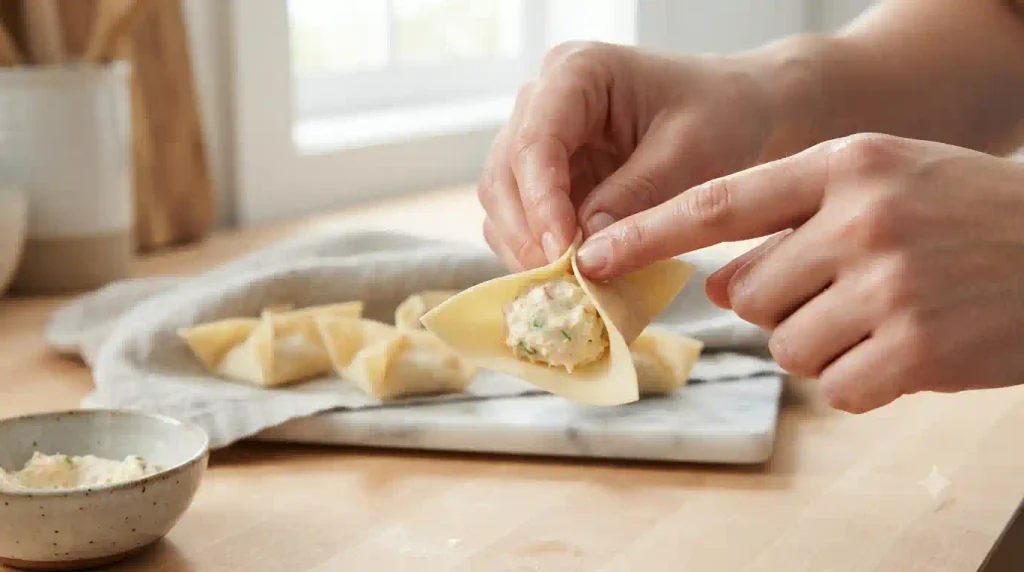
Lightly wet the edges of a wrapper with water using your fingertip.
Bring two opposite corners together above the filling. Bring the remaining two corners toward the center to create the classic four-point rangoon shape.
Pinch the seams together firmly from the filling outward.
This part matters: Check each seam for tiny gaps or air pockets. Press them closed before frying.
Try not to trap excessive air inside. Expanding air and steam can put pressure on the seams once the rangoon hits hot oil.
Place finished rangoons on a plate and keep them covered while you finish shaping the rest.
Step 4: Heat the Frying Oil Correctly
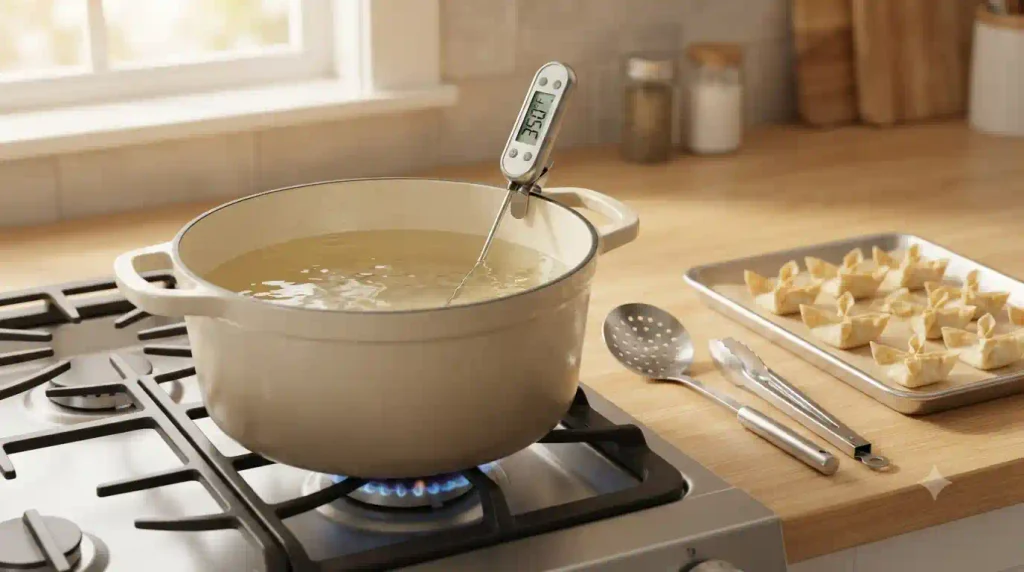
Pour about 2–3 inches of oil into a heavy-bottomed pot.
Heat the oil to 350°F (175°C).
If you’re using a thermometer, keep checking the temperature between batches. Adding cold food temporarily lowers the oil temperature.
For safety, never fill your pot more than halfway with oil. Keep the pot handle turned inward, and never add wet utensils or water near hot frying oil.
Step 5: Fry Until Crisp and Golden
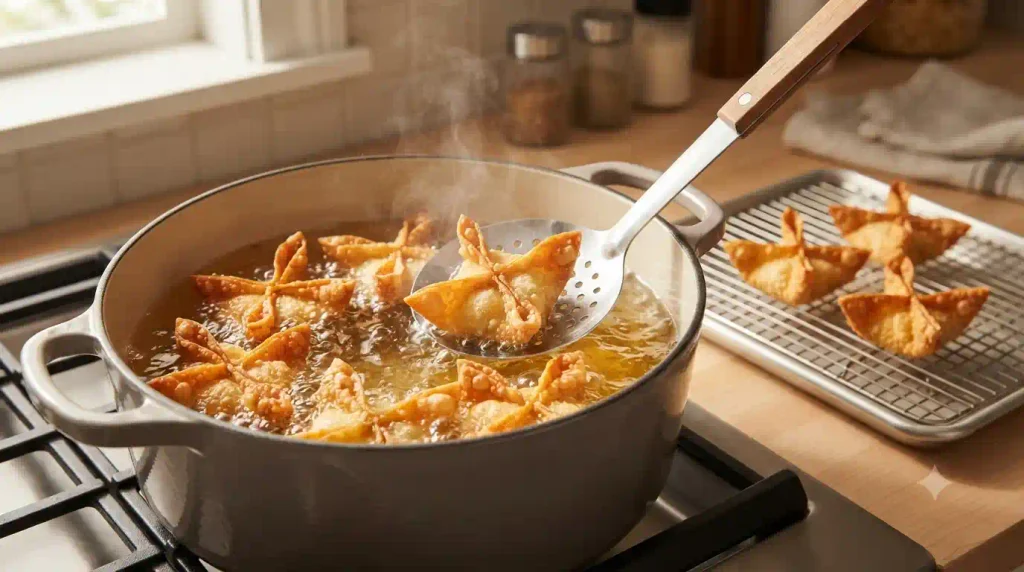
Carefully lower 4–6 crab rangoons into the hot oil, depending on the size of your pot.
Do not crowd them.
Fry for approximately 2–3 minutes, gently turning when necessary, until the wrappers are evenly golden brown and crisp.
Keep the oil around 340–350°F (170–175°C) while frying.
If you notice a seam beginning to open, carefully remove that rangoon rather than allowing the filling to escape into the oil.
Transfer the cooked rangoons to a wire rack with a tray underneath. A rack keeps air circulating around them, helping the bottoms stay crisp.
Step 6: Cool Briefly and Serve
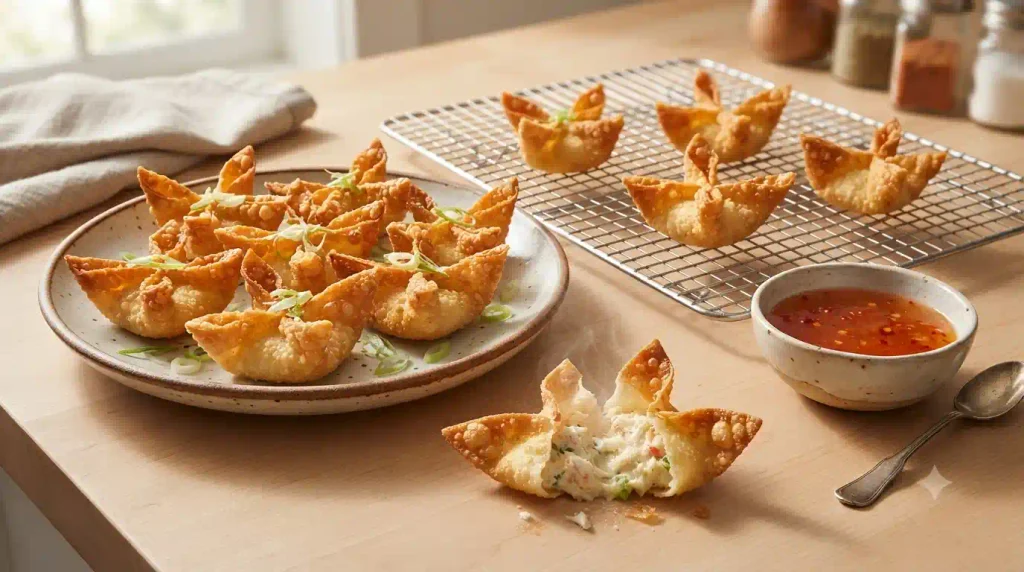
Let the crab rangoons rest for 3–5 minutes before eating. That creamy center can be much hotter than the wrapper suggests.
For the optional sauce, simply stir together the sweet chili sauce, rice vinegar, and honey.
Serve the rangoons while they’re still warm and crunchy.
If you’re cooking several batches, avoid piling the finished pieces on top of one another. Trapped steam softens those beautifully crisp wrappers.
Health Benefits
Crab rangoon is best thought of as an occasional appetizer rather than an everyday health food, especially when deep-fried. Still, some ingredients bring useful nutrients to the table.
Crab provides protein. It also naturally contains micronutrients including vitamin B12, selenium, and zinc, although amounts depend on the type and quantity of crab used.
Green onions add freshness for very few calories. They also provide small amounts of vitamins and plant compounds.
Protein and fat increase satisfaction. The combination of crab and cream cheese can make a modest portion feel more satisfying than plain fried wrappers.
For a lighter option, the rangoons can be air-fried or baked. The texture won’t be identical to deep-fried restaurant rangoons, but you’ll use substantially less added oil.
If sodium is a concern, choose reduced-sodium soy sauce and check the sodium content of your crab and Worcestershire sauce.
Nutrition Information (Per Serving)
Approximate nutrition for 4 crab rangoons, assuming the recipe makes six servings:
| Nutrient | Approximate Amount |
|---|---|
| Calories | 300 kcal |
| Protein | 9 g |
| Fat | 20 g |
| Carbohydrates | 22 g |
Note: These values are estimates. The actual calories and fat can vary considerably depending on the wrappers, cream cheese, crab product, portion size, and particularly how much frying oil is absorbed.
Pro Tips & Variations
Dry crab makes better filling. Whether you’re using fresh, canned, or refrigerated crab, drain it thoroughly. Watery filling produces steam and makes leaking more likely.
Don’t overfill the wrappers. Around 2 teaspoons per wrapper is plenty. More filling isn’t necessarily better if half of it ends up floating in your frying oil.
Keep the wrapper edges clean. Cream cheese smeared across an edge can prevent the wonton from sealing properly.
Press out excess air. Don’t squash the filling, but avoid creating large air pockets before sealing.
Maintain your oil temperature. Aim for roughly 350°F (175°C). Give the oil time to recover between batches.
Want them sweeter? Increase the powdered sugar slightly for a more pronounced American takeout-style sweetness.
Prefer less sweetness? Reduce the powdered sugar to 1–2 teaspoons.
No crab? Finely chopped imitation crab works well and is often cheaper. Keep in mind that imitation crab may contain wheat and other allergens depending on the brand.
Want more heat? Add a little sriracha or a pinch of cayenne to the filling.
Air-fryer variation: Lightly brush or spray the outside with oil and air-fry at approximately 375°F (190°C) until crisp and golden, checking after 6–8 minutes.
Oven variation: Brush lightly with oil and bake at 400°F (200°C) until crisp and browned, roughly 10–15 minutes depending on your oven and wrapper thickness.
For either alternative method, watch the first batch carefully because wonton wrappers can go from pale to deeply browned quickly.
How Much Does It Cost to Make?
Prices vary significantly by region, supermarket, and whether you use real or imitation crab, but here’s a reasonable US grocery estimate:
| Ingredient | Estimated Cost Used |
|---|---|
| Cream cheese | $2.00 |
| Crab meat | $5.00–$8.00 |
| Wonton wrappers | $2.50 |
| Green onions | $0.50 |
| Sauces & seasonings | $0.75 |
| Frying oil used/absorbed | $1.00–$1.50 |
| Estimated Total | $11.75–$15.25 |
| Approx. Cost Per Serving | $1.95–$2.55 |
Using imitation crab can bring the total closer to $9–$11, depending on local prices.
It’s an especially good party recipe because one batch produces around 24 individual appetizers without requiring expensive specialty equipment.
Frequently Asked Questions
Why does my crab rangoon keep bursting while frying?
The usual culprits are overfilling, wet filling, trapped air, poorly sealed edges, or incorrect oil temperature.
Use only about 2 teaspoons of filling and thoroughly drain the crab. Moisten the wrapper edges lightly—not excessively—and pinch every seam firmly closed.
Also avoid putting too many rangoons into the oil simultaneously because this can quickly lower the frying temperature.
Can I make crab rangoon ahead of time?
Yes. Assemble the rangoons, place them in a single layer on a covered tray, and refrigerate them for a few hours before frying.
Don’t leave assembled wonton wrappers sitting around uncovered. They’ll dry out, become brittle, and may crack during frying.
For longer storage, freezing is a better option.
Can you freeze homemade crab rangoon?
Yes. Arrange uncooked rangoons in a single layer on a parchment-lined baking sheet and freeze until firm. Transfer them to a freezer-safe container or bag.
Separating layers with parchment helps prevent sticking.
For best texture and food safety, keep them frozen until you’re ready to cook rather than letting the cream-cheese filling sit at room temperature.
Is crab rangoon made with real crab?
It can be.
Some versions use real crab meat, while many restaurant and budget-friendly recipes use imitation crab. Both can make tasty rangoon.
Real crab gives you a more delicate seafood flavor. Imitation crab tends to be sweeter, less expensive, and easy to find.
If you’re serving anyone with allergies, check every packaged ingredient carefully. Crab is a shellfish allergen, while imitation crab can contain fish, wheat, egg, or other ingredients depending on the manufacturer.
Final Thoughts
The secret to crispy crab rangoon isn’t complicated: keep the filling thick, don’t overfill, seal every seam carefully, and control your frying temperature.
Once you’ve shaped the first few, the process gets surprisingly quick. And when that first batch comes out golden, bubbly, and intact, waiting those few minutes for the molten cream cheese center to cool might be the hardest step of the entire recipe.
Serve them hot with sweet chili sauce, make enough for sharing, and don’t be surprised when everyone starts hovering around the kitchen waiting for the next batch.