

There’s something deeply satisfying about turning a few simple ingredients into a restaurant-worthy dinner at home. When the craving hits for savory fried rice with sweet, delicate crab, it’s tempting to reach for takeout. But homemade crab fried rice can taste fresher, lighter, and far more balanced—and you get to control every ingredient that goes into the pan.
The secret is texture. Great fried rice should have separate, fluffy grains, tender pieces of crab, soft ribbons of egg, and just enough seasoning to bring everything together without making it greasy or heavy. This recipe uses cold cooked rice, high heat, and gentle handling so the crab stays delicate while the rice develops that irresistible wok-kissed flavor.
Prep & Cook Time
This is a quick recipe once your rice is cooked and chilled. For the best texture, use rice that has been refrigerated overnight, although a quick-chill method works too.
| Details | Time / Amount |
|---|---|
| Prep Time | 15 minutes |
| Cook Time | 12 minutes |
| Total Time | 27 minutes |
| Servings | 4 |
| Difficulty | Easy |
Note: The timing assumes you already have cooked, chilled rice ready to use.
What Equipment Do You Need?
You don’t need a restaurant wok setup to make excellent fried rice. A large skillet works beautifully as long as you give the ingredients enough room.
- Large wok or 12-inch skillet
- Wooden spoon or wok spatula
- Cutting board
- Sharp chef’s knife
- Small mixing bowl
- Measuring cups and spoons
- Fork for checking the crab meat
- Serving bowls or plates
A wide pan is important. If your skillet is too crowded, the rice traps steam and turns soft instead of frying.
Ingredients
For 4 servings, you’ll need:
- 4 cups cold cooked jasmine rice, preferably day-old
- 8 oz (225 g) cooked lump crab meat, picked over for shells
- 3 large eggs
- 2 tablespoons neutral cooking oil, divided
- 1 teaspoon toasted sesame oil
- 3 scallions, thinly sliced, white and green parts separated
- 2 garlic cloves, finely minced
- 1 teaspoon fresh ginger, finely grated
- ½ cup frozen peas, thawed
- ½ cup finely diced carrots
- 2 tablespoons light soy sauce
- 1 teaspoon fish sauce, optional
- ¼ teaspoon white pepper
- ¼ teaspoon fine salt, plus more if needed
- 1 teaspoon fresh lime juice
- 2 tablespoons chopped fresh cilantro, optional
- Lime wedges, for serving
Chef’s note: If your crab meat is packed in liquid, drain it thoroughly and gently pat it dry. Excess moisture is one of the fastest ways to lose that fluffy fried-rice texture.
Why Each Ingredient Matters
| Ingredient | Why It Matters |
|---|---|
| Cold jasmine rice | Chilling firms the starch, helping individual grains stay separate during frying. |
| Lump crab meat | Provides delicate sweetness, protein, and the signature seafood flavor. |
| Eggs | Add richness, protein, and soft contrasting texture. |
| Neutral oil | Handles high cooking temperatures without overpowering the crab. |
| Sesame oil | Adds a nutty toasted aroma; a little goes a long way. |
| Scallions | Give the dish fresh onion flavor without making it heavy. |
| Garlic | Builds a savory aromatic base. |
| Fresh ginger | Adds warmth and freshness that works particularly well with seafood. |
| Carrots & peas | Bring color, mild sweetness, texture, and extra nutrients. |
| Soy sauce | Supplies salt and umami, but using it sparingly keeps the rice light. |
| Fish sauce | Adds deeper savory complexity without needing lots of soy sauce. |
| White pepper | Gives subtle heat traditionally associated with many Asian-style fried rice dishes. |
| Lime juice | A little acidity brightens the rich egg and sweet crab. |
The biggest mistake I see in home kitchens is pouring soy sauce over the rice until it turns uniformly dark. With crab, less seasoning is usually better. You want to taste the seafood, not bury it.
Step-by-Step Instructions
Step 1: Prepare the Rice and Crab
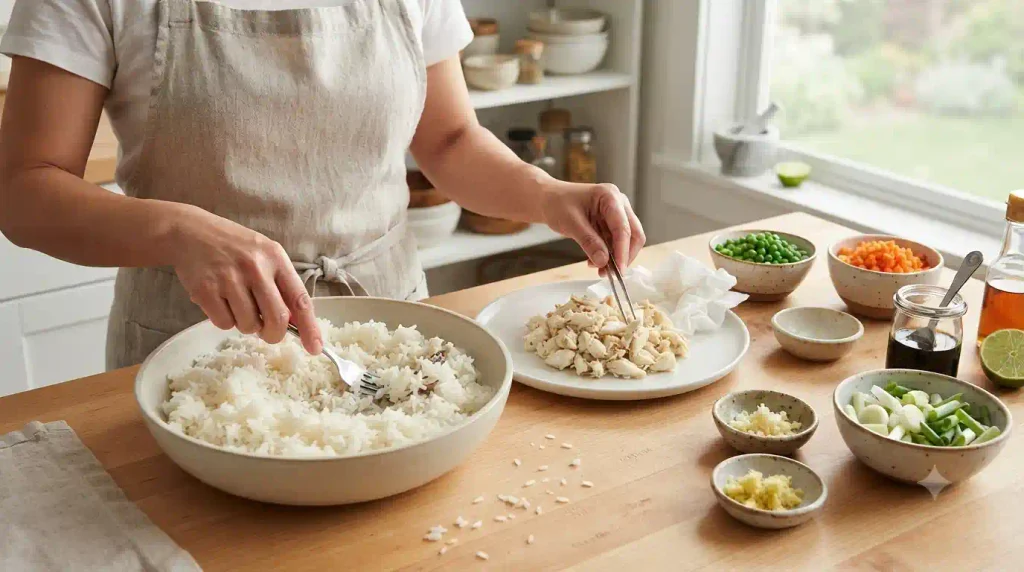
Take 4 cups of cold cooked rice from the refrigerator. Use clean hands or a fork to gently separate any large clumps before you start cooking.
Check the 8 oz crab meat carefully for small pieces of shell. Even high-quality packaged lump crab occasionally hides one.
Pat the crab dry with paper towels if it seems wet.
Have every ingredient measured and sitting beside the stove before heating your pan. Fried rice cooks quickly, so there won’t be much time for chopping once you begin.
Step 2: Cook the Eggs
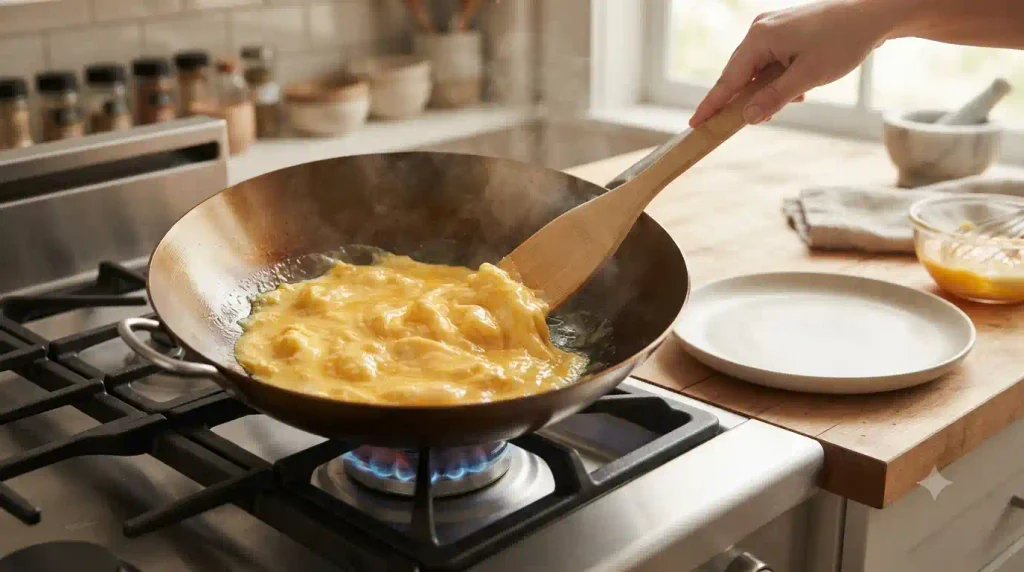
Heat your wok or large skillet over medium-high heat until hot.
Add about 1 teaspoon of the neutral oil.
Beat the eggs lightly with a small pinch of salt, then pour them into the pan.
Allow them to sit for several seconds before gently pushing the cooked portions toward the center. Cook until the eggs form soft curds but still look slightly glossy.
Transfer them immediately to a clean plate.
Don’t cook them completely dry. They’ll return to the hot pan later, and slightly undercooking them now keeps the finished egg tender.
Step 3: Build the Aromatic Base
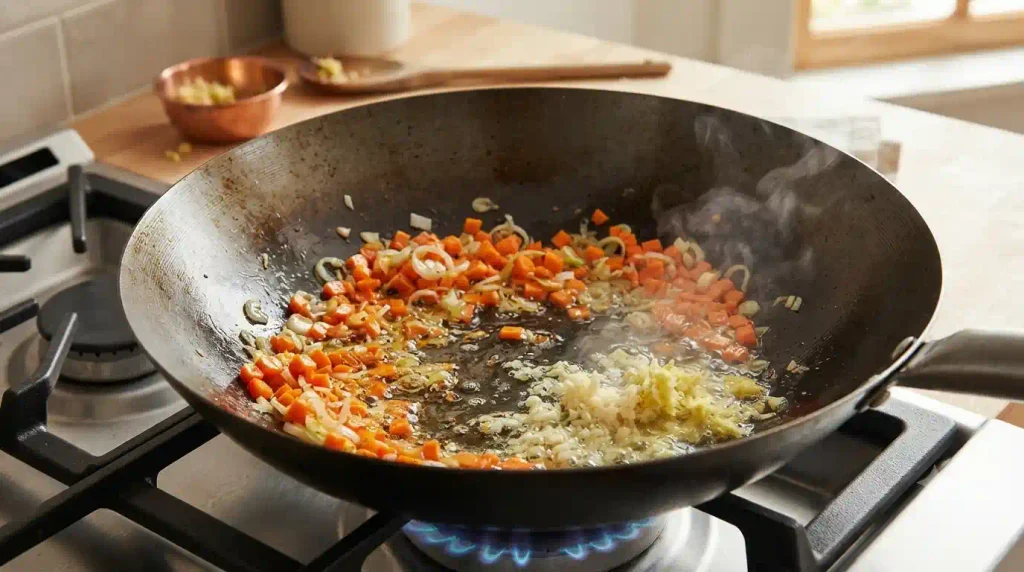
Increase the heat to high and add the remaining neutral oil.
Add the diced carrots and scallion whites. Stir-fry for about 1½–2 minutes, until the carrots begin to soften while retaining a little bite.
Add the garlic and ginger.
Cook for only 20–30 seconds, stirring constantly.
You should smell the garlic almost immediately. Once it becomes fragrant, move on. Burnt garlic can make the entire skillet taste bitter.
Step 4: Fry the Rice Until Fluffy
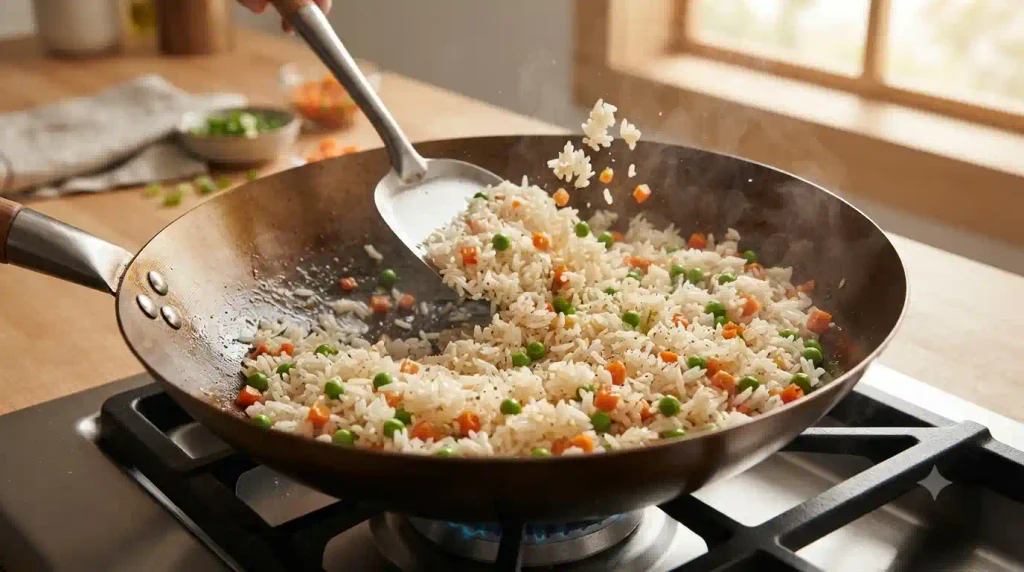
Add the cold rice to the hot skillet.
Spread it across as much of the pan’s surface as possible. Let it sit undisturbed for about 30 seconds, then toss or stir.
Continue cooking for 3–4 minutes.
Use the edge of your spatula to break apart stubborn clumps rather than aggressively mashing the rice.
Add the peas, soy sauce, fish sauce if using, white pepper, and salt.
Toss quickly until the seasoning is evenly distributed.
The rice should look glossy rather than wet. You may even hear individual grains lightly crackling against the pan—that’s a good sign.
Step 5: Gently Fold in the Crab and Eggs
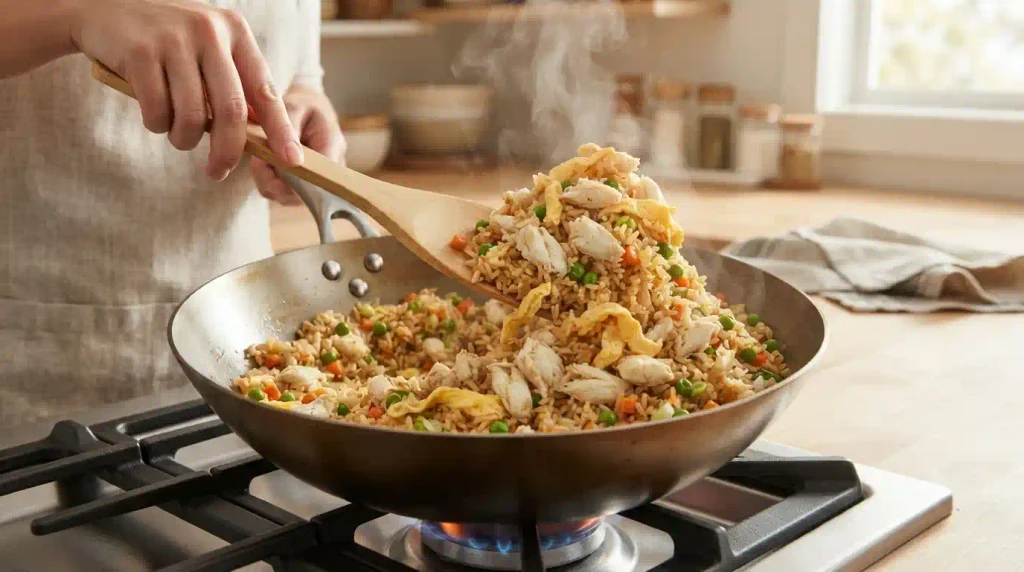
Reduce the heat slightly to medium-high.
Add the cooked eggs back to the skillet, breaking the larger pieces into bite-size ribbons.
Now add the crab meat.
Gently fold everything together for 1–2 minutes, just until the crab is heated through.
Avoid vigorous stirring at this stage. Lump crab is delicate, and too much mixing turns those beautiful pieces into tiny shreds.
Because the crab is already cooked, you are reheating it, not cooking it from raw. Heat leftovers and cooked seafood thoroughly, and don’t leave perishable seafood sitting at room temperature for extended periods.
Step 6: Finish and Serve
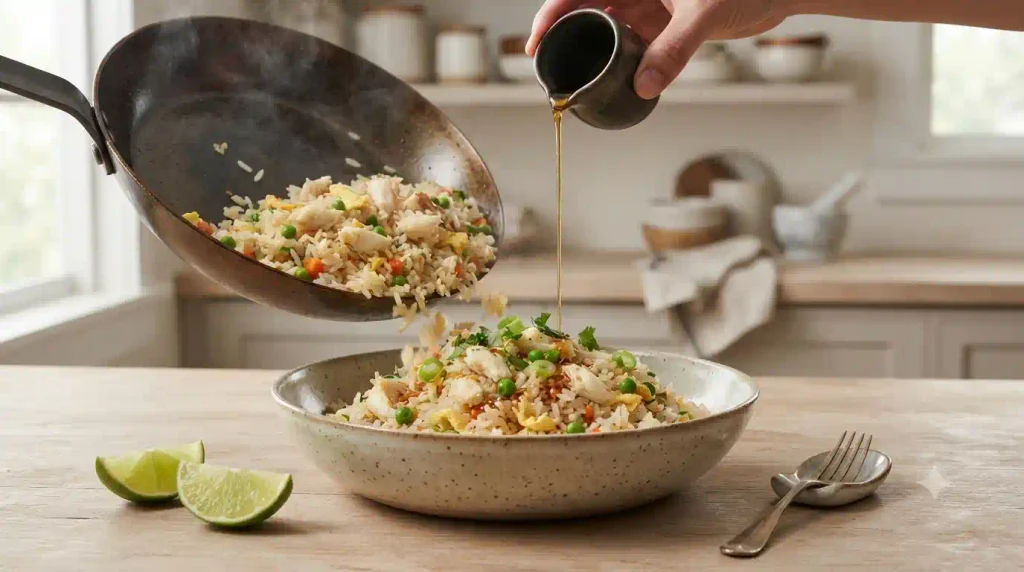
Turn off the heat.
Drizzle over 1 teaspoon sesame oil and 1 teaspoon fresh lime juice.
Add the scallion greens and cilantro, if using.
Give everything two or three gentle tosses.
Taste before adding additional salt or soy sauce. Crab can naturally taste slightly salty, and different soy sauces vary considerably in sodium.
Serve immediately with fresh lime wedges.
The finished fried rice should feel light and fluffy rather than oily, with visible pieces of crab scattered throughout.
Health Benefits
Crab fried rice is comfort food, but it can also provide a useful mix of protein, carbohydrates, vegetables, and micronutrients.
Crab is protein-rich. It provides high-quality protein along with nutrients such as vitamin B12 and selenium.
Eggs provide additional protein and nutrients. They also make the meal more satisfying without requiring a large quantity of meat.
Peas and carrots add vegetables. They contribute fiber, vitamins, minerals, and natural sweetness.
Rice supplies carbohydrates. Carbohydrates are an important energy source, especially when the meal is paired with protein and vegetables.
Using only a modest amount of oil keeps this homemade version from becoming unnecessarily greasy.
For a lighter meal, increase the peas and carrots or serve the fried rice alongside steamed vegetables.
Nutrition Information (Per Serving)
The following figures are approximate estimates. Actual nutrition will change depending on the crab, rice, soy sauce, oil, and brands you use.
| Nutrient | Approx. Amount |
|---|---|
| Calories | 430 kcal |
| Protein | 23 g |
| Fat | 13 g |
| Carbohydrates | 55 g |
If sodium is a concern, choose reduced-sodium soy sauce and adjust additional salt carefully.
Pro Tips & Variations
Chef Tips for Perfect Fried Rice
- Use cold rice. Fresh, steaming rice contains too much surface moisture and can become sticky in the skillet.
- Don’t overcrowd your pan. If you’re doubling the recipe, cook it in two batches.
- Preheat properly. Adding cold rice to a barely warm pan encourages steaming instead of frying.
- Keep the crab chunky. Fold rather than aggressively stir after adding lump crab meat.
- Season gradually. You can always add more soy sauce, but you can’t remove it.
- Keep everything ready beside the stove. Once the pan gets hot, the recipe moves fast.
- Don’t drown the rice in oil. Proper heat and dry rice create better texture than excessive fat.
No Day-Old Rice?
Cook jasmine rice using slightly less water than usual. Spread the cooked rice in a thin layer on a baking sheet and allow the steam to escape.
Once it has cooled safely, refrigerate it until thoroughly chilled.
Never leave cooked rice sitting at room temperature for long periods. Cool and refrigerate leftovers promptly because cooked rice can support bacterial growth when improperly stored.
Brown Rice Variation
Swap the jasmine rice for 4 cups cooked and chilled brown rice.
The result will be chewier and nuttier, with additional whole-grain character.
Spicy Crab Fried Rice
Add one of the following with the garlic:
- ½ finely chopped red chilli
- ½ teaspoon chilli flakes
- 1–2 teaspoons chilli-garlic sauce
Start small so the chilli doesn’t overpower the delicate crab.
Extra-Vegetable Version
Try adding:
- Diced bell pepper
- Corn
- Edamame
- Finely chopped broccoli
- Shredded cabbage
Keep additions fairly dry and cook watery vegetables before adding the rice.
Gluten-Free Option
Use certified gluten-free tamari instead of regular soy sauce and check that your fish sauce and other packaged ingredients meet your dietary requirements.
How Much Does It Cost to Make?
Prices vary considerably by location, season, and especially the type of crab you buy. Crab will account for most of the cost.
Here is a rough U.S. home-cooking estimate:
| Ingredient | Estimated Cost Used |
|---|---|
| Lump crab meat | $8.00–$12.00 |
| Cooked jasmine rice | $1.00 |
| 3 eggs | $1.00 |
| Peas and carrots | $1.00 |
| Scallions, garlic & ginger | $1.25 |
| Soy sauce & seasonings | $0.75 |
| Oil, lime & extras | $0.75 |
| Estimated Total | $13.75–$17.75 |
| Approx. Cost Per Serving | $3.45–$4.45 |
Using leftover rice and vegetables already in your fridge can bring the cost down further. Premium fresh crab will push it higher.
Frequently Asked Questions
What is the secret to fluffy fried rice?
Start with cold, relatively dry cooked rice and use a large, properly heated pan. Cold rice has firmer grains that separate more easily.
Don’t crowd the skillet, either. Too much food lowers the pan temperature and produces steam, which can make fried rice soft and clumpy.
Can I use freshly cooked rice for crab fried rice?
Yes, but it isn’t ideal.
If that’s your only option, spread the cooked rice across a large tray or baking sheet so excess steam can escape. Cool it promptly, then refrigerate it until chilled before frying.
Putting piping-hot, moist rice directly into the skillet usually gives you a softer result.
When should I add crab to fried rice?
Add cooked crab near the end.
Crab meat is delicate and doesn’t need lengthy cooking. Once the rice is seasoned and almost finished, gently fold in the crab and heat it through.
Adding it too early can dry it out and break large pieces into shreds.
Can I make crab fried rice ahead of time?
Yes, although fried rice tastes best straight from the hot skillet.
If you have leftovers, cool them promptly and refrigerate them in a shallow, airtight container. When reheating, heat the rice thoroughly until steaming hot throughout. Avoid repeatedly cooling and reheating the same batch.
Final Thoughts
Great crab fried rice isn’t about piling on sauces or using restaurant equipment. The magic comes from cold rice, high heat, restrained seasoning, and gentle handling of the crab.
Once you’ve tried this method, it’s easy to adapt with whatever vegetables are waiting in your fridge. Keep your pan hot, your ingredients ready, and don’t fuss with the crab too much. You’ll end up with fluffy, separate grains, tender egg, fresh vegetables, and sweet bites of crab—the kind of simple homemade dinner that makes takeout surprisingly easy to forget.