

There’s something irresistible about a huge seafood boil spread across the table, especially when every piece of crab, shrimp, sausage, and corn is coated in a buttery, garlicky sauce. The problem? A restaurant seafood feast can easily push the bill toward $100 or more. When that craving hits, making it at home is surprisingly doable—and a lot more fun than it looks.
This homemade boiling crab recipe brings that messy, finger-licking seafood-boil experience straight to your kitchen. You’ll get sweet crab, juicy shrimp, tender potatoes, smoky sausage, and corn tossed in a bold Cajun garlic butter sauce. Grab plenty of napkins because forks quickly become optional.
Massive Boiling Crab Recipe at Home – Skip the $100 Bill
This recipe makes a generous seafood boil for about 6 people. It’s inspired by the bold, buttery flavors people love at seafood-boil restaurants, but everything can be adjusted to your preferred spice level.
Prep & Cook Time
| Details | Time / Amount |
|---|---|
| Prep Time | 25 minutes |
| Cook Time | 30 minutes |
| Total Time | 55 minutes |
| Servings | 6 |
| Difficulty | Easy–Moderate |
Most of your time is spent preparing the ingredients. Once the pot starts boiling, everything moves quickly, so have the garlic butter sauce ingredients measured before you begin.
What Equipment Do You Need?
You don’t need restaurant equipment to pull this off. A few everyday kitchen tools will handle the job.
- 1 large stockpot, ideally 12–16 quarts
- Large colander or strainer
- Large skillet or saucepan
- Sharp chef’s knife
- Cutting board
- Measuring cups and spoons
- Kitchen tongs
- Wooden spoon or silicone spatula
- Large serving tray, roasting pan, or several large bowls
- Seafood crackers or kitchen shears for crab
- Disposable gloves, optional but very useful
- Plenty of napkins—you really will need them
Kitchen note: A seafood-filled stockpot gets extremely heavy. Instead of trying to carry and drain an overflowing pot, remove the seafood and vegetables in batches with a large slotted spoon or spider strainer.
Ingredients
For the Seafood Boil
- 3 lb snow crab leg clusters, thawed if frozen
- 2 lb large shell-on shrimp, deveined
- 1 lb smoked Andouille sausage, sliced into 1-inch pieces
- 1½ lb baby potatoes
- 4 ears corn, each cut into 3 pieces
- 1 large yellow onion, quartered
- 1 whole garlic bulb, halved crosswise
- 2 lemons, halved
- ¼ cup Cajun seasoning
- 2 tablespoons Old Bay seasoning
- 1 tablespoon kosher salt, plus more if needed
- 2 bay leaves
- 10–12 cups water, or enough to comfortably cover the ingredients
For the Garlic Cajun Butter Sauce
- 1 cup (2 sticks) unsalted butter
- 10 large garlic cloves, finely minced
- 2 tablespoons Cajun seasoning
- 1 tablespoon Old Bay seasoning
- 2 teaspoons smoked paprika
- 1 teaspoon onion powder
- 1 teaspoon garlic powder
- ½–1 teaspoon cayenne pepper, depending on your heat preference
- 1 teaspoon freshly ground black pepper
- 1 tablespoon brown sugar
- 2 tablespoons fresh lemon juice
- ½ cup reserved seafood cooking liquid
- 1 tablespoon hot sauce, optional
- 2 tablespoons chopped fresh parsley
For Serving
- Lemon wedges
- Chopped parsley
- Extra melted butter, optional
- Hot sauce, optional
Salt tip: Cajun seasoning, Old Bay, sausage, and crab can all contain plenty of sodium. Start conservatively with extra salt and adjust only after tasting.
Why Each Ingredient Matters
A great seafood boil isn’t simply seafood covered in butter. Each ingredient contributes something important.
| Ingredient | Why It Matters |
|---|---|
| Snow crab | Naturally sweet and delicate, giving the boil its luxurious seafood flavor. |
| Shell-on shrimp | The shells help protect the shrimp during boiling and contribute extra seafood flavor. |
| Andouille sausage | Adds smoky, savory richness and a little spice. |
| Baby potatoes | Absorb the seasoned cooking liquid while adding a hearty, creamy element. |
| Corn | Its natural sweetness balances Cajun spice and salty seafood. |
| Garlic | Creates the aromatic backbone of the butter sauce. |
| Butter | Carries fat-soluble flavors from the spices and helps the seasoning cling to the seafood. |
| Cajun seasoning | Provides the signature combination of pepper, herbs, garlic, and spice. |
| Old Bay | Adds classic seafood-boil flavor with celery salt and warming spices. |
| Smoked paprika | Gives the sauce deeper color and a subtle smoky character. |
| Brown sugar | A small amount rounds out the salt, garlic, cayenne, and lemon without making the sauce noticeably sweet. |
| Lemon | Acidity cuts through all that rich butter and brightens the seafood. |
| Cooking liquid | Loosens the butter sauce while reinforcing the seafood and spice flavors already in the pot. |
The biggest flavor trick is balance. Butter brings richness, lemon brings acidity, garlic provides aroma, and cayenne adds heat. When those four are balanced, the sauce tastes much more complex than simply melted butter with seasoning.
Step-by-Step Instructions
Step 1: Build the Seasoned Boiling Liquid
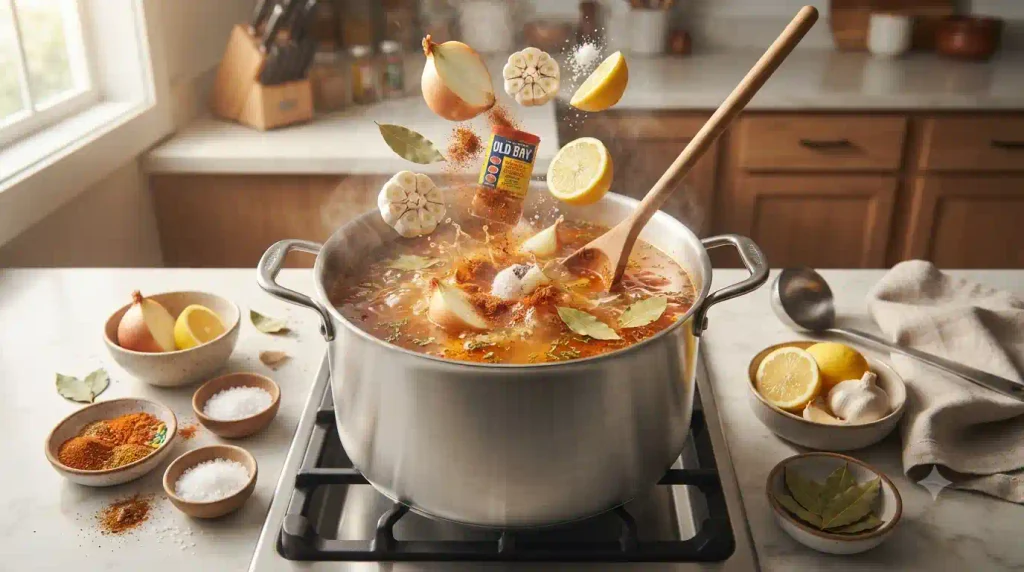
Fill a large stockpot with about 10–12 cups of water, leaving enough room for the ingredients without risking an overflow.
Add the quartered onion, halved garlic bulb, halved lemons, Cajun seasoning, Old Bay, kosher salt, and bay leaves.
Bring everything to a strong boil over high heat. Once boiling, reduce it slightly and let the seasoned liquid simmer for about 5 minutes.
This short simmer matters. It gives the aromatics and spices time to flavor the water before the potatoes go in.
Taste a carefully cooled spoonful of the liquid. It should taste boldly seasoned but not unbearably salty.
Step 2: Cook the Potatoes and Sausage
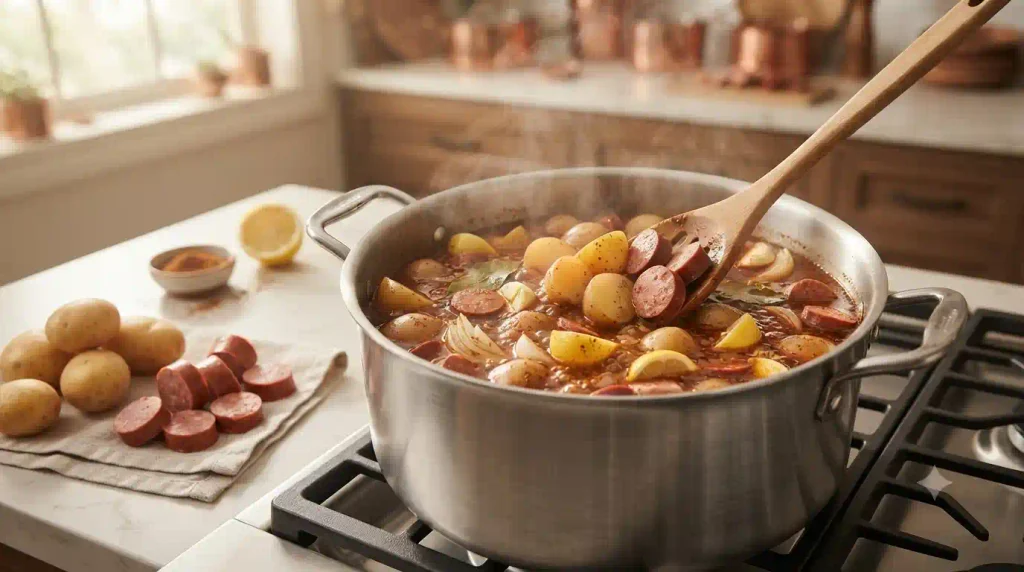
Add the baby potatoes first because they need the longest cooking time.
Cook for approximately 10–12 minutes, depending on their size.
Add the sliced Andouille sausage and continue cooking for about 3 minutes.
Check a potato with the tip of a knife. It should be starting to soften but shouldn’t be completely tender yet.
Don’t wait until the potatoes are fully cooked before adding everything else. They’ll continue cooking while the corn and seafood finish.
Step 3: Add the Corn and Crab
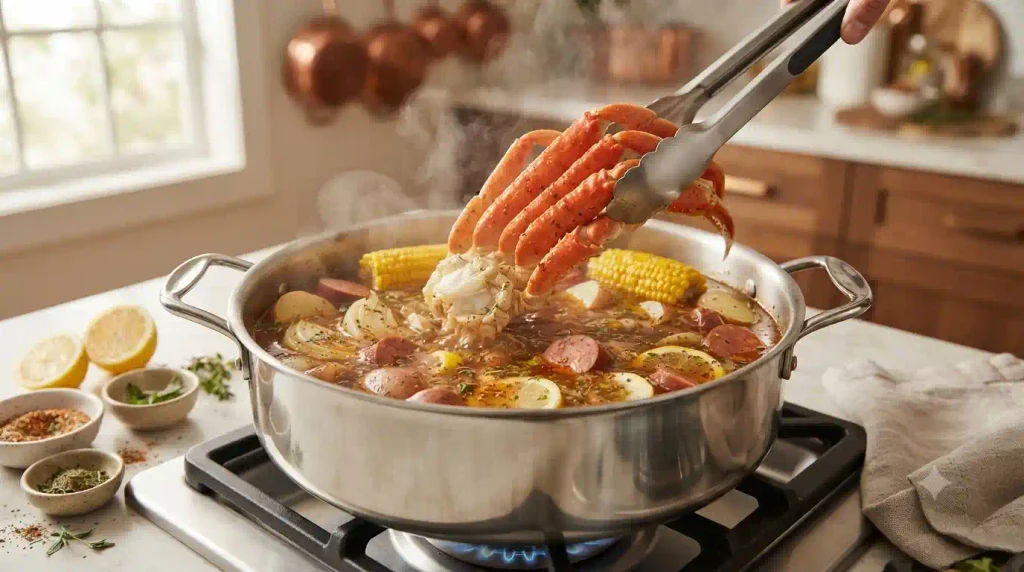
Add the corn pieces to the pot and cook for about 3 minutes.
Carefully lower in the snow crab clusters.
Most commercially available frozen snow crab legs are already cooked, which means you’re primarily heating them through rather than cooking them from raw.
Cook the crab for approximately 4–5 minutes, depending on its size and whether it was completely thawed.
Try not to aggressively stir the pot. Crab shells can break apart. Use kitchen tongs to gently reposition the clusters if necessary.
Step 4: Cook the Shrimp
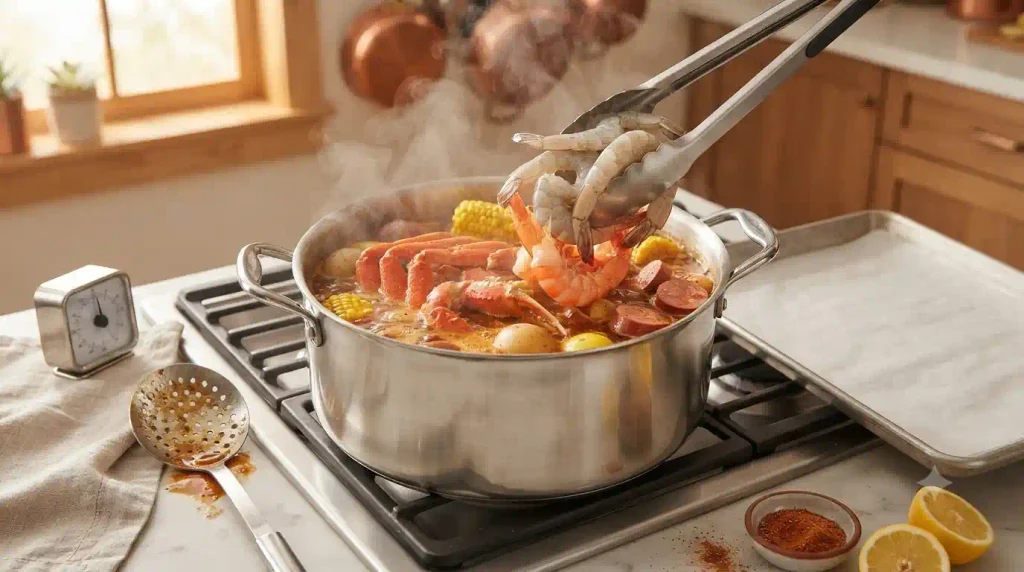
Add the shrimp last.
Cook for approximately 2–3 minutes, or until the shrimp are opaque and curled and have reached a safe internal temperature of 145°F (63°C).
This is one place where timing really matters.
Overcooked shrimp become rubbery surprisingly quickly. If you’re standing over the pot thinking, “Maybe they need another five minutes,” they probably don’t.
Remove the seafood, sausage, corn, and potatoes with a large slotted spoon or spider strainer and transfer everything to a large tray.
Reserve at least ½ cup of the cooking liquid before discarding the rest.
Step 5: Make the Garlic Cajun Butter Sauce
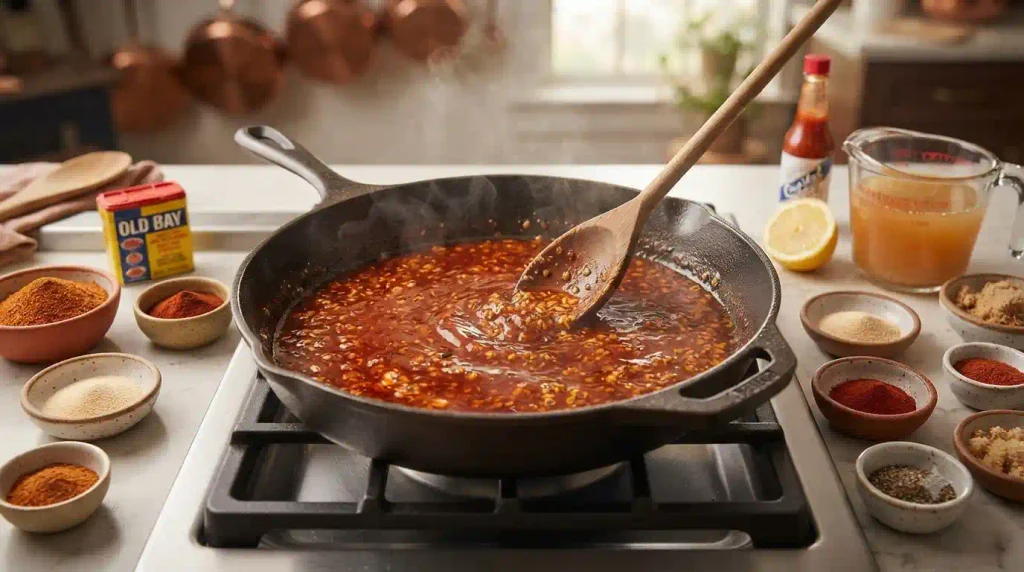
While the seafood rests, melt 1 cup butter in a large skillet or saucepan over medium-low heat.
Add the minced garlic.
Cook gently for 60–90 seconds, stirring constantly. You want fragrant garlic, not browned garlic. Burnt garlic can make the entire sauce bitter.
Reduce the heat to low and stir in:
- Cajun seasoning
- Old Bay
- Smoked paprika
- Onion powder
- Garlic powder
- Cayenne
- Black pepper
- Brown sugar
Cook the spices in the butter for about 30 seconds.
Stir in the lemon juice, optional hot sauce, and ½ cup reserved cooking liquid.
Let the sauce gently bubble for 1–2 minutes until glossy and slightly emulsified.
Taste before adding any additional salt.
Step 6: Sauce Everything and Serve
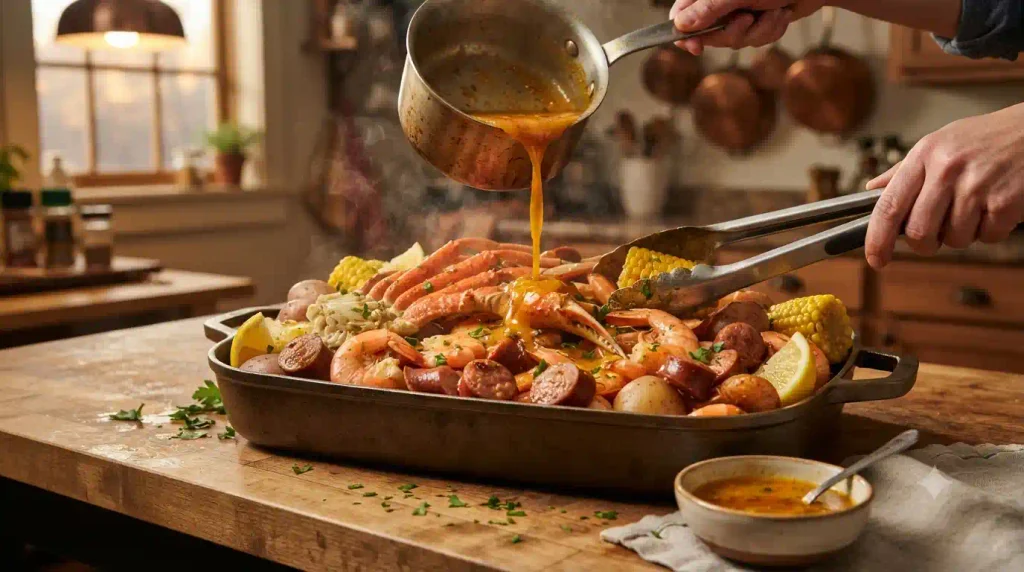
Place the crab, shrimp, potatoes, corn, and sausage in your biggest heat-safe serving bowl or roasting pan.
Pour about two-thirds of the hot garlic Cajun butter sauce over everything.
Use tongs to toss gently until the seafood and vegetables are shiny and evenly coated. Spoon the remaining sauce over the crab clusters, where it can work its way into all those little cracks.
Finish with fresh parsley and lemon wedges.
Serve immediately while everything is steaming hot.
For the full seafood-boil experience, cover the table with butcher paper or food-safe disposable paper, pile everything in the center, and let everyone dig in.
Food safety note: Don’t leave cooked seafood sitting at room temperature for more than 2 hours. Refrigerate leftovers promptly in shallow, airtight containers.
Health Benefits
A seafood boil is definitely an indulgent meal—especially once a cup of butter enters the picture—but several ingredients offer worthwhile nutrients.
Crab provides high-quality protein while supplying nutrients including vitamin B12, selenium, zinc, and other minerals.
Shrimp is another protein-rich seafood choice and naturally contains very little carbohydrate.
Potatoes contribute potassium, vitamin C, and carbohydrates that make the meal more filling.
Corn provides carbohydrates, fiber, and several micronutrients.
Garlic contains sulfur-containing plant compounds and lets you build intense flavor without relying exclusively on additional salt.
The biggest nutritional considerations are sodium and saturated fat. Restaurant-style seafood boils can be particularly high in both.
For a lighter version, reduce the butter to ½–¾ cup, use a lower-sodium Cajun seasoning, and choose lower-sodium smoked sausage. You’ll still have plenty of flavor from garlic, lemon, spices, and the seafood itself.
Nutrition Information (Per Serving)
Nutrition will vary significantly according to the size and brand of crab clusters, sausage, butter, seasoning, and how much sauce actually ends up on each serving.
The following is a practical estimate for 1 of 6 servings.
| Nutrient | Approximate Amount |
|---|---|
| Calories | 850–950 kcal |
| Protein | 65–75 g |
| Fat | 48–55 g |
| Carbohydrates | 40–50 g |
Nutritionist’s note: Seafood-boil seasoning and sausage can make sodium levels quite high. If sodium intake is something you’re watching, use unsalted butter, reduced-sodium sausage, and salt-free or reduced-sodium Cajun seasoning.
Pro Tips & Variations
1. Don’t Cook Everything at Once
This is probably the most important tip.
Potatoes might need 15 minutes while shrimp can be finished in 2–3. Throwing everything into the pot simultaneously almost guarantees either hard potatoes or overcooked seafood.
2. Use Shell-On Shrimp
Peeled shrimp work, but shell-on shrimp tend to stay juicier and feel much more authentic in a seafood boil.
For easier eating, use easy-peel shrimp with the backs already split and deveined.
3. Control the Heat Yourself
For mild, use just a pinch of cayenne.
For medium, use about ½ teaspoon.
For hot, use 1 teaspoon or more, plus your favorite hot sauce.
Remember that Cajun seasoning itself may already contain cayenne or other peppers.
4. Don’t Drown the Seafood
You want everything coated in sauce, not swimming in a bowl of melted butter.
Start with two-thirds of the sauce, toss, then add more as necessary.
5. Add Lobster for a Celebration
Replace some of the crab with lobster tails. Add thawed lobster tails toward the end of cooking and cook according to their size until the flesh reaches 145°F (63°C).
6. Try King Crab
Snow crab is considerably more budget-friendly, but king crab makes this feast spectacular.
Because most frozen king crab is already cooked, avoid prolonged boiling. You’re essentially reheating it.
7. Make It Extra Garlicky
Garlic lovers can increase the fresh garlic from 10 cloves to 14–16 cloves.
Keep the heat fairly low when cooking it. Garlic goes from fragrant to burnt faster than you’d expect when you’re distracted by a giant pot of crab.
8. Make the Sauce Less Rich
Use:
- ½ cup butter
- ¾ cup reserved seafood broth
- Extra lemon juice
You’ll get a thinner, punchier sauce with considerably less butter.
9. Add More Seafood
This recipe is easy to customize with:
- Mussels
- Clams
- Crawfish
- Lobster tails
- Scallops
Just remember that different seafood cooks at different speeds. Add delicate ingredients near the end.
10. Serve It Immediately
A seafood boil is one of those meals that doesn’t improve by sitting around.
Get everyone to the table before you finish tossing the seafood with sauce. Hot crab and juicy shrimp are worth organizing the family for.
How Much Does It Cost to Make?
Prices vary substantially by region and season, particularly for crab. But making a large seafood boil at home can still offer significant savings compared with ordering similar portions at a restaurant.
Here’s a reasonable US grocery-store estimate:
| Ingredient | Estimated Cost |
|---|---|
| 3 lb snow crab clusters | $30–$42 |
| 2 lb large shrimp | $14–$20 |
| 1 lb Andouille sausage | $5–$7 |
| Corn | $3–$5 |
| Baby potatoes | $3–$4 |
| Butter | $4–$6 |
| Garlic, onion & lemons | $4–$6 |
| Seasonings & extras | $3–$5 |
| Estimated Total | $66–$95 |
For 6 generous servings, that’s roughly $11–$16 per person, depending heavily on local seafood prices.
Want to bring the price down even further? Use 2 pounds of crab instead of 3, add another pound of shrimp, and increase the potatoes and corn. You’ll still get an enormous-looking seafood spread while letting the cheaper ingredients stretch the meal.
Buying frozen crab clusters when they’re on sale can also make a dramatic difference.
Frequently Asked Questions
Can I use frozen crab legs for a seafood boil?
Absolutely. In fact, frozen snow crab is often the easiest option to find.
Most frozen crab legs sold in supermarkets have already been cooked and then frozen. Thaw them overnight in the refrigerator before using them for more predictable heating.
Check the package to confirm whether your particular crab is precooked.
How do I keep shrimp from getting rubbery?
Add them last and watch the clock.
Large shrimp generally cook very quickly in boiling liquid. Once they’re opaque and reach 145°F (63°C), remove them from the heat.
Leaving shrimp in the hot cooking liquid after they’re done can continue cooking them, so transfer everything out promptly.
What seasoning is best for a seafood boil?
A combination of Cajun seasoning and Old Bay gives you a great balance of Southern-style spice and classic seafood-boil flavor.
For more heat, add cayenne and hot sauce. For less heat, reduce the Cajun seasoning slightly and skip the cayenne.
Always check whether your seasoning blend contains salt before adding extra.
Can I make boiling crab sauce ahead of time?
Yes.
Prepare the garlic butter sauce up to 2 days ahead, cool it quickly, and refrigerate it in an airtight container.
When you’re ready to serve, gently reheat it over low heat. Add a splash of freshly reserved seafood cooking liquid to loosen the sauce and bring back its glossy consistency.
Avoid repeatedly reheating and cooling the same batch.
Final Thoughts
You don’t need a restaurant reservation—or a painful dinner bill—to enjoy a massive seafood feast.
The secret to a great homemade boiling crab spread is surprisingly simple: season the cooking liquid well, add ingredients according to their cooking times, protect the shrimp from overcooking, and finish everything with plenty of fresh garlic, butter, Cajun spice, and lemon.
It might get messy. There will probably be butter on somebody’s sleeve and a pile of crab shells in the middle of the table. That’s part of the fun.
Put down some paper, bring out the napkins, and serve the whole tray while it’s piping hot. Once you see everyone reaching for that last sauce-covered potato, you’ll know the homemade version was worth it.