

There’s something deeply satisfying about turning a few everyday ingredients into a hot, glossy dinner that tastes better than expected. When the craving for a savory Chinese-American-style meal hits, pork chop suey is exactly the kind of recipe I reach for. It’s colorful, filling, and made for spooning over a bowl of steaming rice.
The trouble is that homemade chop suey can sometimes end up swimming in thin, watery sauce. This version fixes that. Tender pork, crisp vegetables, and a properly thickened savory sauce come together in one pan. The trick is controlling vegetable moisture, keeping the pan hot, and adding the cornstarch slurry at exactly the right moment.
Pork Chop Suey Recipe – Thick, Glossy & Never Watery
This pork chop suey recipe gives you tender slices of pork, crisp-tender vegetables, and a rich, glossy sauce that actually clings to every bite. It’s an easy weeknight dinner that works beautifully with steamed rice or noodles.
Prep & Cook Time
| Details | Time / Amount |
|---|---|
| Prep Time | 20 minutes |
| Cook Time | 20 minutes |
| Total Time | 40 minutes |
| Servings | 4 |
| Difficulty | Easy |
| Cooking Method | Stir-fry |
What Equipment Do You Need?
You don’t need restaurant equipment to make great chop suey. A few everyday kitchen tools will do the job.
- Large wok or 12-inch skillet – Enough room lets the ingredients fry instead of steam.
- Sharp chef’s knife – Thin, even pork slices cook quickly and stay tender.
- Cutting board – Use separate boards for raw meat and vegetables when possible.
- Small mixing bowls – Helpful for preparing the sauce and slurry before cooking.
- Measuring cups and spoons – Particularly important for getting the sauce consistency right.
- Wooden spoon or wok spatula – For quick tossing and stirring.
- Whisk or fork – Makes it easier to create a lump-free cornstarch slurry.
Ingredients
For the Pork
- 1 lb (450 g) boneless pork loin or pork chops, thinly sliced against the grain
- 1 tablespoon soy sauce
- 1 teaspoon cornstarch
- 1 teaspoon neutral cooking oil
For the Chop Suey
- 2 tablespoons neutral cooking oil, divided
- 1 medium yellow onion, sliced
- 2 garlic cloves, finely minced
- 1 teaspoon fresh ginger, finely grated
- 2 celery stalks, thinly sliced
- 1 medium carrot, thinly sliced
- 1 red bell pepper, sliced
- 2 cups shredded green cabbage
- 1½ cups bean sprouts, drained and dried well
- 1 cup mushrooms, sliced
- 2 green onions, sliced
For the Glossy Sauce
- 1 cup (240 ml) low-sodium chicken broth
- 3 tablespoons soy sauce
- 1 tablespoon oyster sauce
- 1 teaspoon toasted sesame oil
- ½ teaspoon sugar
- ¼ teaspoon ground white pepper, or black pepper
For the Cornstarch Slurry
- 2 tablespoons cornstarch
- 3 tablespoons cold water
For Serving
- 4 cups cooked white or brown rice, optional
Why Each Ingredient Matters
| Ingredient | Why It Matters |
|---|---|
| Pork loin/chops | Lean, quick-cooking pork provides plenty of protein without making the dish greasy. Thin slicing keeps it tender. |
| Soy sauce | Supplies saltiness, umami, and the familiar savory backbone of chop suey. |
| Cornstarch | Used twice here. A little protects the pork while the slurry thickens the finished sauce. |
| Chicken broth | Creates a flavorful sauce base without relying entirely on soy sauce. |
| Oyster sauce | Adds concentrated savory-sweet depth and helps create a restaurant-style flavor. |
| Sesame oil | A small amount adds a nutty aroma. Too much can overpower the vegetables. |
| Ginger | Adds fresh warmth that cuts through the rich sauce. |
| Garlic | Gives the stir-fry an aromatic savory base. |
| Cabbage | Adds volume, sweetness, and texture while remaining budget-friendly. |
| Celery | Provides the characteristic fresh crunch associated with chop suey. |
| Carrot | Adds sweetness, color, and firmness. |
| Bell pepper | Adds natural sweetness and a fresh, slightly crisp texture. |
| Mushrooms | Bring extra umami and a satisfying meaty texture. |
| Bean sprouts | Add lightness and crunch, but drying them first is important because excess water can thin the sauce. |
| Sugar | A tiny amount balances the salty soy and oyster sauces rather than making the dish noticeably sweet. |
Step-by-Step Instructions
Step 1: Slice and Season the Pork
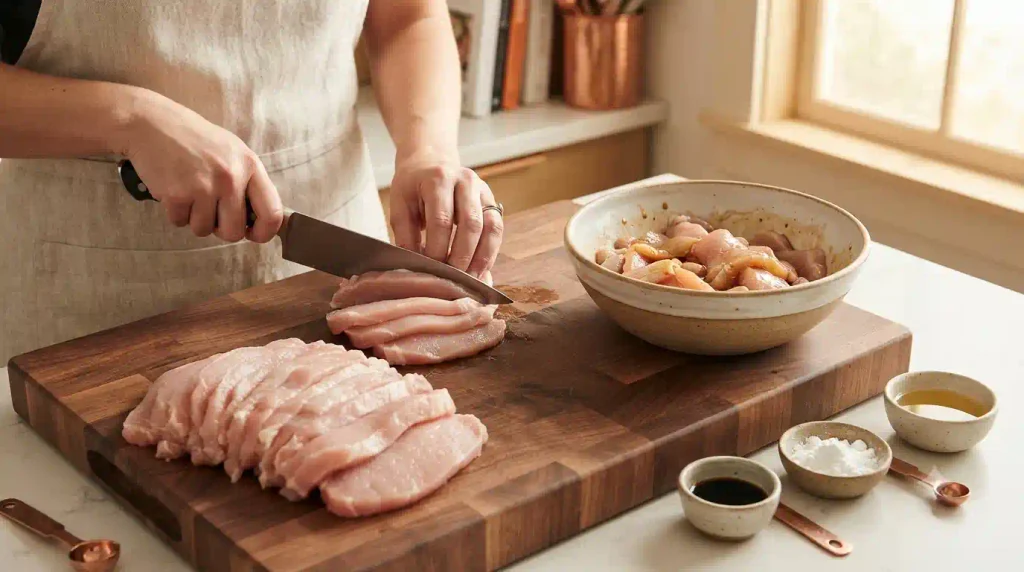
Slice 1 pound of pork thinly against the grain. Aim for pieces roughly ⅛ to ¼ inch thick so they cook quickly.
Place the pork in a bowl and toss it with:
- 1 tablespoon soy sauce
- 1 teaspoon cornstarch
- 1 teaspoon neutral oil
Leave it for about 10 minutes while you prepare the vegetables.
That small amount of cornstarch is useful. It forms a light coating around the meat that helps the pork stay juicy during high-heat cooking.
Food safety note: Wash your hands, knife, cutting board, and anything else that touched the raw pork before using them for cooked food or vegetables.
Step 2: Prepare the Vegetables and Sauce
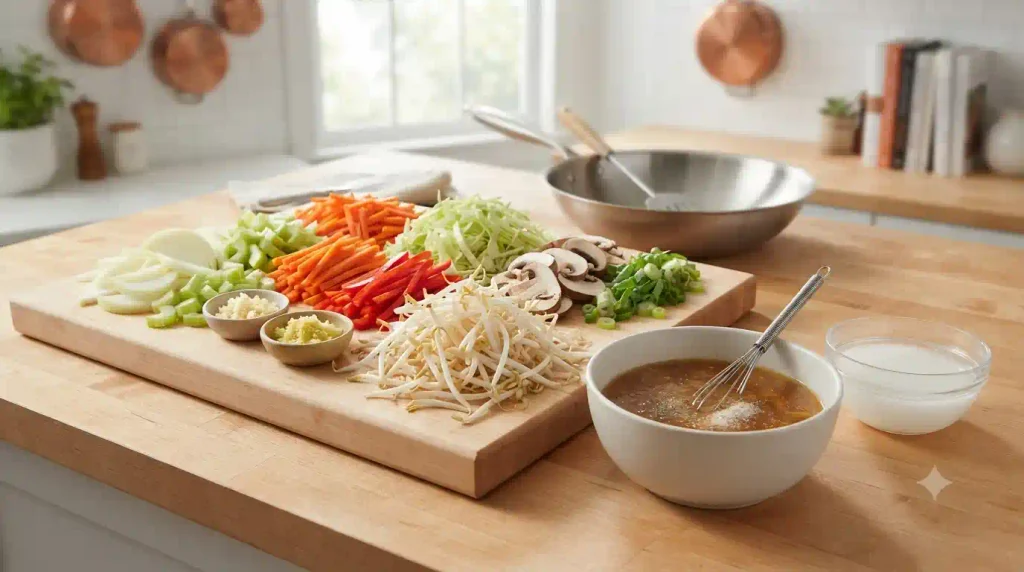
Stir-fries move quickly once the pan gets hot, so have everything ready before you start cooking.
Slice the onion, celery, carrot, bell pepper, cabbage, mushrooms, and green onions. Mince the garlic and grate the ginger.
Dry the bean sprouts thoroughly. This sounds minor, but it’s one of the easiest ways to prevent watery chop suey.
In a separate bowl, whisk together:
- 1 cup chicken broth
- 3 tablespoons soy sauce
- 1 tablespoon oyster sauce
- 1 teaspoon sesame oil
- ½ teaspoon sugar
- ¼ teaspoon white pepper
In another small bowl, combine 2 tablespoons cornstarch with 3 tablespoons cold water.
Whisk until completely smooth.
Don’t add cornstarch directly to the hot pan. It will usually form stubborn little lumps.
Step 3: Sear the Pork

Place a large wok or skillet over medium-high to high heat.
Once properly hot, add 1 tablespoon oil.
Add the pork in a single layer. If your skillet is small, cook it in two batches rather than crowding everything together.
Let the pork sear briefly before tossing it. Stir-fry for approximately 3–4 minutes, until lightly browned and cooked through.
For food safety, whole cuts of pork should reach 145°F (63°C) followed by at least a 3-minute rest.
Transfer the pork to a clean plate.
Chef’s tip: If liquid starts pooling around the meat, your pan may be overcrowded or insufficiently hot. That’s steaming rather than searing.
Step 4: Stir-Fry the Vegetables

Add the remaining 1 tablespoon oil to the hot pan.
Add the onion, carrot, celery, and mushrooms first. Stir-fry for approximately 2–3 minutes.
Add the bell pepper, cabbage, garlic, and ginger.
Continue stir-frying for another 2–3 minutes.
The vegetables should become slightly tender while retaining some bite.
Don’t cook them until completely soft. Vegetables release more water as they break down, which is one reason homemade chop suey sometimes becomes watery.
Step 5: Add the Sauce and Thicken It
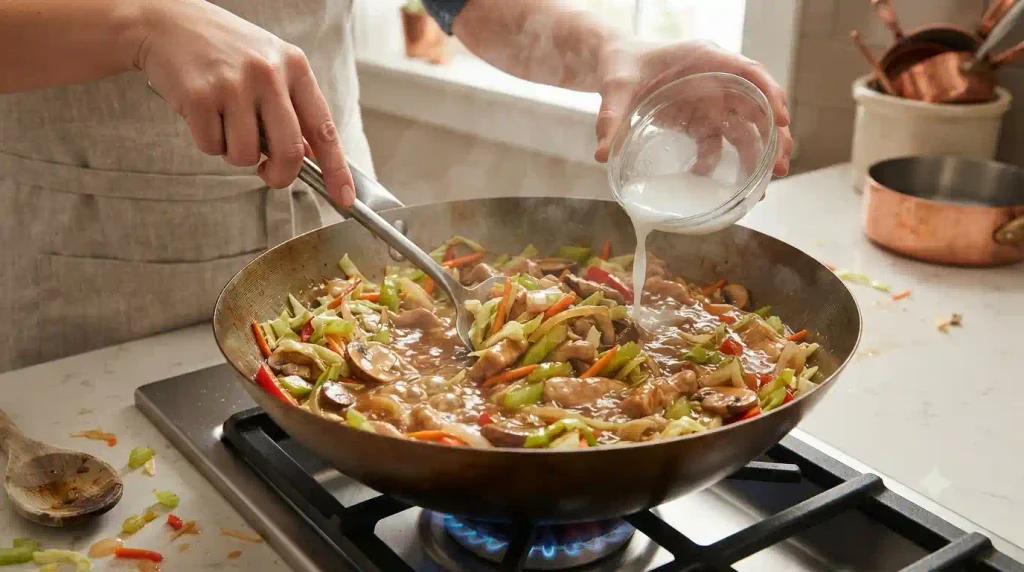
Give the prepared sauce a quick stir and pour it into the pan.
Bring everything to a lively simmer for approximately 1–2 minutes.
Give your cornstarch slurry another stir because cornstarch settles surprisingly quickly.
While stirring the vegetables, slowly pour in the slurry.
Continue stirring for approximately 30–60 seconds.
You’ll see the change almost immediately: the thin liquid should turn into a shiny, glossy sauce that lightly coats the vegetables.
Don’t keep boiling it unnecessarily once it’s thick.
If the sauce looks too thick: Add chicken broth, 1 tablespoon at a time.
If it’s still thin: Let it simmer briefly before adding more starch. Cornstarch needs heat to reach its full thickening power.
Step 6: Finish the Chop Suey

Return the cooked pork and any juices from the plate to the skillet.
Add the well-dried bean sprouts and most of the green onions.
Toss everything together over medium-high heat for approximately 1–2 minutes, just until the pork is hot and the bean sprouts are slightly tender but still crisp.
Taste before adding extra salt. Soy sauce and oyster sauce already contain plenty of sodium.
Remove from the heat and sprinkle with the remaining green onions.
Serve immediately over hot steamed rice.
The finished sauce should coat your spoon and vegetables rather than collecting like broth at the bottom of the bowl.
Health Benefits
Pork chop suey can make a balanced dinner, particularly because the recipe combines lean protein with a generous amount of vegetables.
- High-quality protein: Pork provides complete protein that supports muscle maintenance and normal body function.
- Plenty of vegetables: Cabbage, carrots, peppers, mushrooms, celery, and bean sprouts add fiber and a range of micronutrients.
- Vitamin C: Bell peppers and cabbage contribute vitamin C.
- B vitamins: Pork is naturally rich in several B vitamins, including thiamine.
- Iron and zinc: Pork supplies minerals involved in normal immune and metabolic function.
- Easy to customize: Adding more vegetables can increase the volume and fiber without requiring substantially more meat.
The biggest nutritional consideration is sodium. Using low-sodium broth and soy sauce can help if you’re watching your sodium intake.
Nutrition Information (Per Serving)
Approximate nutrition for one of four servings of chop suey, excluding rice:
| Nutrient | Approximate Amount |
|---|---|
| Calories | 360 kcal |
| Protein | 32 g |
| Fat | 16 g |
| Carbohydrates | 24 g |
Note: Nutrition values are estimates. Exact numbers depend on the pork cut, sauces, brands, vegetable sizes, and portion sizes you use. Rice or noodles will increase the calories and carbohydrates.
Pro Tips & Variations
How to Guarantee Thick, Glossy Chop Suey
1. Dry your vegetables.
Wet vegetables introduce unnecessary moisture. This is especially important for bean sprouts and freshly washed cabbage.
2. Don’t overcrowd the skillet.
A crowded pan traps steam. Use a large skillet or cook the pork in batches.
3. Keep the heat fairly high.
You want vegetables to stir-fry rather than slowly simmer in their own juices.
4. Always use cold water for the slurry.
Mixing cornstarch with cold water allows it to disperse smoothly before reaching the hot sauce.
5. Stir the slurry immediately before using it.
Cornstarch sinks to the bottom of the bowl while it sits.
6. Don’t overcook the vegetables.
Chop suey is much better when the vegetables retain some crispness.
7. Add bean sprouts near the end.
They need very little cooking and can release water if left in the pan too long.
Easy Variations
Chicken Chop Suey:
Replace the pork with 1 pound thinly sliced boneless, skinless chicken breast or thighs.
Beef Chop Suey:
Use thinly sliced flank steak or sirloin. Always slice across the grain.
Shrimp Chop Suey:
Use peeled, deveined shrimp and cook them only until opaque and properly cooked through.
Vegetarian Chop Suey:
Replace the pork with firm tofu and use vegetable broth. Choose a vegetarian oyster-style sauce if needed.
Extra-Veggie Version:
Try adding:
- Broccoli florets
- Snow peas
- Baby corn
- Bok choy
- Water chestnuts
- Bamboo shoots
Gluten-Free Variation
Use certified gluten-free tamari instead of regular soy sauce and check that your oyster sauce and broth are also certified gluten-free.
Lower-Sodium Variation
Use low-sodium broth and reduced-sodium soy sauce. You can also slightly reduce the soy sauce and adjust seasoning at the table.
How Much Does It Cost to Make?
Prices vary considerably by location, season, and supermarket, but this is a reasonable rough estimate for a US grocery shop.
| Ingredient Group | Estimated Cost |
|---|---|
| Pork | $4.00–$6.00 |
| Fresh vegetables | $5.00–$7.00 |
| Broth | $0.75–$1.25 |
| Sauces & seasonings used | $1.00–$1.75 |
| Cornstarch & oil used | $0.30–$0.60 |
| Estimated Total | $11.05–$16.60 |
| Estimated Cost Per Serving | $2.75–$4.15 |
If soy sauce, cornstarch, sesame oil, and oyster sauce are already in your pantry, your actual out-of-pocket cost can be noticeably lower.
Rice will add a small additional cost if you’re serving it alongside the chop suey.
Frequently Asked Questions
Why does my chop suey get watery?
There are several common causes: wet vegetables, overcrowding the skillet, cooking at too low a temperature, overcooking the vegetables, or using an insufficient amount of thickener.
For this recipe, dry the vegetables well, use a hot pan, avoid overcrowding, and add the cornstarch slurry only after the sauce reaches a simmer.
How do you thicken chop suey sauce?
A cornstarch slurry is one of the simplest methods. This recipe combines 2 tablespoons cornstarch with 3 tablespoons cold water.
Stir it immediately before pouring it gradually into the simmering sauce. The sauce should become noticeably thicker within about a minute.
What vegetables traditionally go in pork chop suey?
Recipes vary widely, but common choices include celery, onions, cabbage, bean sprouts, mushrooms, carrots, and bell peppers.
Chop suey is flexible, so it’s also a practical recipe for using vegetables already sitting in your refrigerator.
Can I make pork chop suey ahead of time?
Yes, although its texture is best immediately after cooking.
Cool leftovers promptly and refrigerate them in an airtight container. For best quality, use them within 3–4 days. Reheat leftovers thoroughly until steaming hot throughout.
Keep in mind that vegetables soften during storage, so freshly made chop suey will always have the best crunch.
Final Thoughts
A great pork chop suey doesn’t need complicated techniques or specialty equipment. The difference comes from a few small details: slice the pork thinly, keep the skillet hot, dry your vegetables, don’t overcook them, and thicken the sauce at the end.
Once you see that glossy sauce grab onto the pork and vegetables instead of running to the bottom of the pan, you’ll know you’ve nailed it.
Serve it straight from the skillet with fluffy rice, and don’t worry if your kitchen looks a little chaotic afterward. That’s usually what happens when dinner is worth making again.