

There’s something wonderfully satisfying about cooking duck at home. The moment that skin starts sizzling in a cold pan, you know dinner is going to be special. Add fresh orange, a glossy sauce, and a little caramelization, and suddenly an ordinary evening feels like a restaurant night. The best part? You don’t need complicated techniques or fancy equipment to make it happen.
This orange duck recipe is built for home cooks who want crispy skin, juicy meat, and a sticky orange glaze without spending hours in the kitchen. The trick is simple: start the duck in a cold pan so the fat renders slowly, then finish it with a bright, sweet-savory orange sauce. Your kitchen may get a little messy along the way, but that’s part of cooking a meal worth remembering.
Prep & Cook Time
| Details | Time |
|---|---|
| Prep Time | 15 minutes |
| Cook Time | 30 minutes |
| Total Time | 45 minutes |
| Servings | 4 |
Recipe type: Main course
Cuisine: American-inspired / French-inspired
Best for: Weeknight dinners, date nights, holiday meals, dinner parties
What Equipment Do You Need?
You only need a few basic kitchen tools:
- Large heavy-bottomed skillet, preferably cast iron or stainless steel
- Sharp chef’s knife
- Cutting board
- Small saucepan
- Tongs
- Measuring spoons and cups
- Fine grater or microplane for orange zest
- Citrus juicer
- Instant-read meat thermometer
- Paper towels
- Small bowl
Chef tip: A heavy skillet is especially helpful because it holds heat well and gives the duck skin an even, deep golden color.
Ingredients
For the Duck
- 4 boneless duck breasts, about 6–7 ounces each, skin-on
- 1 teaspoon kosher salt
- ½ teaspoon freshly ground black pepper
- 1 teaspoon olive oil, only if needed for the pan
For the Sticky Orange Glaze
- ¾ cup fresh orange juice, from about 2 large oranges
- 1 tablespoon finely grated orange zest
- 3 tablespoons honey
- 2 tablespoons low-sodium soy sauce
- 1 tablespoon rice vinegar
- 1 tablespoon fresh lemon juice
- 1 garlic clove, finely minced
- 1 teaspoon fresh ginger, finely grated
- ½ teaspoon Dijon mustard
- 1 teaspoon cornstarch
- 1 tablespoon cold water
For Finishing
- 1 tablespoon unsalted butter
- 2 tablespoons thinly sliced green onions
- 1 teaspoon toasted sesame seeds, optional
- Fresh orange zest, optional, for serving
Why Each Ingredient Matters
Every ingredient has a job here. The recipe works because the sweet, salty, acidic, and aromatic flavors balance the richness of duck.
- Duck breasts: Duck has naturally rich meat and a generous layer of fat beneath the skin. Slowly rendering that fat creates the crisp skin this recipe is known for.
- Salt: Seasons the meat and helps draw a little moisture from the surface of the skin, which encourages better browning.
- Orange juice: Brings fresh citrus flavor and acidity to cut through the richness of the duck.
- Orange zest: Adds concentrated orange aroma without making the sauce overly acidic.
- Honey: Gives the glaze its glossy finish and helps it caramelize as it coats the duck.
- Soy sauce: Adds savory depth and umami while balancing the sweetness.
- Rice vinegar and lemon juice: Brighten the sauce and keep the orange glaze from tasting flat or overly sweet.
- Garlic and ginger: Add warmth and a subtle savory bite.
- Dijon mustard: Helps round out the sauce with gentle sharpness.
- Cornstarch: Thickens the glaze so it clings beautifully to the duck instead of running across the plate.
- Butter: Swirled in at the end, it gives the sauce a smoother texture and richer finish.
Step-by-Step Instructions
Step 1: Prepare and Score the Duck
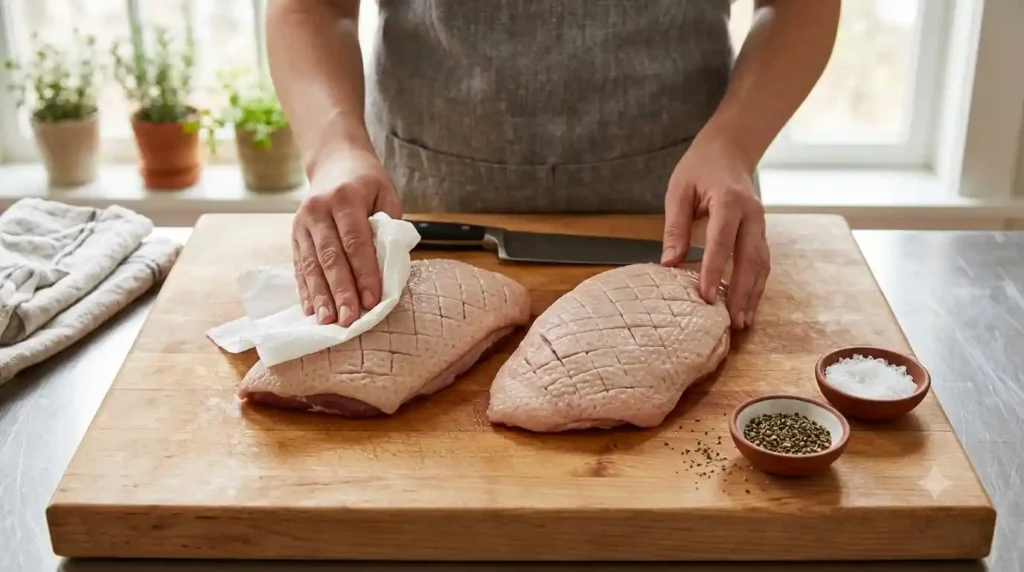
Pat the duck breasts very dry with paper towels. This is one of the easiest ways to improve the final texture.
Using a sharp knife, gently score the skin in a crosshatch pattern. Make shallow cuts through the skin and fat, but do not cut into the meat.
Season both sides with kosher salt and black pepper.
Let the duck sit at room temperature for about 10–15 minutes while you prepare the sauce ingredients.
Important: Keep raw duck separate from ready-to-eat foods. Wash your hands, cutting board, knife, and other surfaces thoroughly after handling it.
Step 2: Make the Orange Glaze
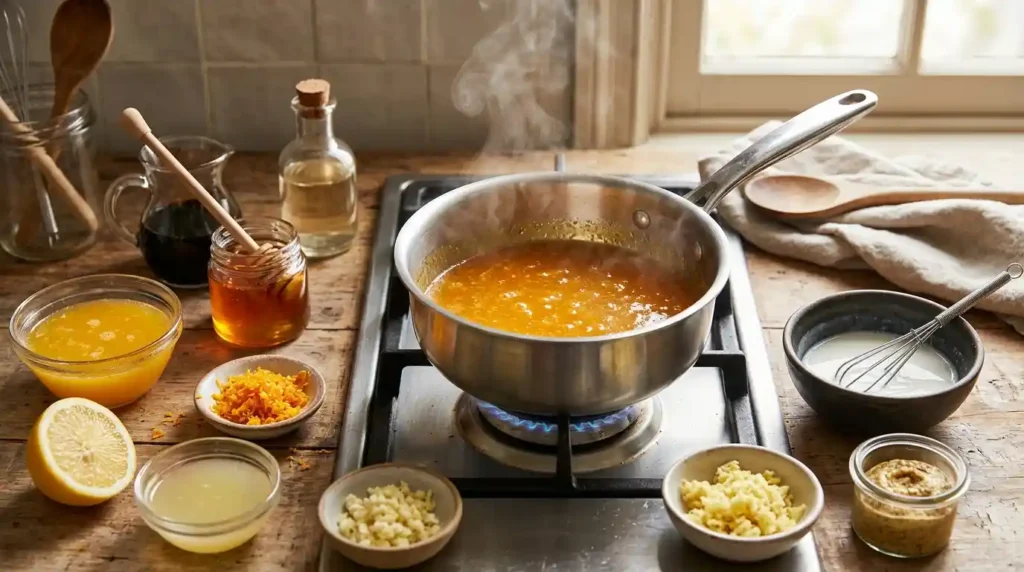
In a small saucepan, combine:
- ¾ cup orange juice
- 1 tablespoon orange zest
- 3 tablespoons honey
- 2 tablespoons soy sauce
- 1 tablespoon rice vinegar
- 1 tablespoon lemon juice
- 1 minced garlic clove
- 1 teaspoon grated ginger
- ½ teaspoon Dijon mustard
Bring the mixture to a gentle simmer over medium heat.
Cook for about 5–7 minutes, stirring occasionally, until the liquid reduces slightly and smells intensely citrusy.
Mix 1 teaspoon cornstarch with 1 tablespoon cold water in a small bowl. Stir until completely smooth.
Whisk the slurry into the simmering orange mixture and cook for another 1–2 minutes, until the glaze lightly coats a spoon.
Remove from the heat and set aside.
Don’t make the glaze too thick at this stage. It will thicken a little more as it cools and again when it hits the hot duck.
Step 3: Slowly Render the Duck Skin
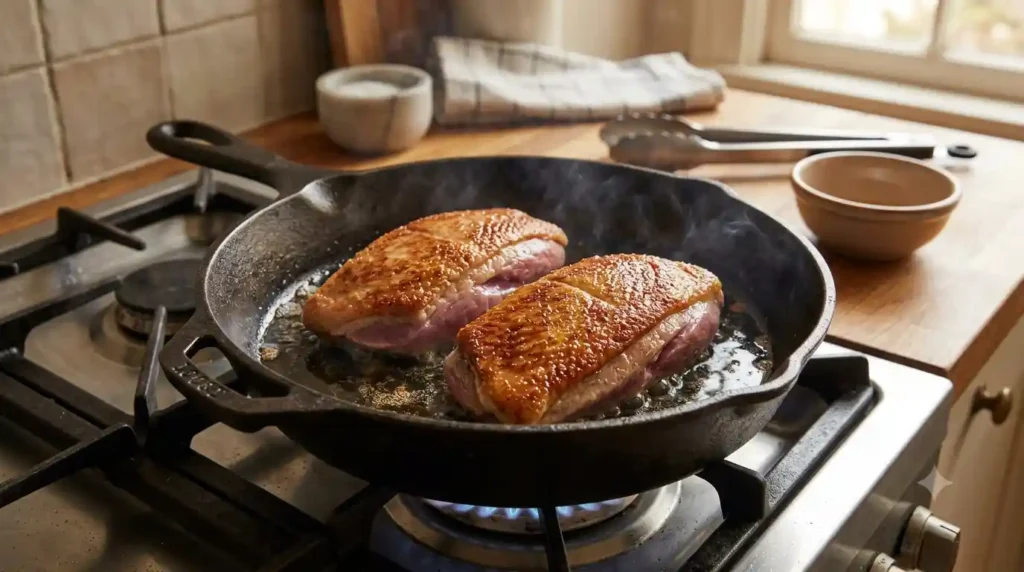
Place the duck breasts skin-side down in a cold, dry skillet. Do not preheat the pan.
Turn the heat to medium-low.
Let the duck cook undisturbed for approximately 10–15 minutes. As the pan heats, the fat underneath the skin will slowly melt out.
You should see a good amount of golden duck fat collecting in the skillet.
Every few minutes, carefully spoon or pour off excess fat into a heatproof container. Don’t pour hot fat down the sink because it can harden inside your plumbing.
Keep cooking until the skin is deep golden brown and crisp.
If one part of the skin is browning faster than another, gently press the duck down with tongs for better contact with the pan.
Step 4: Brown the Meat Side and Finish Cooking
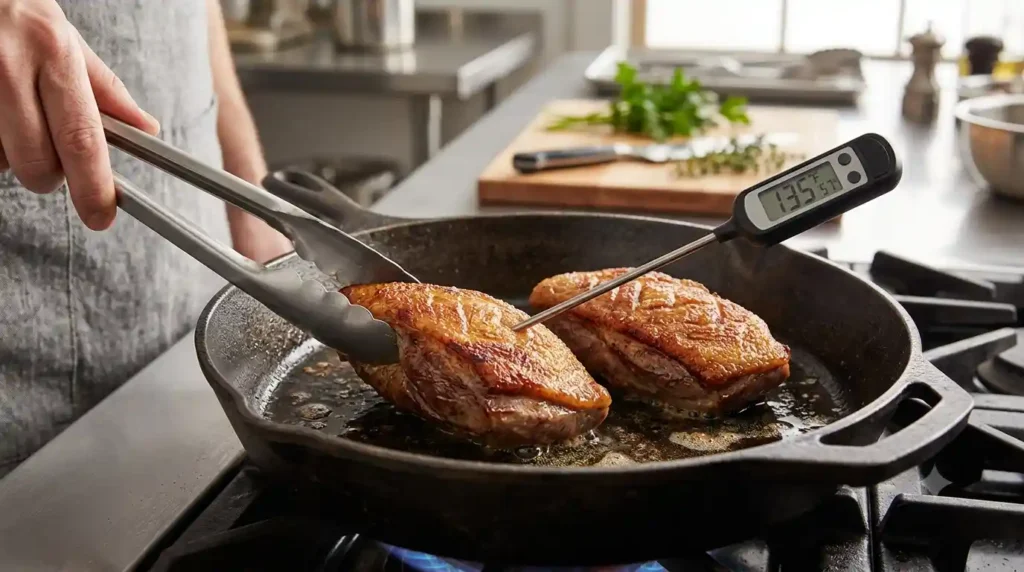
Once the skin is crisp, turn the duck breasts over.
Cook the meat side for approximately 3–5 minutes, depending on thickness.
For the safest poultry preparation, cook duck until the thickest part reaches 165°F (74°C) on an instant-read thermometer.
If the skin has become very dark before the meat reaches the safe temperature, reduce the heat and continue cooking gently.
Transfer the duck to a clean plate and let it rest for 5 minutes.
Resting gives the juices time to redistribute instead of immediately running onto your cutting board.
Step 5: Turn the Orange Sauce Into a Sticky Glaze
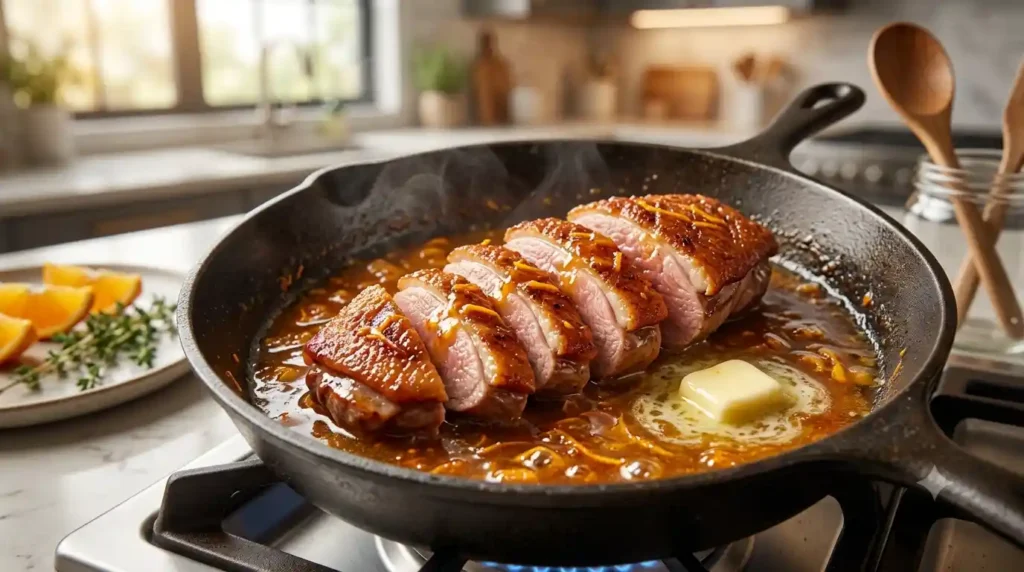
Carefully wipe out most of the excess fat from the skillet, leaving behind a thin coating.
Return the skillet to medium-low heat.
Pour in the prepared orange sauce and let it bubble gently for about 1–2 minutes.
Add 1 tablespoon butter and swirl the pan until the butter melts into the sauce.
Return the rested duck to the skillet, skin-side up.
Spoon some glaze over the meat, but try not to completely drown the crispy skin. Keeping the skin exposed helps preserve that satisfying crunch.
Cook for another 30–60 seconds, just long enough to coat the meat with the sticky glaze.
Step 6: Slice, Garnish, and Serve
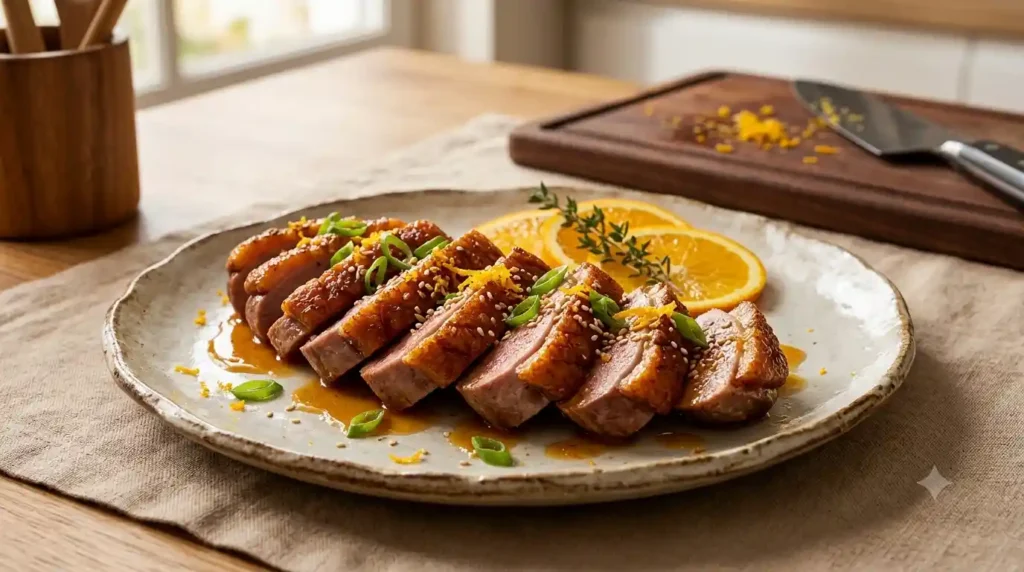
Transfer the duck to a cutting board.
Using a sharp knife, slice each breast into thin pieces.
Arrange the slices on plates and spoon the orange glaze around and lightly over the meat.
Finish with:
- Sliced green onions
- Toasted sesame seeds
- A little fresh orange zest
Serve immediately while the skin is still crisp and the glaze is warm.
Home-cook tip: If you want maximum crispiness, drizzle the sauce around the duck rather than directly over the skin.
Health Benefits
Duck is naturally rich and satisfying, and this recipe pairs it with fresh citrus and aromatic ingredients.
- Duck provides high-quality protein, which supports muscle maintenance and helps make meals more filling.
- Duck contains iron and zinc, important minerals involved in oxygen transport and immune function.
- Oranges provide vitamin C, along with plant compounds such as flavonoids.
- Fresh ginger and garlic contribute flavorful plant compounds while allowing you to build a complex sauce without relying on large amounts of added salt.
- Using fresh orange juice and zest gives the sauce plenty of flavor without needing an excessive amount of sugar.
Because duck is naturally higher in fat than many poultry options, portion size matters. Serving it with vegetables, greens, or roasted vegetables makes for a more balanced meal.
Nutrition Information (Per Serving)
Estimated for 1 duck breast with approximately ¼ of the orange glaze. Actual values will vary depending on the size of the duck breasts and how much rendered fat is consumed.
| Nutrient | Approximate Amount |
|---|---|
| Calories | 520 kcal |
| Protein | 39 g |
| Fat | 31 g |
| Carbohydrates | 21 g |
| Sugars | 17 g |
| Sodium | 720 mg |
Note: These numbers are estimates, not medical or dietary advice. Nutrition can vary considerably by brand, portion size, and how much duck fat remains in the finished dish.
Pro Tips & Variations
For Extra-Crispy Skin
Start with a cold pan. This is the biggest trick in the recipe. It gives the fat time to render before the skin gets aggressively browned.
Dry the Skin Thoroughly
Moisture is the enemy of crispiness. Pat the duck dry before scoring and seasoning.
Don’t Cut Too Deep
Score only the skin and fat. Cutting into the meat can cause juices to escape and makes the breast harder to cook evenly.
Don’t Flip Constantly
Once the duck is skin-side down, leave it alone for most of the rendering process. Constant movement prevents proper browning.
Keep the Sauce Away From the Skin
The orange glaze is delicious, but too much sauce directly on crispy skin will soften it quickly. Spoon it underneath or lightly over the meat.
Easy Variations
Spicy Orange Duck:
Add ½–1 teaspoon red pepper flakes or a little chili garlic sauce to the glaze.
Maple Orange Duck:
Replace the honey with an equal amount of pure maple syrup for a deeper, slightly woodsy sweetness.
Five-Spice Orange Duck:
Add ¼ teaspoon Chinese five-spice powder to the sauce for a warmer, more aromatic flavor.
Low-Sodium Version:
Use reduced-sodium soy sauce and slightly reduce the added salt on the duck.
Extra-Citrusy Version:
Add a little more orange zest at the end rather than adding more juice. The zest gives you stronger orange aroma without making the sauce watery.
What to Serve With Orange Duck
This rich duck pairs beautifully with lighter sides:
- Steamed jasmine rice
- Roasted asparagus
- Green beans
- Sesame broccoli
- Baby bok choy
- Simple mixed greens
- Roasted carrots
- Creamy mashed potatoes
For a dinner-party plate, try orange duck + jasmine rice + roasted broccolini. The combination gives you rich, bright, savory, and fresh flavors in every bite.
How Much Does It Cost to Make?
Prices vary by location and season, especially for duck, but this recipe is fairly manageable for a special dinner at home.
| Ingredient/Category | Estimated Cost |
|---|---|
| 4 duck breasts | $18–$24 |
| Fresh oranges | $2–$4 |
| Honey | $0.75 |
| Soy sauce | $0.30 |
| Ginger, garlic & lemon | $1.50 |
| Vinegar, mustard & cornstarch | $0.50 |
| Butter & garnishes | $1.25 |
| Estimated Total | $24–$32 |
| Approx. Cost Per Serving | $6–$8 |
The biggest variable is the price of duck breasts. Buying duck when it’s on sale or purchasing larger packs can bring the cost per serving down.
Compared with ordering a duck entrée at a restaurant, making it at home can still be a great value for a special meal.
Frequently Asked Questions
Can I make orange duck with duck legs instead of duck breast?
Yes, but the cooking method needs to change. Duck legs contain more connective tissue and generally benefit from a longer, slower cooking process. This recipe is specifically designed for skin-on duck breasts.
How do you get duck skin crispy?
The key is to start the duck in a cold, dry skillet and cook it skin-side down over medium-low heat. This slowly renders the fat beneath the skin. Patting the skin completely dry and avoiding excessive sauce on top also helps keep it crisp.
Can I make the orange glaze ahead of time?
Absolutely. The glaze can be prepared up to 2–3 days ahead and stored in a covered container in the refrigerator. Reheat it gently in a saucepan before serving. If it becomes too thick, loosen it with a small splash of orange juice or water.
What temperature should duck breast be cooked to?
For food safety, poultry should reach an internal temperature of 165°F (74°C) measured at the thickest part. Use an instant-read thermometer rather than relying only on cooking time, since duck breasts vary in size and thickness.
Final Thoughts
This orange duck is proof that an impressive dinner doesn’t have to feel intimidating. The slow-rendered skin, juicy duck, and bright sticky orange glaze create that special restaurant-style combination, while the actual technique is surprisingly simple.
Take your time with the skin, don’t rush the rendering, and keep the glaze balanced between sweet, salty, and citrusy. Once you hear that first crisp slice hit the cutting board, you’ll understand why making duck at home is worth the little bit of extra effort. Serve it hot, add your favorite simple side, and enjoy every bite.