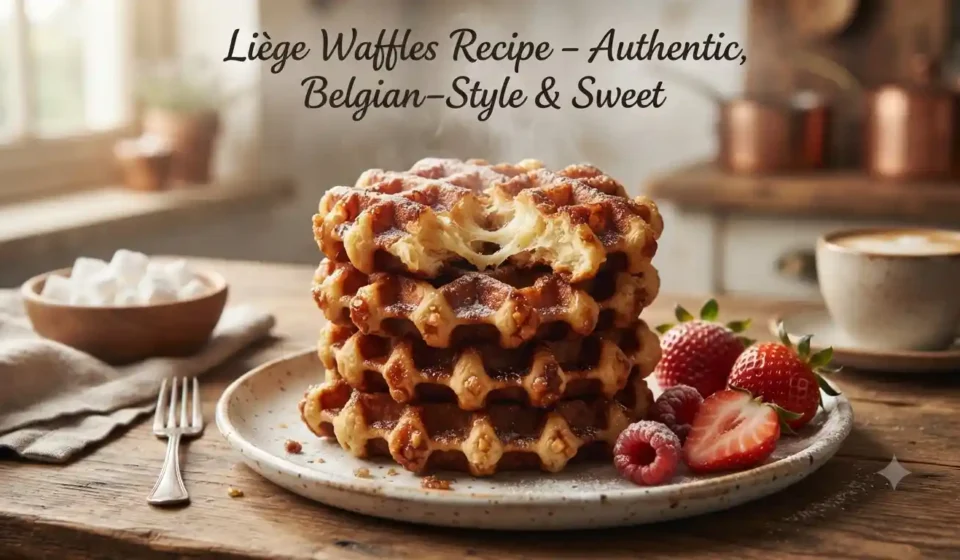

There’s something especially satisfying about making waffles from scratch when a sweet, buttery craving hits. Liège waffles are not the light breakfast waffles many of us grew up with. They’re richer, chewier, and almost pastry-like, with little pockets of caramelized sugar. The smell of butter, vanilla, and warm sugar coming from the waffle iron makes waiting surprisingly difficult.
The good news is that authentic Belgian-style Liège waffles are very manageable in a home kitchen. The dough needs time to rise, but the hands-on work is simple. Once pearl sugar is folded in, each waffle cooks into a golden, crisp-edged treat with a soft, brioche-like center.
Liege Waffles Recipe – Authentic, Belgian-Style & Sweet
These classic Liège waffles are made with a yeast-raised, buttery dough rather than a pourable waffle batter. Belgian pearl sugar is folded in just before cooking, creating the signature crunchy, caramelized pockets that make these waffles so special.
Prep & Cook Time
| Details | Time / Amount |
|---|---|
| Prep Time | 25 minutes |
| Rising Time | 1 hour 15 minutes |
| Cook Time | 20 minutes |
| Total Time | About 2 hours |
| Servings | 8 waffles |
| Serving Size | 1 waffle |
Note: Cooking time can vary depending on the size and temperature of your waffle iron.
What Equipment Do You Need?
You don’t need professional Belgian waffle equipment to make a great batch at home.
- Belgian-style waffle iron
- Large mixing bowl
- Small bowl or measuring jug
- Measuring cups and spoons
- Digital kitchen scale, if available
- Wooden spoon or sturdy spatula
- Stand mixer with dough hook, optional
- Clean kitchen towel or plastic wrap
- Wire cooling rack
- Silicone or heat-resistant tongs
A deep-pocketed Belgian waffle maker gives the most traditional appearance, but a regular waffle iron can work too. Just make smaller portions so the dough doesn’t spill over the sides.
Ingredients
For 8 Belgian-style Liège waffles, you’ll need:
- ¾ cup (180 ml) whole milk, lukewarm
- 2¼ teaspoons (7 g) active dry yeast
- 2 tablespoons (25 g) granulated sugar
- 3 cups (375 g) all-purpose flour
- ½ teaspoon fine salt
- 2 large eggs, at room temperature
- 2 teaspoons pure vanilla extract
- 1 cup (226 g) unsalted butter, very soft but not melted
- 1 cup (150 g) Belgian pearl sugar
Optional for Serving
- Fresh strawberries or raspberries
- Sliced banana
- Light dusting of powdered sugar
- Melted dark chocolate
- Whipped cream
- Greek yogurt
Traditional Liège waffles are already sweet enough to eat completely plain. Try one straight from the waffle iron before reaching for maple syrup—you may find it doesn’t need anything else.
Why Each Ingredient Matters
| Ingredient | Why It Matters |
|---|---|
| Whole milk | Adds moisture, richness, and dairy flavor while helping create a tender interior. |
| Yeast | Gives the dough its characteristic rise and slightly fermented, bakery-style flavor. |
| Granulated sugar | Provides a little sweetness and helps support yeast activity. |
| All-purpose flour | Provides enough gluten structure to hold the rich butter and eggs without making the waffles overly heavy. |
| Salt | Balances the sweetness and strengthens the overall flavor. |
| Eggs | Add richness, structure, moisture, and color. |
| Vanilla | Adds warmth and enhances the buttery caramel flavors. |
| Butter | Responsible for much of the rich, brioche-like texture and flavor. |
| Belgian pearl sugar | Creates the crunchy sugar pockets and caramelized exterior that define an authentic Liège waffle. |
The pearl sugar is especially important. Unlike ordinary granulated sugar, the large sugar pieces don’t immediately disappear into the dough. Some remain intact while others melt against the hot waffle plates and caramelize.
That contrast between soft dough, crisp edges, and crunchy sugar is the whole point of a proper Liège waffle.
Step-by-Step Instructions
Step 1: Activate the Yeast
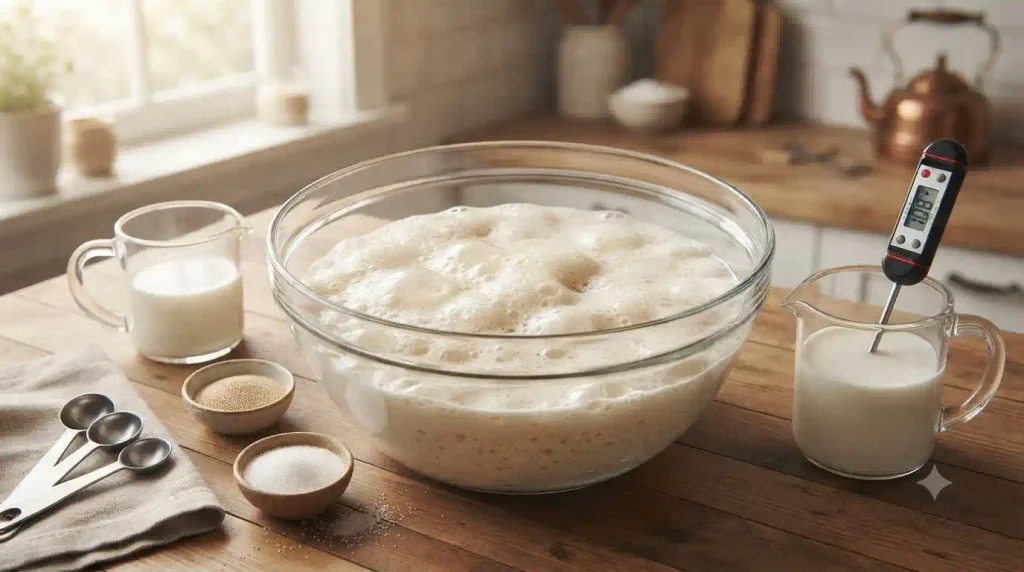
Warm the milk until it feels comfortably warm rather than hot, ideally around 105–110°F (40–43°C).
Pour it into a large mixing bowl and stir in the yeast and granulated sugar. Leave the mixture undisturbed for 5–10 minutes.
You should see some foam or bubbles forming on the surface.
If absolutely nothing happens and you know your milk wasn’t too hot, your yeast may be old. Starting again now is much better than discovering after an hour that the dough won’t rise.
Chef tip: Milk that is excessively hot can damage the yeast. Warm is what you want—not steaming.
Step 2: Make the Dough
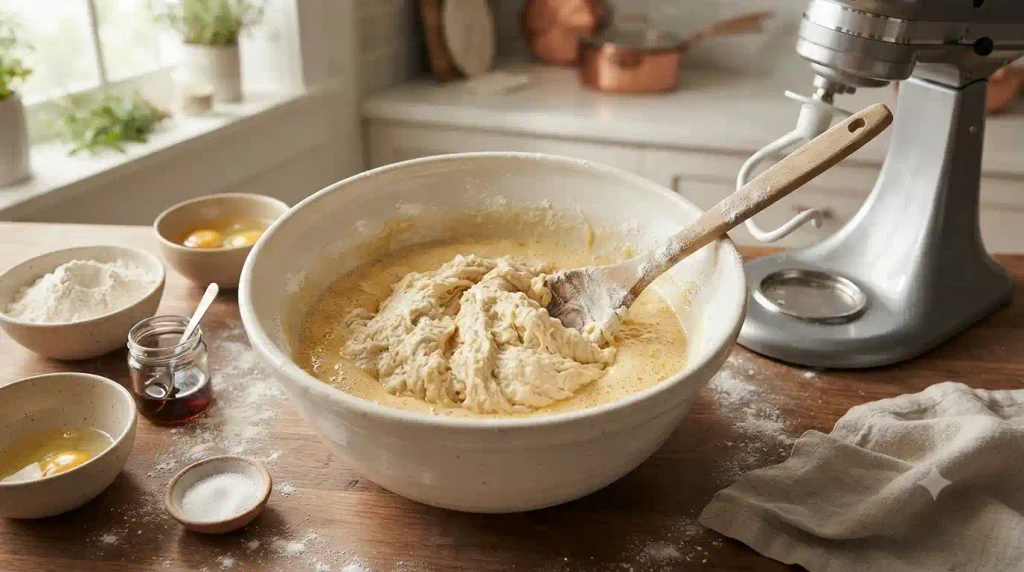
Add the eggs and vanilla to the activated yeast mixture and whisk briefly.
Add the flour and salt.
Using a wooden spoon, sturdy spatula, or stand mixer fitted with a dough hook, mix until a thick, shaggy dough begins to form.
Continue kneading for approximately 5–7 minutes with a mixer or 8–10 minutes by hand.
The dough should become smoother and more elastic.
Don’t panic if it feels stickier than ordinary bread dough. Liège waffle dough is enriched with eggs and will become even softer once the butter goes in. Resist dumping in lots of extra flour, which can make the finished waffles dense.
Step 3: Work in the Butter
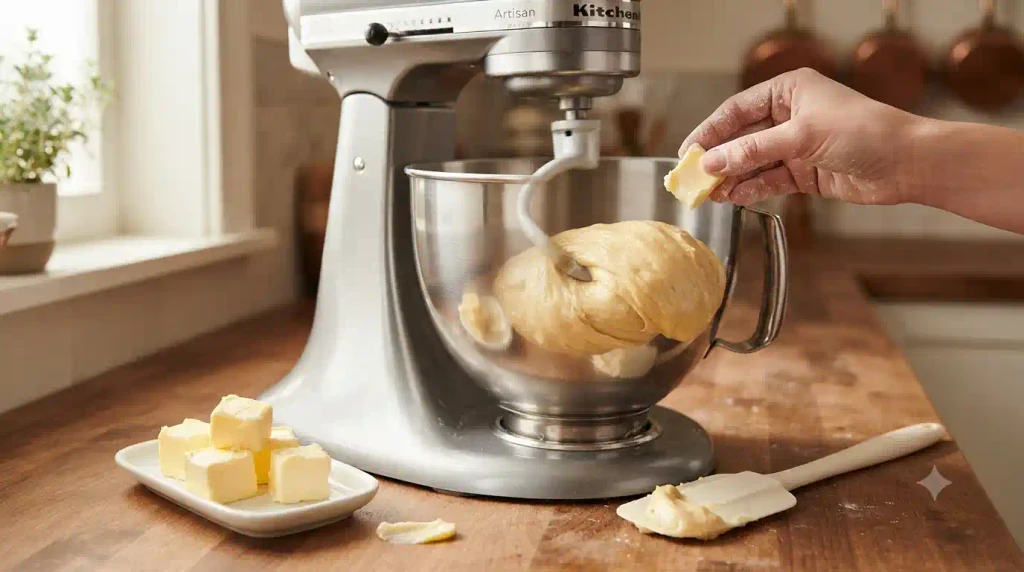
Add the softened butter gradually, roughly 1–2 tablespoons at a time.
Mix well after each addition before adding more.
At first, your dough may look greasy or even slightly separated. This is one of those messy-kitchen moments where the recipe can look wrong before suddenly coming together.
Keep mixing.
After several minutes, the butter should become incorporated and the dough should look glossy, soft, and elastic.
This gradual process allows the dough to absorb a substantial amount of butter while maintaining enough structure to rise.
Step 4: Let the Dough Rise
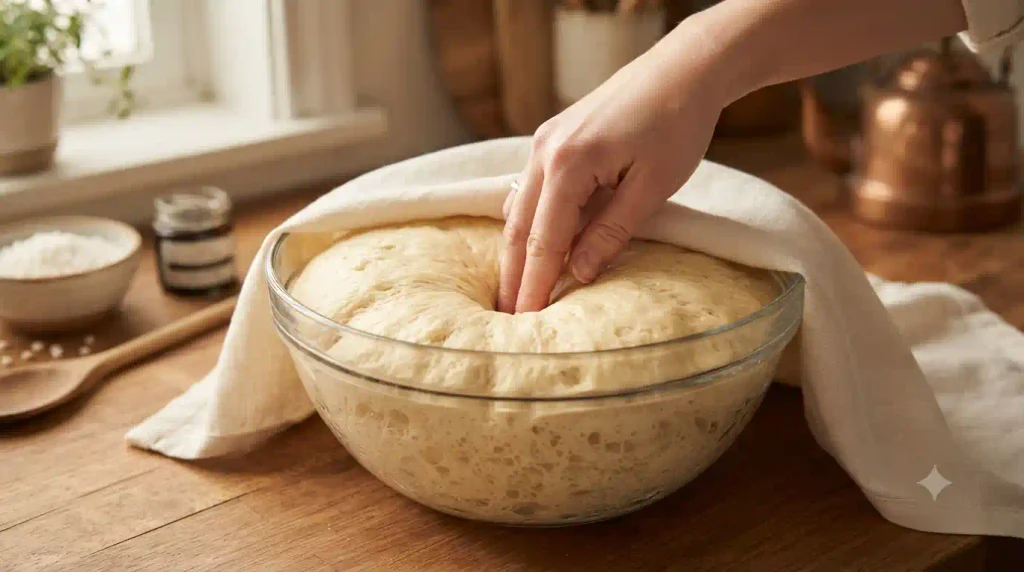
Gather the dough into the center of the bowl.
Cover loosely with plastic wrap or a clean kitchen towel and place it somewhere comfortably warm and draft-free.
Let it rise for approximately 60–75 minutes, or until noticeably puffy and close to doubled in volume.
Room temperature matters. A cool kitchen may require more time, while a warm kitchen may speed things up.
Avoid placing the bowl directly against a very hot oven or heating element.
Once risen, gently press down the dough to release some of the excess gas.
Step 5: Fold in the Pearl Sugar
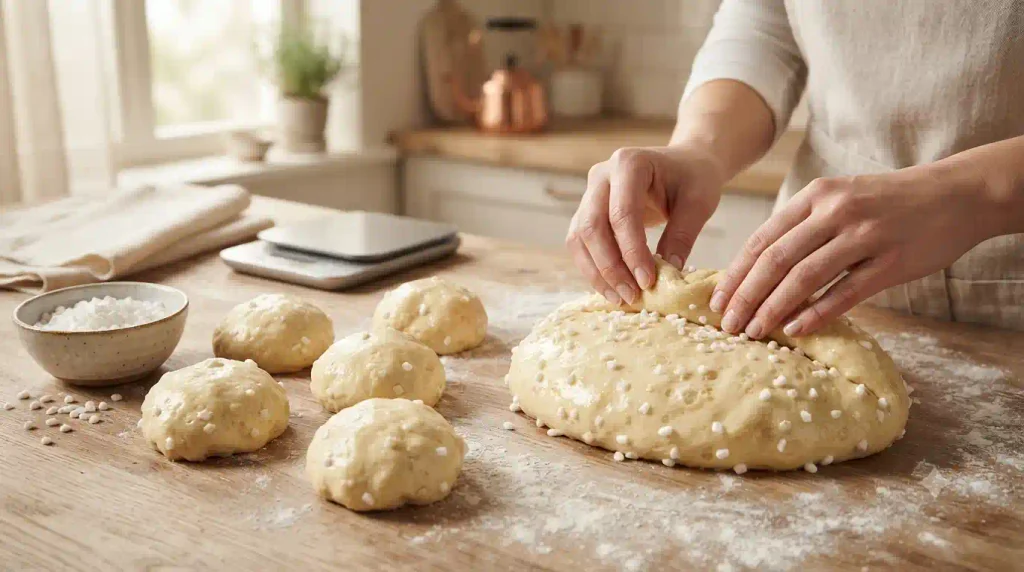
Add the Belgian pearl sugar to the risen dough.
Gently fold or knead it through until the sugar is reasonably evenly distributed.
Don’t aggressively knead the dough at this stage. You want the sugar crystals scattered throughout rather than completely crushed.
Divide the dough into 8 roughly equal portions, approximately 115–120 g each, depending on your final dough weight.
Shape each portion loosely into a ball.
Let them rest for about 10 minutes while you preheat the waffle iron.
Step 6: Cook Until Golden and Caramelized
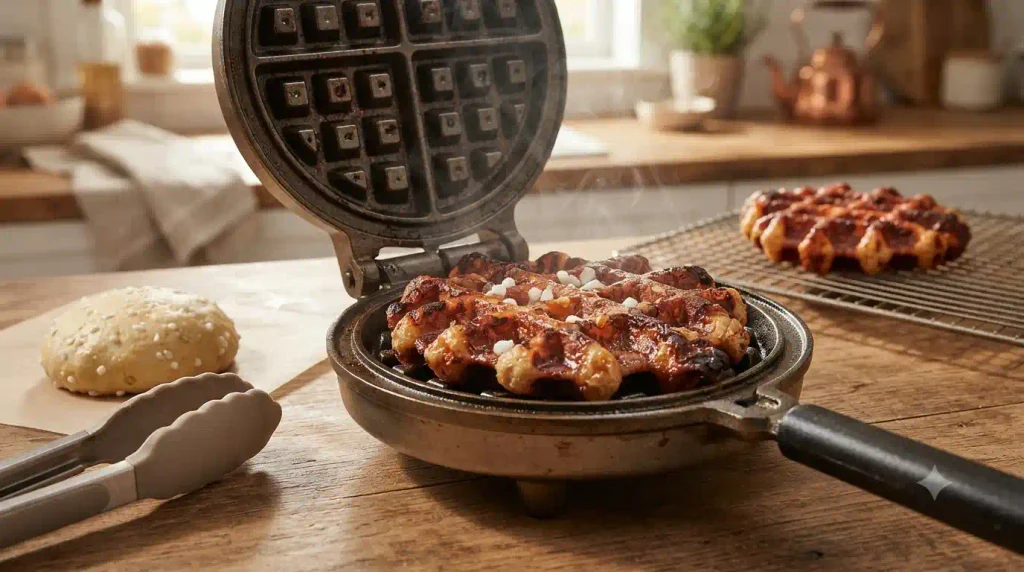
Preheat your Belgian waffle iron according to the manufacturer’s directions. A medium to medium-high setting is usually a good starting point.
Place one portion of dough in the center of the waffle iron and close the lid gently.
Cook for approximately 3–5 minutes, depending on your machine, until deeply golden brown and caramelized around the edges.
Carefully remove the waffle using heat-resistant tongs or a suitable utensil and transfer it to a wire rack.
Be particularly careful here. Melted pearl sugar becomes extremely hot and can cause a painful burn. Avoid touching freshly caramelized sugar with your fingers.
Repeat with the remaining dough.
Let each waffle cool for a few minutes before eating. That short rest also gives the caramelized exterior time to become beautifully crisp.
Health Benefits
Liège waffles are an indulgent food, so it makes more sense to enjoy them for what they are rather than turn them into a so-called health food. Still, several ingredients contribute useful nutrients.
Eggs provide protein and micronutrients. They contain high-quality protein as well as nutrients including vitamin B12, selenium, and choline.
Milk contributes calcium and protein. Whole milk also helps make the waffles satisfying and adds richness without relying solely on sugar for flavor.
A satisfying portion can fit into a balanced diet. One waffle paired with fresh berries and plain Greek yogurt makes a more nutritionally rounded meal than piling several waffles with additional syrup and whipped cream.
The main nutritional consideration is that traditional Liège waffles contain significant amounts of butter, refined flour, and added sugar. They’re best considered a treat rather than an everyday breakfast staple.
For portion control, one rich waffle is often surprisingly satisfying.
Nutrition Information (Per Serving)
Approximate nutrition for 1 waffle, assuming the recipe makes 8:
| Nutrient | Approximate Amount |
|---|---|
| Calories | 480 kcal |
| Protein | 8 g |
| Fat | 26 g |
| Carbohydrates | 56 g |
Nutrition note: These values are estimates. Actual nutrition varies according to ingredient brands, waffle size, the amount of caramelized sugar left on the waffle iron, and any toppings added.
Pro Tips & Variations
Use real Belgian pearl sugar
This is the ingredient most worth seeking out. Large Belgian pearl sugar crystals are designed to survive long enough during cooking to produce those unmistakable crunchy caramel pockets.
Regular granulated sugar isn’t a direct substitute.
Don’t melt the butter
Use very soft room-temperature butter.
Melted butter changes how the fat incorporates into the dough and can make it considerably harder to achieve that rich, structured brioche-like consistency.
Give the dough enough time to rise
Watch the dough rather than watching only the clock.
Yeast works more slowly in a cool kitchen. If the dough hasn’t become noticeably puffy after an hour, simply give it longer.
Don’t add too much flour
The dough is supposed to be soft and somewhat sticky.
Adding flour until it resembles firm bread dough may make handling easier, but you’ll sacrifice some of the tender interior.
Control your waffle iron temperature
Pearl sugar caramelizes quickly.
If the outside becomes very dark before the middle cooks, lower the temperature slightly for your next waffle.
Make smaller waffles
Liège waffles traditionally have an irregular shape rather than filling every corner of the waffle iron.
Putting a small ball of dough in the center also gives it room to expand without squeezing caramelized sugar everywhere.
Cinnamon Variation
Add ½ teaspoon ground cinnamon to the flour for a warm, lightly spiced version.
Chocolate Variation
Once the waffles have cooled slightly, drizzle them with a little melted dark chocolate.
The slight bitterness of dark chocolate works particularly well against the sweet pearl sugar.
Citrus Variation
Add 1 teaspoon finely grated orange or lemon zest with the vanilla.
Citrus cuts through the richness without changing the basic waffle texture.
Slightly Lighter Serving Idea
Keep the traditional waffle recipe intact but change the toppings.
Serve one waffle with:
- Fresh berries
- Sliced peaches
- Plain Greek yogurt
- A small amount of nut butter
This preserves the authentic waffle while adding fruit and protein to the plate.
Keeping Waffles Crisp
Don’t immediately stack hot waffles.
Steam becomes trapped between them and softens that lovely caramelized exterior. Put finished waffles individually on a wire cooling rack instead.
Reheating
A toaster or 350°F (175°C) oven for about 5–7 minutes works much better than a microwave.
Microwaving makes the waffle soft and can turn the sugar pockets unpleasantly sticky.
How Much Does It Cost to Make?
Prices vary considerably by location and brand, but here’s a reasonable estimate for a home kitchen in the USA.
| Ingredient | Approximate Recipe Cost |
|---|---|
| Whole milk | $0.40 |
| Active dry yeast | $0.50 |
| Granulated sugar | $0.10 |
| All-purpose flour | $0.65 |
| Eggs | $0.70 |
| Vanilla extract | $0.45 |
| Unsalted butter | $2.25 |
| Belgian pearl sugar | $2.50–$3.50 |
| Salt | $0.02 |
| Estimated Total | $7.50–$8.50 |
| Approx. Cost Per Waffle | $0.95–$1.05 |
Pearl sugar is usually the least common—and potentially most expensive—ingredient. However, making a batch at home can still be considerably cheaper than buying individual specialty waffles from a bakery or café.
For UK cooks, ingredient prices will differ, but the same recipe and metric measurements work without modification.
Frequently Asked Questions
What is the difference between Liège waffles and Belgian waffles?
“Belgian waffle” is a broad term, while Belgium actually has several waffle traditions.
Liège waffles are typically dense, rich, yeast-raised, and made from dough. Pearl sugar is incorporated into that dough and caramelizes during cooking.
Brussels-style waffles are generally lighter, crisper, more rectangular, and airier.
If you’re expecting a thin, pourable batter, Liège waffle dough can initially seem unusual. Its thicker consistency is intentional.
Can I make Liège waffles without pearl sugar?
Technically, you can make the dough without it, but you won’t get the defining Liège waffle texture.
Belgian pearl sugar creates the crunchy pockets and caramelized crust. Ordinary granulated sugar dissolves too readily and therefore won’t behave the same way.
If authenticity is your goal, Belgian pearl sugar is worth buying.
Can Liège waffle dough be made ahead of time?
Yes.
For convenient morning waffles, prepare the dough through its initial mixing stage, cover it securely, and refrigerate it overnight. Cold fermentation can also develop more complex flavor.
The following day, allow the dough to soften and become active at room temperature before folding in the pearl sugar and cooking.
For best results, add the pearl sugar shortly before cooking rather than leaving it in the moist dough overnight.
How do I store leftover Liège waffles?
Let the waffles cool completely before storing them.
Keep them in an airtight container in the refrigerator for around 3–4 days, or freeze them individually for longer storage.
To freeze, place cooled waffles in a freezer-safe container or bag with parchment between layers.
Reheat refrigerated or frozen waffles in a toaster or moderate oven until the center is warm and the exterior becomes crisp again.
Final Thoughts
Homemade Liège waffles take a little more patience than ordinary waffles, but the payoff is completely different: buttery brioche-like centers, crisp golden edges, and pockets of caramelized pearl sugar in every bite.
Don’t worry about making every waffle perfectly shaped. The slightly irregular edges and spots of deep caramelization are part of their charm. Give the yeast time to work, keep the dough soft, and watch the hot sugar carefully while cooking.
Serve them warm, keep the toppings simple, and don’t be surprised when the first waffle disappears while you’re still cooking the second.