

Cooking something delicious from scratch has a way of making an ordinary morning feel special. Sometimes all it takes is the smell of butter hitting a warm skillet to send us straight to the kitchen. When a craving for something sweet, cozy, and satisfying shows up, cinnamon French toast is one of those recipes that never disappoints.
The secret is simple: use sturdy bread, a well-seasoned custard, and enough butter to create those golden, crispy edges while keeping the center soft and fluffy. Whether you’re making breakfast for the family or treating yourself to a slow weekend brunch, this recipe gives you that classic diner-style French toast without complicated techniques or hard-to-find ingredients.
Prep & Cook Time
- Prep time: 10 minutes
- Cook time: 15 minutes
- Total time: 25 minutes
- Servings: 4
- Yield: 8 slices of French toast
What Equipment Do You Need?
You only need a few basic kitchen tools:
- Large mixing bowl
- Whisk or fork
- Shallow baking dish or pie plate
- Large nonstick skillet or griddle
- Spatula
- Measuring cups and spoons
- Small bowl for melted butter, if desired
- Serving plates
Chef’s note: A shallow dish is much easier than a deep bowl for dipping the bread. It helps you coat each slice evenly without soaking it too aggressively.
Ingredients
- 8 slices thick-cut bread, preferably brioche, challah, or Texas toast
- 3 large eggs
- ¾ cup whole milk
- 2 tablespoons heavy cream
- 2 tablespoons granulated sugar
- 1½ teaspoons ground cinnamon
- 1 teaspoon pure vanilla extract
- ¼ teaspoon fine salt
- 2 tablespoons unsalted butter, plus more as needed for cooking
- Maple syrup, for serving
- Powdered sugar, optional, for serving
- Fresh berries or sliced bananas, optional, for serving
Best bread: Slightly stale bread works beautifully because it absorbs the custard without falling apart. If your bread is very fresh, leave the slices uncovered for 30–60 minutes before cooking.
Why Each Ingredient Matters
Thick-cut bread: The bread provides the structure for the French toast. Brioche and challah are especially good because their rich, tender texture creates a soft center while the outside becomes beautifully crisp.
Eggs: Eggs are the backbone of the custard. Their proteins set as they cook, helping the French toast hold together while adding richness.
Whole milk: Milk loosens the eggs and creates a creamy custard. Whole milk gives a richer result than skim milk.
Heavy cream: Just two tablespoons make the custard extra luxurious without making it overly heavy.
Cinnamon: Cinnamon gives the French toast its warm, bakery-style flavor. It also pairs naturally with maple syrup and butter.
Vanilla extract: Vanilla rounds out the eggy custard and adds a gentle sweetness.
Sugar: A small amount helps the French toast caramelize as it hits the hot skillet. Too much sugar can cause the outside to burn before the center cooks.
Salt: Don’t skip it. A little salt balances the sweetness and makes the cinnamon and vanilla taste more noticeable.
Butter: Butter gives the slices those irresistible golden edges and adds a classic breakfast flavor.
Step-by-Step Instructions
Step 1: Make the Cinnamon Custard
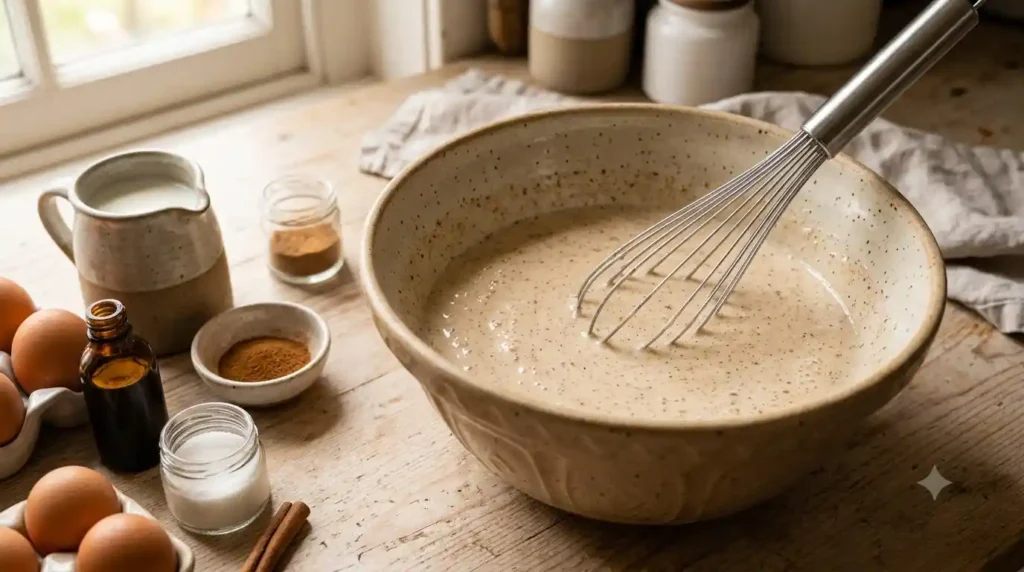
In a large mixing bowl, whisk together the 3 eggs, ¾ cup whole milk, 2 tablespoons heavy cream, 2 tablespoons sugar, 1½ teaspoons cinnamon, 1 teaspoon vanilla extract, and ¼ teaspoon salt.
Whisk until the eggs are fully blended and no obvious streaks of egg white remain.
Don’t worry if you see tiny cinnamon specks floating around. Cinnamon naturally doesn’t dissolve completely in liquid, and those little specks are exactly what you want.
Step 2: Heat the Skillet
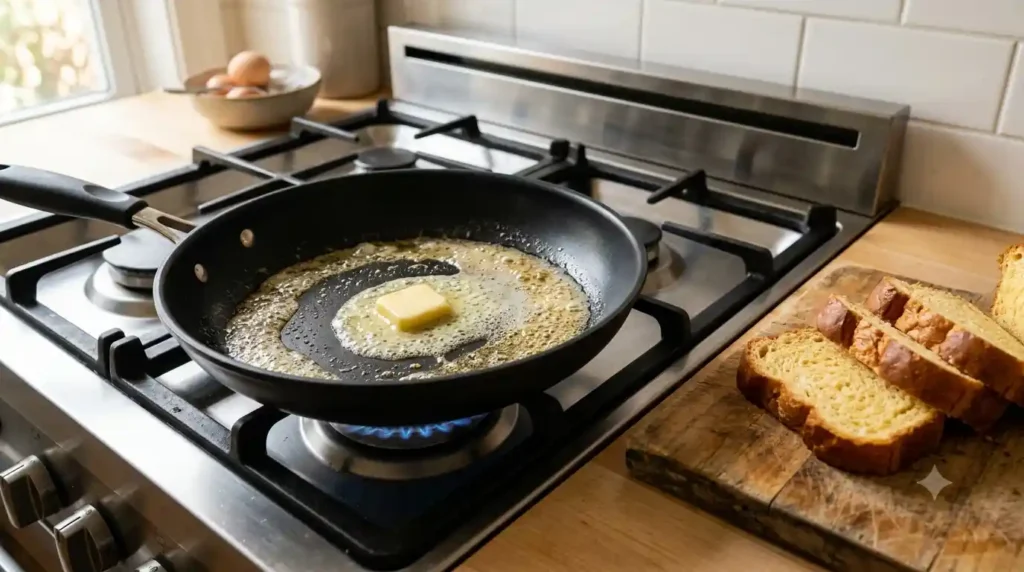
Place a large nonstick skillet or griddle over medium heat.
Add about 1 tablespoon of butter and let it melt until lightly foamy. Don’t let the butter become dark brown or smoky.
The skillet should be hot enough to sizzle gently when the bread touches it, but not so hot that the butter immediately burns.
Step 3: Dip the Bread
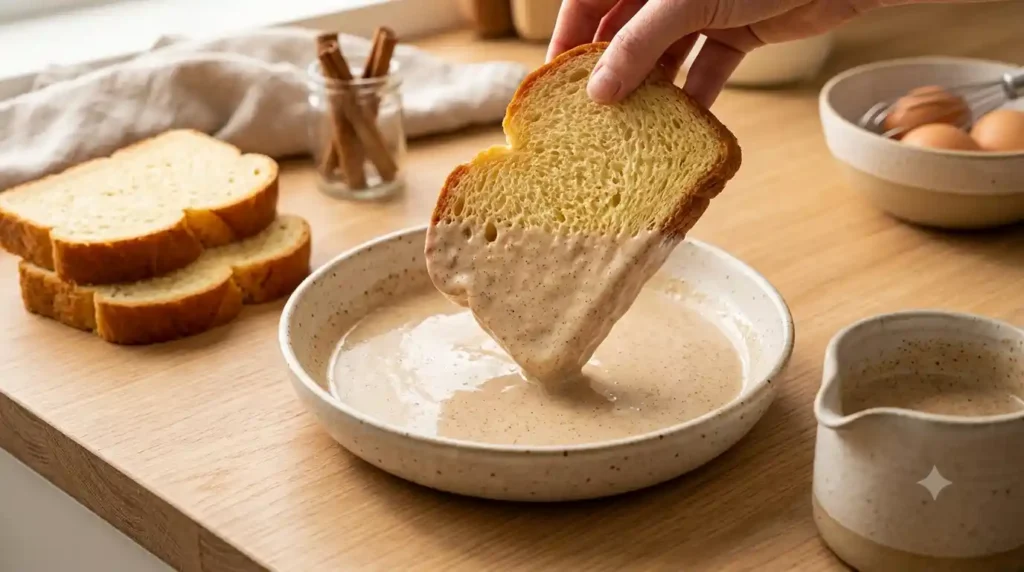
Pour the custard into a shallow dish.
Place one slice of bread into the mixture and let it soak for about 10–15 seconds per side.
Turn it carefully so both sides are coated.
Don’t drown the bread. Very soft bread only needs a quick dip. If you soak it too long, the center can become mushy and difficult to flip.
Repeat with the remaining slices as you cook them in batches.
Step 4: Cook Until Golden
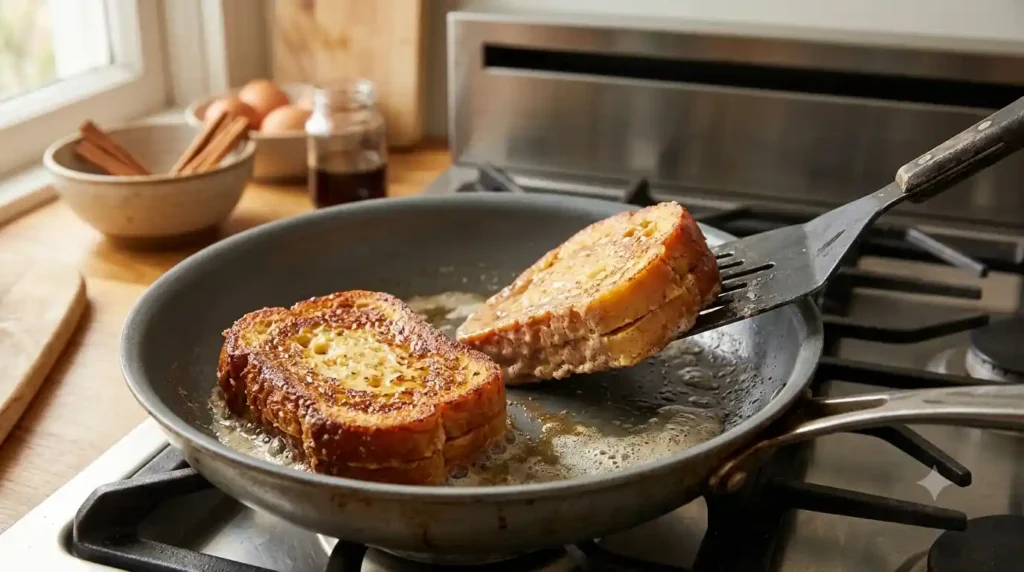
Carefully place the soaked bread into the hot skillet.
Cook for about 2–3 minutes on the first side, or until deep golden brown and crisp around the edges.
Flip with a spatula and cook the second side for another 2–3 minutes.
If the outside is browning too quickly while the center still feels soft, lower the heat slightly. French toast needs enough time for the custard inside to cook through.
Step 5: Cook the Remaining Slices
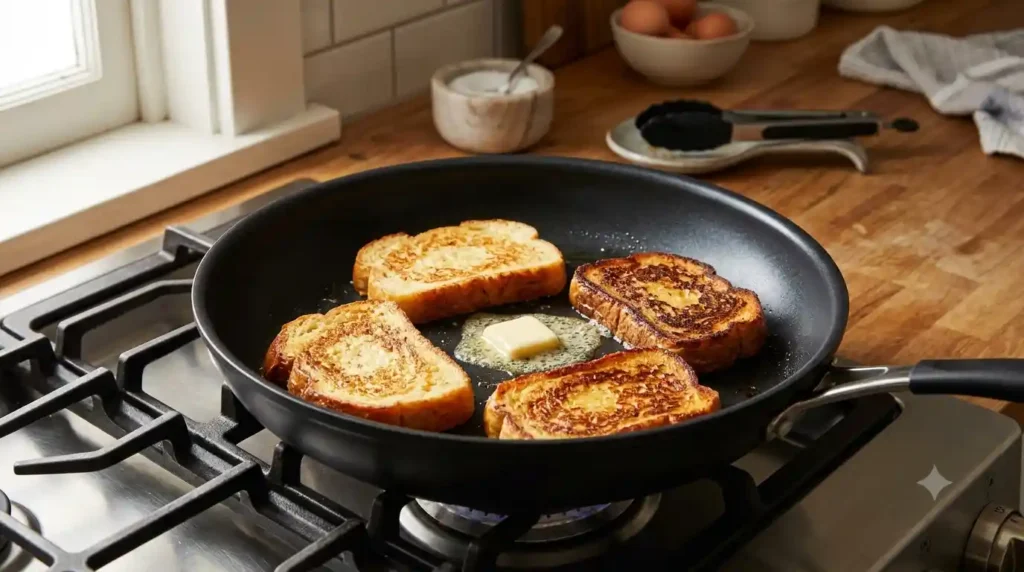
Add a little more butter to the skillet between batches as needed.
Continue cooking the remaining bread until every slice is golden brown on the outside and soft but set in the center.
Avoid overcrowding the skillet. Too many slices at once can lower the pan temperature and prevent proper browning.
For food safety, make sure the egg-based custard is fully cooked rather than leaving the center wet or liquid.
Step 6: Serve Warm
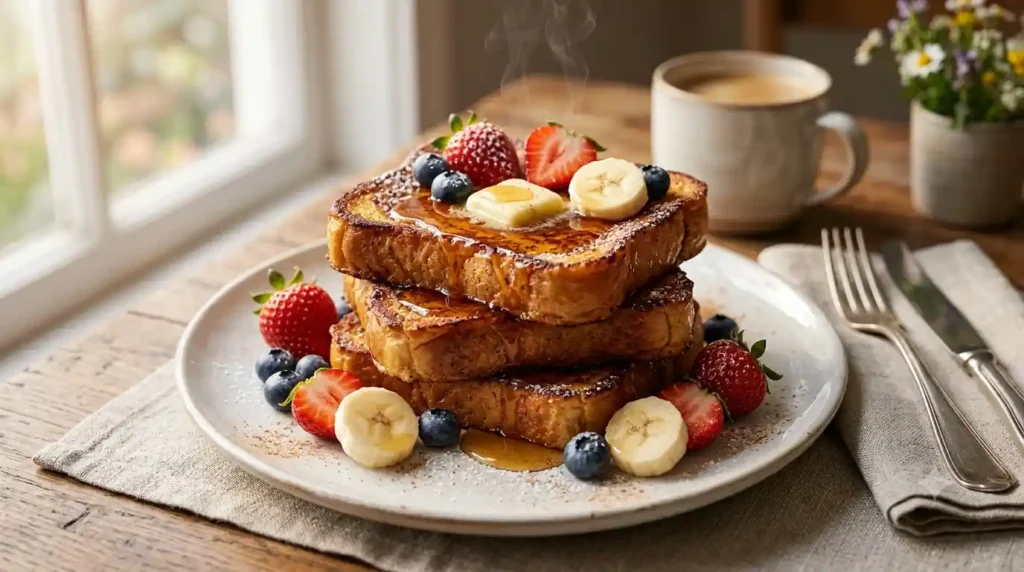
Transfer the finished French toast to plates and serve immediately.
Top with warm maple syrup, powdered sugar, fresh berries, sliced bananas, or a small pat of butter.
For an especially cozy weekend breakfast, add a sprinkle of cinnamon right before serving.
Chef’s finishing touch: A tiny pinch of cinnamon over the maple syrup makes the whole plate smell like a bakery.
Health Benefits
French toast is a comforting breakfast, but several ingredients also provide useful nutrients.
- Eggs provide protein and important nutrients such as choline and vitamin B12.
- Milk contributes protein and calcium, along with other essential micronutrients.
- Cinnamon adds flavor without requiring a large amount of added sugar.
- Fresh berries provide fiber and antioxidants when used as a topping.
- Whole-grain bread can increase fiber compared with refined white bread.
For a more balanced breakfast, serve one or two slices with fresh fruit and a source of additional protein, such as Greek yogurt.
Keep in mind that traditional French toast contains butter, eggs, dairy, and added sugar, so portion size and toppings can make a meaningful difference to the overall nutrition.
Nutrition Information (Per Serving)
Approximate values based on 2 slices per serving, before optional maple syrup, fruit, or powdered sugar.
- Calories: 390
- Protein: 14 g
- Fat: 17 g
- Carbohydrates: 44 g
Nutrition will vary depending on the bread, milk, butter, and toppings you use.
Pro Tips & Variations
For Extra-Crispy Edges
Use slightly stale, thick-cut bread and make sure your skillet is properly preheated. A medium heat gives the outside time to brown while the center cooks.
For a Fluffier Center
Brioche or challah is ideal. Their tender crumb absorbs the custard while staying soft inside.
Don’t Over-Soak
This is one of the most common French toast mistakes. Bread should absorb the custard, not collapse in it.
Control the Cinnamon
If you love cinnamon, increase it to 2 teaspoons. For a milder flavor, use 1 teaspoon.
Make It Less Sweet
Reduce the sugar in the custard to 1 tablespoon and let maple syrup provide most of the sweetness at the table.
Use Half-and-Half
If you don’t have heavy cream, simply replace the 2 tablespoons heavy cream with an additional 2 tablespoons of whole milk or half-and-half.
Make It Dairy-Free
Use an unsweetened plant-based milk such as oat or almond milk and a dairy-free butter alternative.
Make It More Filling
Use whole-grain bread and serve the French toast with Greek yogurt and berries.
Add a Seasonal Twist
Try adding a small pinch of nutmeg, pumpkin pie spice, or orange zest to the custard. These simple additions can make the recipe feel completely different without changing the cooking method.
Keep Finished Slices Warm
If you’re cooking for a crowd, place cooked slices on a wire rack over a baking sheet in a 200°F (95°C) oven while you finish the remaining batches. Avoid stacking them directly on a plate because trapped steam can soften those crisp edges.
How Much Does It Cost to Make?
The exact price depends on where you shop and the brand of ingredients, but this recipe is fairly budget-friendly for a family breakfast.
Approximate U.S. grocery cost:
- Bread: $3.00–$4.50
- Eggs: $1.00–$1.50
- Milk and cream: $0.75–$1.25
- Butter: $0.40–$0.70
- Cinnamon, vanilla, and sugar: $0.50–$0.80
- Optional toppings: $1.00–$2.50
Estimated total: about $6.65–$11.25
That works out to roughly $1.65–$2.80 per serving, depending on your bread and toppings.
If you already have cinnamon, vanilla, sugar, butter, and milk in your kitchen, the actual out-of-pocket cost can be considerably lower.
Frequently Asked Questions
What is the best bread for cinnamon French toast?
Brioche, challah, and thick-cut Texas toast are excellent choices. Their sturdy texture absorbs the custard while staying soft inside. Slightly stale bread is often even better because it doesn’t become soggy as quickly.
Why is my French toast soggy in the middle?
The bread may have been soaked for too long, or the skillet may not have been hot enough. Thick bread also needs enough cooking time for the egg custard to set. Use medium heat and cook each side for about 2–3 minutes.
How do you make French toast crispy?
Use thick or slightly stale bread, preheat the skillet, and avoid overcrowding the pan. Cooking in a moderate amount of butter over medium heat helps create crisp, golden edges without burning the outside.
Can I make French toast ahead of time?
Yes. Cooked French toast can be refrigerated in an airtight container for up to 3 days. Reheat it in a skillet, toaster oven, or oven to bring back some of the crisp texture. For best quality, add syrup and fresh toppings just before serving.
Final Thoughts
Great French toast doesn’t require fancy equipment or complicated techniques. The real difference comes from a few small details: sturdy bread, a balanced cinnamon custard, moderate heat, and enough patience to let those edges turn deeply golden.
If your first slice isn’t absolutely perfect, don’t stress. Home kitchens are messy, and French toast is wonderfully forgiving. Adjust the heat, shorten the soak, or add another minute of cooking time, and you’ll quickly find the combination that works best for your bread and your skillet. Serve it warm, add your favorite toppings, and enjoy every crisp, buttery bite.